Introduction
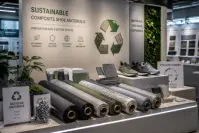
Circular Economy in Composite Materials Manufacturing is becoming an important development direction in the global footwear industry. As sustainability becomes a major concern for brands and consumers, manufacturers are adopting innovative solutions to reduce waste, improve resource efficiency, and create environmentally responsible composite shoe materials.
Unlike the traditional linear production model of “take, make, and dispose,” the circular economy emphasizes keeping materials in use for as long as possible through recycling, reuse, remanufacturing, and efficient resource management. For manufacturers of composite shoe materials, this approach not only reduces environmental impact but also creates long-term economic value by minimizing waste and improving production efficiency.
By integrating recycled fibers, recyclable composite structures, and advanced lamination technologies, modern footwear material manufacturers can support sustainable product development while meeting the high-performance requirements of today’s global footwear market.
Understanding Circular Economy in Composite Materials Manufacturing
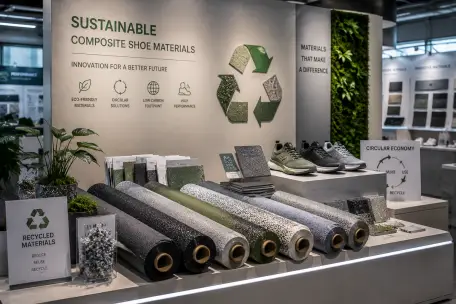
A circular economy aims to maximize the value of raw materials by extending their useful life and reducing unnecessary waste. According to the Ellen MacArthur Foundation, circular economy principles focus on eliminating waste and keeping products and materials in continuous use through recycling and regeneration. In composite material manufacturing, this involves designing products that are durable, repairable, recyclable, and manufactured using environmentally responsible processes.
Modern composite shoe materials increasingly incorporate recycled polyester, recycled TPU films, bio-based fibers, and low-impact adhesives. Manufacturers also optimize production by reducing offcuts, recycling manufacturing scraps, and improving material utilization during lamination and cutting processes.
Through digital manufacturing systems and precise process control, factories can significantly reduce material waste while maintaining consistent product quality.
Key Benefits of Circular Manufacturing
Reduced Raw Material Consumption
Circular Economy in Composite Materials Manufacturing helps footwear manufacturers reduce production waste while improving material efficiency and sustainability.
Using recycled and renewable materials decreases dependence on virgin resources and helps preserve natural ecosystems.
Lower Carbon Emissions
Efficient production processes reduce energy consumption and greenhouse gas emissions throughout the manufacturing cycle.The United Nations Environment Programme (UNEP) also highlights resource efficiency and sustainable production as important approaches for reducing environmental impact worldwide.
Waste Reduction
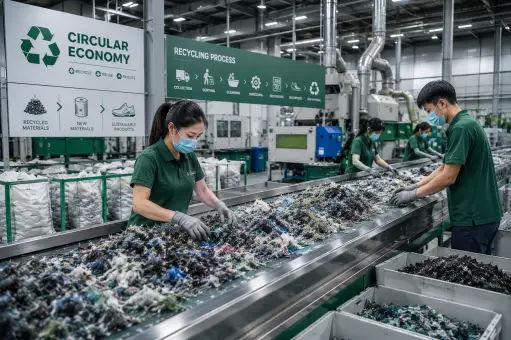
Production scraps can often be recycled into new composite materials, minimizing landfill waste.
Stronger Supply Chain Sustainability
Circular manufacturing supports long-term resource availability and strengthens partnerships with environmentally conscious footwear brands.
The future of Circular Economy in Composite Materials Manufacturing will continue to influence sustainable footwear development worldwide.
Applications of Circular Composite Materials
| Application | Sustainability Advantage |
|---|---|
| Running Shoes | Lightweight recycled materials |
| Outdoor Footwear | Durable waterproof composites |
| Casual Sneakers | Recycled textile uppers |
| Safety Shoes | Long service life |
| Fashion Footwear | Eco-friendly premium materials |
Technical Specifications
| Property | Typical Value |
|---|---|
| Material Weight | 180–350 GSM |
| Thickness | 0.8–2.5 mm |
| Recycled Content | Up to 100% (application dependent) |
| Abrasion Resistance | ≥50,000 Cycles |
| Bonding Strength | ≥35 N/5cm |
| Water Resistance | Customizable |
Driving Innovation Through Circular Manufacturing
Adopting circular economy principles requires more than simply using recycled materials. It involves redesigning manufacturing processes to maximize resource efficiency, extend product life cycles, and reduce environmental impact from raw material sourcing to end-of-life recycling.
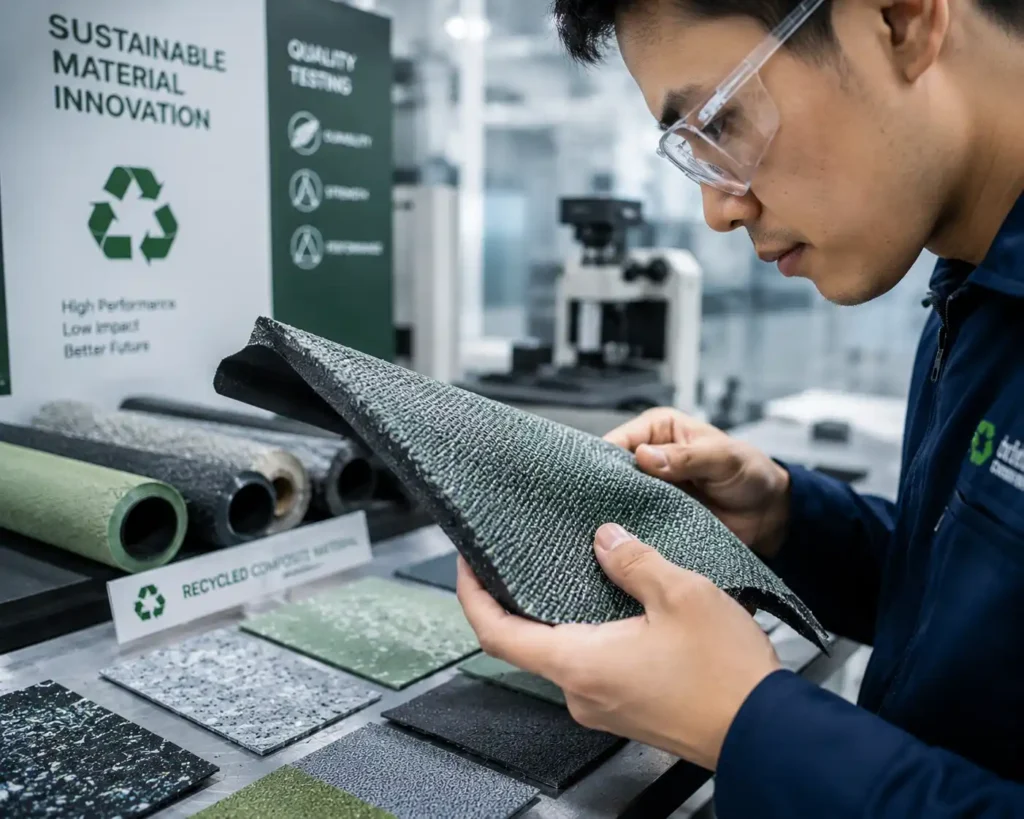
Advanced composite material manufacturers are investing in automated production systems, digital quality monitoring, and precision lamination technologies to improve manufacturing consistency while reducing waste. These technologies help optimize raw material utilization, minimize production defects, and lower energy consumption.
Another important aspect of circular manufacturing is product design. Composite materials are increasingly being developed with recyclability in mind. Modular structures, compatible material combinations, and simplified bonding methods make it easier to recover valuable resources after a product reaches the end of its service life.
Collaboration across the supply chain is equally important. Material suppliers, footwear manufacturers, recycling companies, and global brands can work together to establish collection programs, improve recycling technologies, and create more sustainable product ecosystems.

Future Trends of Circular Economy in Composite Materials Manufacturing
The future of composite material manufacturing will be increasingly driven by sustainability, digitalization, and material innovation. Companies that embrace circular economy strategies will be better positioned to meet international environmental standards and changing consumer expectations.
Key industry trends include:
- Closed-loop recycling systems
- Bio-based composite materials
- Solvent-free lamination technologies
- Water-based adhesive systems
- AI-assisted material optimization
- Digital product traceability
- Low-carbon manufacturing processes
As governments and international brands continue to promote sustainable sourcing, circular manufacturing will become a competitive advantage throughout the global footwear supply chain.
Why Circular Manufacturing Matters
Circular manufacturing delivers benefits that extend beyond environmental protection. It also improves operational efficiency, reduces production costs over time, strengthens supply chain resilience, and enhances brand credibility.
For footwear manufacturers, choosing composite material suppliers that actively invest in circular economy practices demonstrates a commitment to innovation, quality, and long-term sustainability. These partnerships create value for manufacturers, retailers, and end consumers alike.
Conclusion
The transition toward a circular economy is reshaping the future of composite materials manufacturing. By integrating recycled resources, reducing waste, improving production efficiency, and designing materials for longer life cycles, manufacturers can significantly reduce their environmental impact while delivering high-performance footwear materials.
As sustainability becomes a defining factor in the global footwear industry, companies that embrace circular manufacturing will be well positioned to build stronger partnerships, enhance product value, and contribute to a more responsible future.