Imagine investing thousands of dollars in high-grade breathable membranes and advanced hot-air seam taping machinery, only to have your finished hiking boots fail their dynamic laboratory waterproof test. When engineers cut open the failed boot to investigate, they often find that the inner membrane did not tear, and the seam tape did not peel. So how did the water get inside?
The culprit is almost always capillary action—commonly known in the footwear industry as “wicking.” If your factory builds a waterproof boot using standard, untreated textiles, water will travel up the inside of the outer fabrics and pour straight over the top of the waterproof liner. To prevent this catastrophic failure, sourcing managers must strictly specify anti-wicking shoe materials across every single component of the shoe upper.
In this comprehensive manufacturing guide, we will explain the physics of the capillary wicking effect, identify the hidden failure points in a shoe upper, and detail the 5 essential rules for integrating anti-wicking shoe materials into your production line.
What is the Capillary Wicking Effect in Footwear?
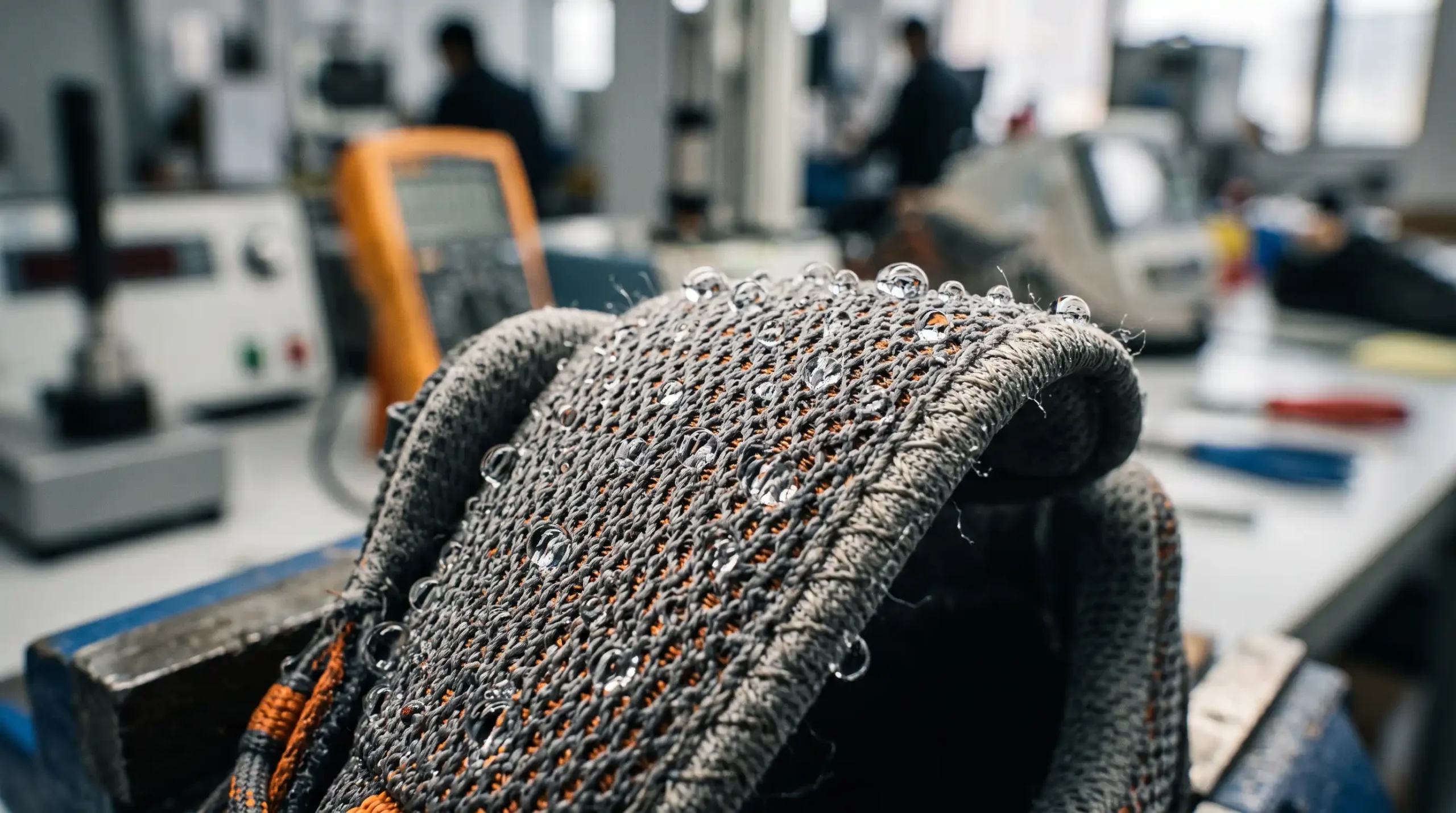
To understand why shoes leak without a single hole in the membrane, think about dipping the bottom tip of a dry paper towel into a glass of water. Within seconds, water defies gravity and climbs upward through the microscopic spaces between the fibers until the entire towel is soaked.
In footwear manufacturing, the exact same physics apply. Even when a shoe features a flawless waterproof bootie construction, that inner waterproof sock must end somewhere—usually a few millimeters below the ankle collar and tongue top so the wearer can insert their foot.
If the outer leather, nylon mesh, collar foam, or backing fabrics are hydrophilic (water-absorbing), stepping into a shallow puddle allows water to enter the microscopic gaps between the textile yarns. As the wearer walks, mechanical flexing pumps this absorbed water upward along the outer shell. Once the moisture climbs high enough to reach the top edge of the ankle collar, it crosses over the membrane boundary and soaks the inner lining. Utilizing engineered anti-wicking shoe materials breaks this capillary bridge, stopping water in its tracks before it can climb.
Why Surface DWR Sprays Are Not Enough
A common mistake made by inexperienced footwear developers is assuming that spraying a post-production Durable Water Repellent (DWR) finish onto the outside of a finished shoe will solve the problem.
While a surface spray helps water bead off the outer face of the fabric temporarily, it does not penetrate the core of the yarns, nor does it treat the cut edges, internal backing scrims, or hidden collar foams. Once water touches an untreated cut edge near the sole line, it bypasses the surface coating entirely and wicks upward from the inside out. True anti-wicking shoe materials must be chemically treated in a dip-bath during the textile dyeing and finishing process so that every individual fiber—inside and out—is permanently hydrophobic.
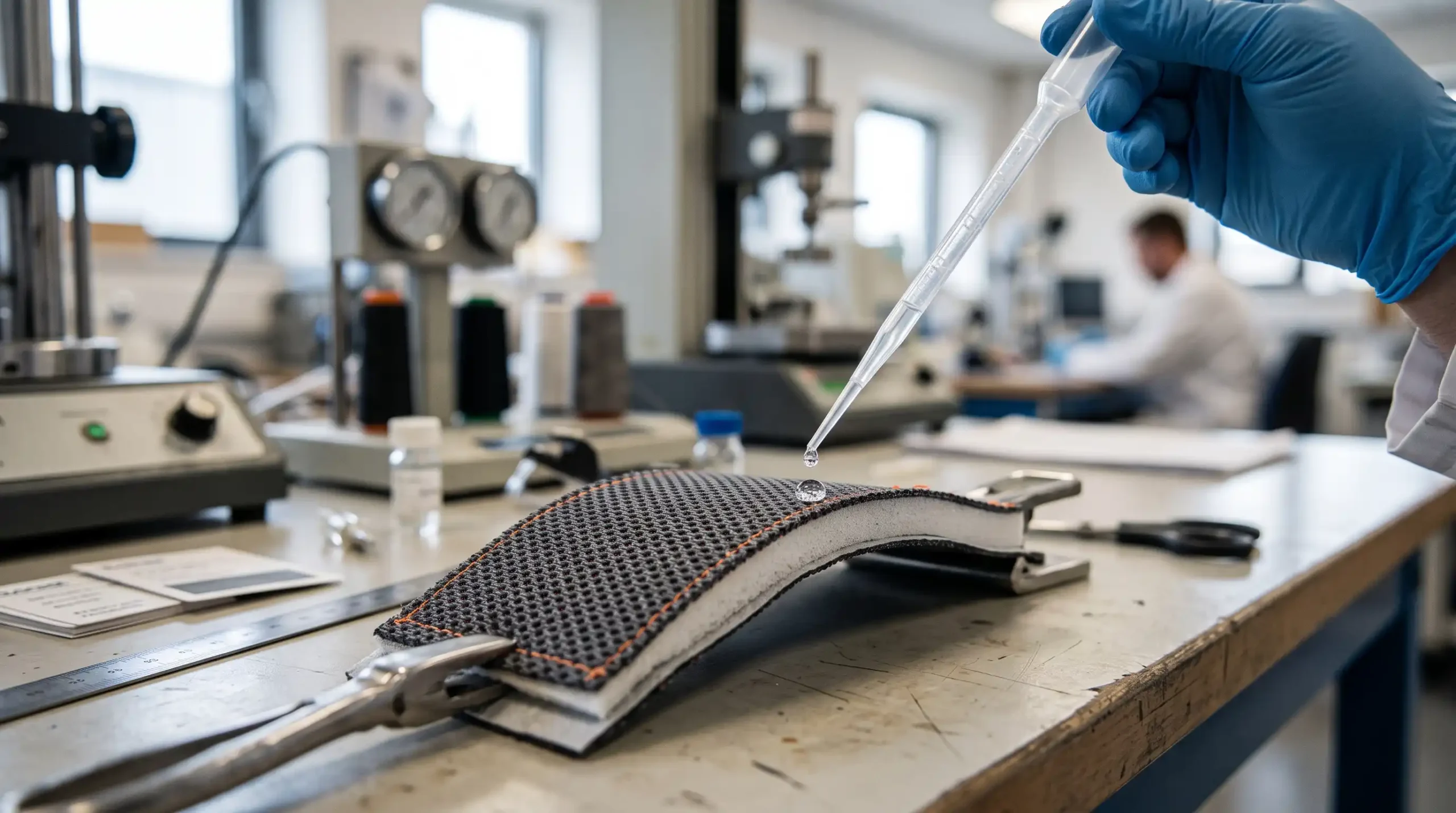
The 5 Essential Rules for Sourcing Anti-Wicking Shoe Materials
To guarantee that your waterproof footwear passes international flexing standards and keeps consumers dry in torrential rain, material engineers must enforce these five sourcing rules across the entire bill of materials (BOM).
Rule 1: Specify Hydrophobic Outer Mesh and Leather
Every exterior textile panel—including vamp mesh, quarter panels, and tongue gussets—must undergo deep-bath hydrophobic treatment prior to lamination. Modern factories increasingly choose an eco-friendly fluorine-free waterproof fabric that modifies the surface tension of the polyester or nylon yarns at a molecular level. Even after tens of thousands of mechanical flexes in mud and water, the fibers refuse to absorb moisture, keeping the shoe lightweight and preventing upward capillary travel.
Rule 2: Eliminate Open-Cell Hydrophilic Collar and Tongue Foams
One of the biggest hidden sponges inside a shoe is the cushioning foam inside the tongue and ankle collar. Standard open-cell polyurethane foam absorbs water aggressively and holds it right against the top edge of the waterproof bootie. When engineering waterproof boots, you must specify closed-cell foams or hydrophobic-treated PU foams as part of your anti-wicking shoe materials package. These specialized foams provide plush ankle comfort while refusing to absorb or transport liquid water.
Rule 3: Mandate Anti-Wicking Sewing Threads and Laces
You can source the finest hydrophobic fabrics in the world, but if your sewing line stitches the upper together using standard polyester or cotton-core thread, every seam becomes a miniature water highway. Untreated thread wicks moisture straight from the exterior wet zone into the interior lining. Factories must strictly use bonded, silicone- or wax-treated anti-wicking threads, as well as hydrophobic shoelaces, to ensure moisture cannot travel along the stitch lines.
Rule 4: Protect the Lamination Backing Scrim and Cut Edges
When outer textiles are laminated to backing fabrics or reinforcement tapes to add structural stability, the hidden backing scrim must also possess anti-wicking properties. If a hydrophilic backing cloth is laminated behind a hydrophobic outer mesh, water entering at the exposed cut edges of the pattern pieces will wick rapidly through the hidden backing layer. Every layer in a composite lamination must be tested as a unified hydrophobic system.
Rule 5: Conduct Strict Pre-Production Wicking Strip Tests
Never allow a roll of fabric onto the cutting table without verifying its capillary resistance in the quality control lab. Before mass production begins, top-tier material suppliers subject every batch of anti-wicking shoe materials to rigorous vertical strip testing, such as SATRA TM344 water absorption testing or equivalent internal factory standards.
In a standard factory wicking test, a 25mm wide strip of fabric is suspended vertically with its bottom edge submerged in dyed water for a specified duration (often 2 to 24 hours). To pass strict waterproof footwear standards, the dyed water must not climb higher than 5mm to 10mm above the waterline. Any fabric showing rapid upward dye migration is immediately rejected.
Source Certified Anti-Wicking Shoe Materials with Galetex
Passing global waterproof footwear certifications requires total control over every layer of your textile package. A single untreated backing scrim or absorbent foam layer can compromise an entire production run of expensive waterproof boots.
At Galetex, we engineer every component of our laminated textiles from the fiber up. We supply global footwear manufacturers with fully verified anti-wicking shoe materials, combining deep-bath hydrophobic outer meshes, non-absorbent comfort foams, and high-performance breathable membranes into seamless, ready-to-cut composite rolls. Contact the Galetex engineering team today to request lab-tested material samples and eliminate wicking failures from your footwear production line forever.