Casual footwear is the largest and most competitive segment of the global shoe market, and the fabric selected for the upper quietly decides how a shoe breathes, flexes, ages, and what it costs to produce. For brands, wholesalers, and sourcing teams, understanding what shoes fabric manufacturers actually produce, and how each material behaves in daily wear, is the difference between a product line that builds loyalty and one that generates returns and complaints.
There is no single best fabric for casual shoes. For everyday comfort and breathability, engineered mesh and knit uppers made from polyester or nylon are the strongest choices; for classic casual styling at a lower price point, cotton or blended canvas remains excellent; and for structured, easy-care designs, synthetic leather offers durability and a clean, premium look. The right choice depends on climate, target retail price, and how the shoe will actually be worn.
The sections below break down the main fabric families used in casual shoes, compare their performance trade-offs, and explain how experienced shoes fabric manufacturers engineer and finish these materials for specific end uses.
Why the Upper Fabric Defines a Casual Shoe
The upper fabric is the single biggest driver of a casual shoe’s breathability, weight, flexibility, and appearance, and it also accounts for a large share of the shoe’s total material cost.
In the basic anatomy of a shoe, the upper wraps and holds the foot, the lining sits directly against the skin, and the sole provides cushioning and grip. In casual shoes, the upper is usually a textile rather than leather, which means the fabric must do more work: it carries the design, manages moisture over long hours of wear, and survives repeated flexing at the forefoot. Because casual shoes are worn in mixed conditions, from commutes to light travel, the fabric has to balance airflow with abrasion resistance and shape retention. Selecting the right shoe upper material early in development also prevents costly redesigns later, because last shape, reinforcement placement, and stitching patterns all depend on how much stretch and support the fabric provides.
What Are the Different Types of Fabric Used for Shoes?
Most casual shoes use one of five fabric families: mesh, knit, canvas, synthetic leather, and coated or laminated composites, each engineered for a different balance of breathability, durability, and cost.
Mesh Fabrics
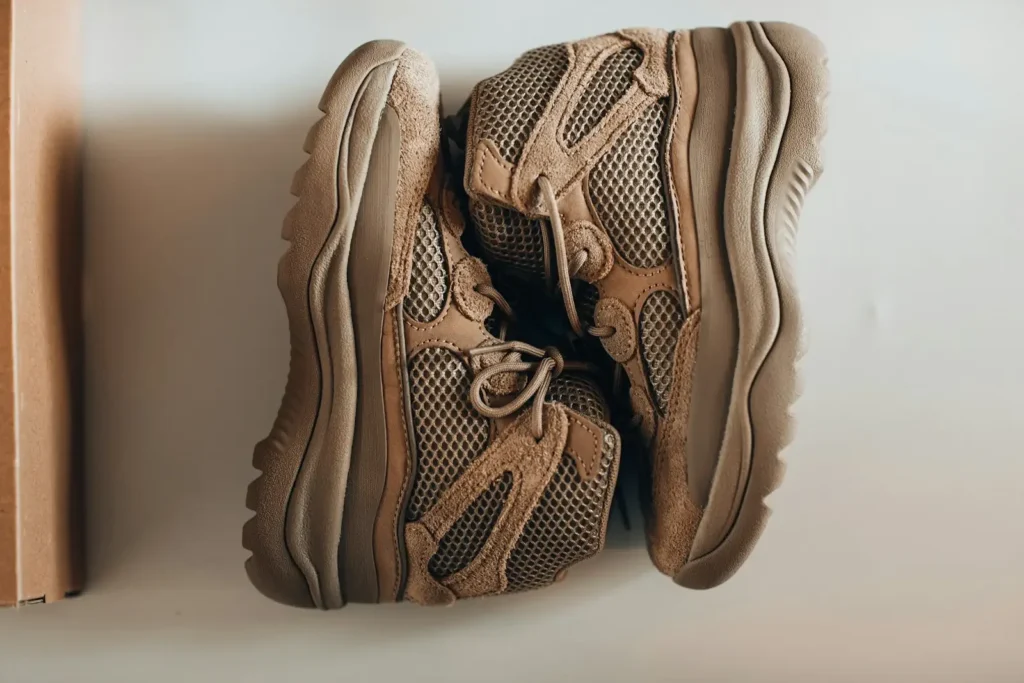
Mesh is an open-structure fabric, most often knitted or woven from polyester or nylon, with deliberate perforations that let air circulate through the upper. It is light, dries quickly, and accepts vibrant dyeing, which makes it the default choice for sporty casual silhouettes. Construction matters more than the fiber alone: single-layer mesh is extremely light and best for warm-weather shoes, while three-layer mesh bonds a face fabric to a foam or film middle layer, adding structure and support while keeping airflow high. A well-made breathable material for shoes manages moisture in both directions, releasing heat during wear and drying fast after rain or washing. The known weakness of mesh is abrasion at high-contact zones such as the toe box and heel collar, which is why reinforced variants exist.
Knit Uppers
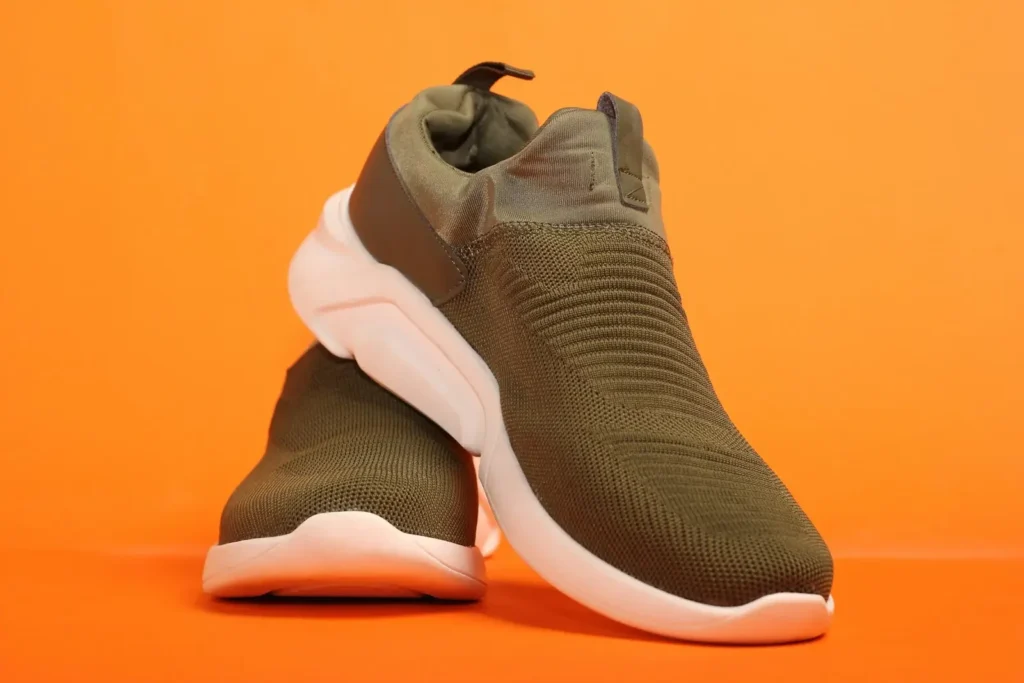
Knit uppers are produced by knitting yarn directly into a nearly complete shoe-shaped panel, often in one piece. This eliminates most seams, reduces break-in time, and creates a sock-like fit that flexes naturally with the foot. Knit allows engineers to program different densities into different zones, tighter at the midfoot for hold and more open across the instep for ventilation. The trade-off is dimensional stability: knit stretches over time, so it holds the foot less firmly than woven fabrics and usually needs reinforcement at the eyestay and heel.
Canvas and Woven Fabrics
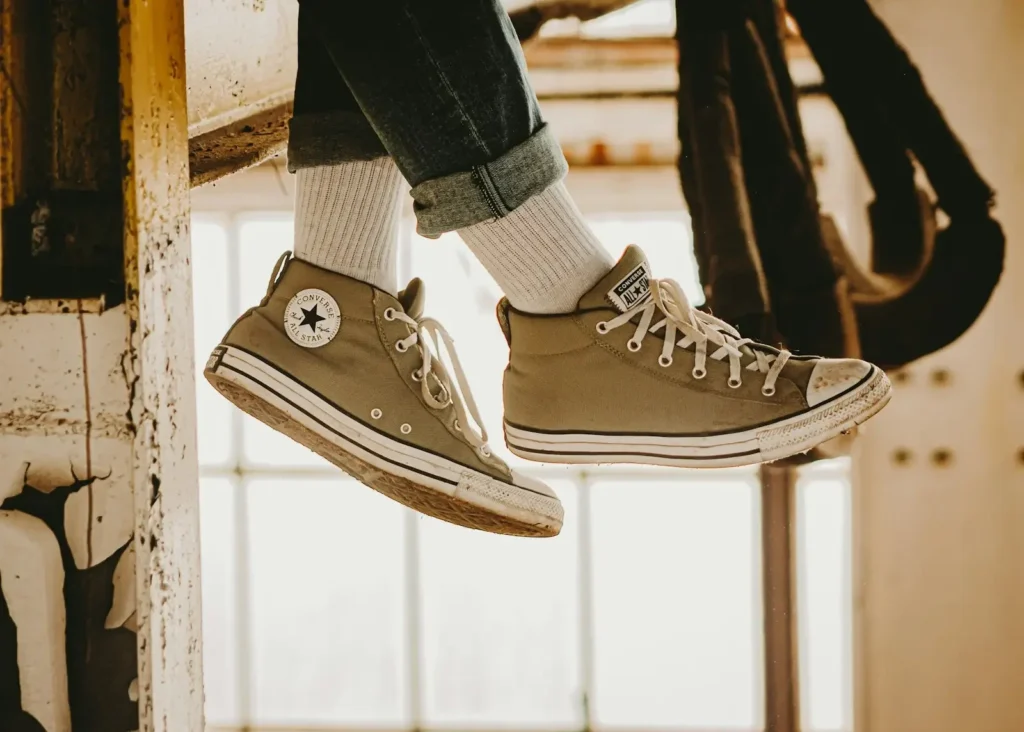
Canvas is a tightly woven fabric, traditionally cotton or a cotton blend, and it is the material most associated with classic casual sneakers. It is inexpensive, easy to dye and print, breathable, and it holds structured low-top shapes well. Its limitations are equally well known: it absorbs water readily, takes longer to dry, and can split at flex creases after heavy use. Blending cotton with synthetic fibers improves abrasion resistance and shrinkage control, and heavier duck canvas grades extend service life.
Synthetic Leather and Coated Fabrics
Synthetic leather is a fabric backing covered with a layer of polyurethane (PU) or polyvinyl chloride (PVC) to resemble the texture of leather. PU versions are softer , more flexible and breathe better . PVC is cheaper and stiffer . Microfiber based synthetic leather is the most durable of the three . These fabrics keep casual shoes looking crisp and structured, repel water and stains and clean off easily. The main downside is heat retention so they are best in designs that use perforations or mesh panels.
What Fabric Is Best for Shoes?
The best fabric for a shoe depends on its intended use: engineered mesh leads for breathability and all-day comfort, canvas wins on cost and classic style, knit offers the best fit and flexibility, and synthetic leather delivers the most structure and weather resistance.
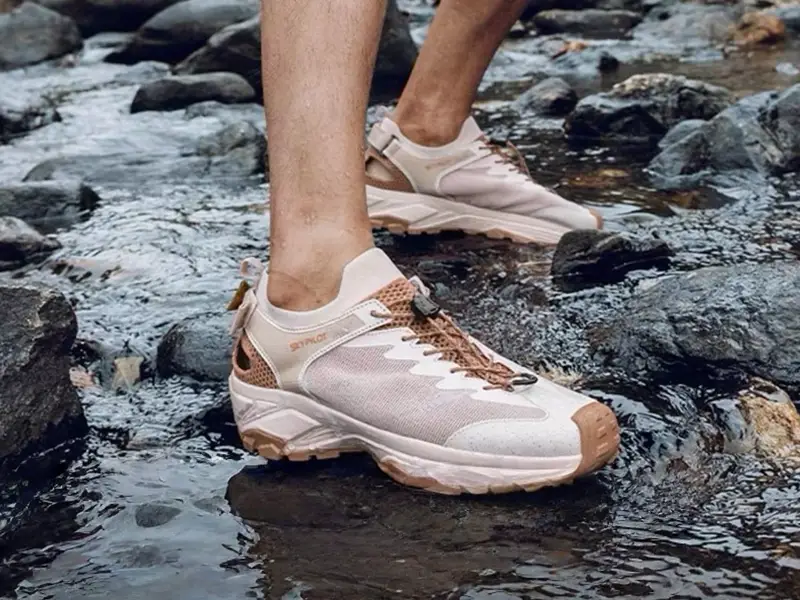
The following comparison summarizes how the main casual shoe fabrics trade off against each other:
| Fabric | Breathability | Durability | Weight | Relative Cost | Best For |
| Engineered mesh | Very high | Moderate | Very low | Low to mid | Everyday sneakers, warm climates |
| Knit | High | Moderate | Low | Mid | Comfort-focused, sock-fit styles |
| Canvas | High | Moderate | Moderate | Low | Classic casual sneakers, prints |
| Synthetic leather | Low to moderate | High | Moderate | Low to mid | Structured, easy-care designs |
| Laminated composite | Varies by design | High | Mid | Mid to high | Weather-resistant performance styles |
For daily commuting in warm climates, mesh or knit keeps feet cooler and lighter. For rainy seasons or messy urban environments, laminated composites and synthetic leather are more practical. For value-driven product lines where visual identity matters most, printed canvas delivers the strongest return. Many successful casual shoes deliberately mix fabrics, for example canvas quarters with mesh tongues and synthetic leather toe caps, to capture several properties at a controlled cost.
What Fabrics Are Performance-Style Casual Shoes Made Of?
Most performance-style casual shoes, including the cushioned running-inspired sneakers that dominate the current market, use engineered mesh or one-piece knit uppers over foam midsoles, because these fabrics deliver ventilation, low weight, and design flexibility at production scale.
Engineered mesh is the most common choice: the knit or weave density is varied across the upper, tighter where support is needed and more open where the foot heats up, producing support and airflow in a single layer. Popular recovery-style and max-cushion sneakers typically pair a soft engineered mesh or stretch-knit upper with a thick foam midsole, prioritizing a plush, wraparound feel over structural rigidity. Leading athletic footwear brands follow the same pattern, specifying polyester-based mesh and knit uppers, reinforced with thin TPU films or fused overlays at stress points, and lining them with moisture-wicking textiles. For brands developing similar silhouettes, the practical takeaway is that the upper fabric must be chosen together with the midsole: a soft, stretchy knit matches a plush ride, while a firmer, laminated three-layer mesh suits a more supportive shoe.
How Shoes Fabric Manufacturers Engineer Casual Shoe Fabrics
Modern shoe fabrics are rarely single-layer textiles; they are engineered composites in which a face fabric, functional middle layers, and coatings are laminated and finished to meet precise performance and compliance targets.
Lamination and Composite Structures
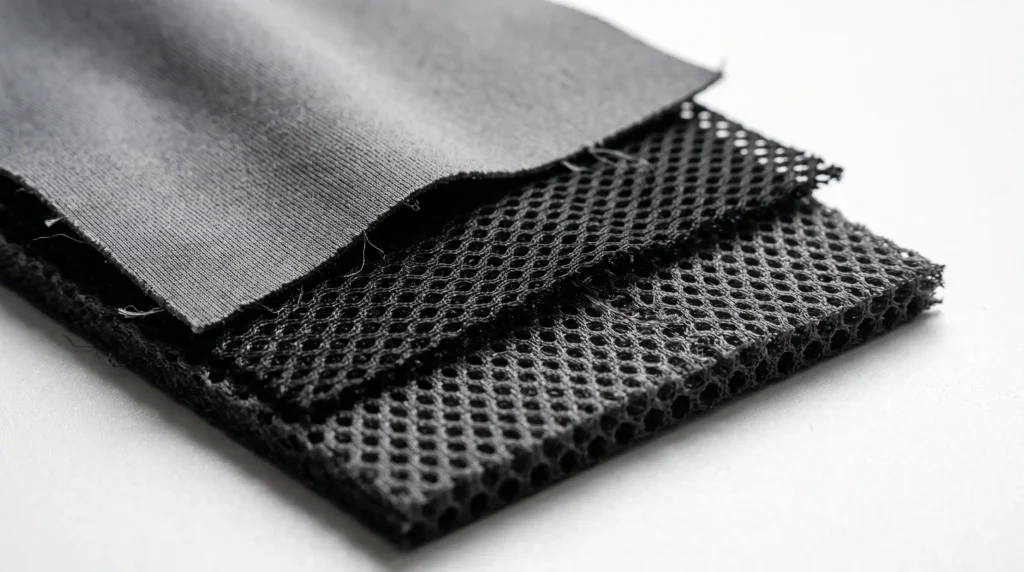
Lamination bonds two or three functional layers into one fabric. A typical three-layer construction combines an outer mesh for abrasion resistance, a middle film or foam for waterproofing or structure, and an inner tricot lining that protects the membrane and feels soft against the foot. A high-performance shoes membrane laminated into the upper keeps rain out while allowing water vapor from perspiration to escape, which is how weatherproof casual shoes stay comfortable. Lamination quality determines long-term performance: poor bonding leads to delamination, bubbling, and stiffness after repeated flexing, so experienced manufacturers test bond strength and wash durability before approving bulk production.
Finishes and Surface Treatments
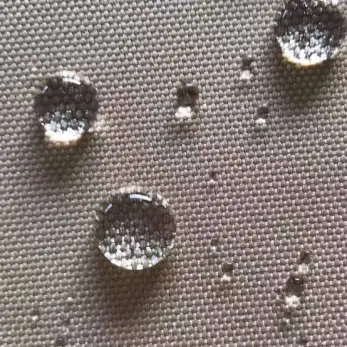
Beyond the base fabric, surface treatments add functional properties. Durable water repellent (DWR) finishes cause water to bead and roll off mesh and canvas; anti-microbial treatments control odor in shoes worn without socks; UV-stabilized finishes slow fading and fiber degradation for shoes sold in sunny markets; and flame-retardant or formaldehyde-compliant finishes address specific regulatory requirements. Finishing also controls hand feel, color depth, and shade consistency between production lots, which matters greatly when panels of the same shoe are cut weeks apart. Buyers should always request finished, treated swatches rather than greige fabric samples, because finishes can change breathability and stretch noticeably.
Sustainable Fabric Options for Casual Shoes
Recycled polyester mesh, organic cotton canvas, and hemp blends are the leading sustainable fabric options for casual shoes, offering measurable environmental gains while meeting the same performance standards as conventional materials.
Recycled polyester (rPET), produced largely from post-consumer plastic bottles, is now widely available in mesh and knit formats and can be certified under the Global Recycled Standard (GRS). Organic cotton canvas avoids synthetic pesticides in cultivation, and hemp requires less water and fewer inputs than conventional cotton while producing a strong, breathable fabric. For B2B buyers, third-party verification is the practical entry point: GRS confirms recycled content and chain of custody, while OEKO-TEX Standard 100 confirms that the finished fabric is free from harmful levels of restricted substances. Sustainable fabrics generally match conventional equivalents in durability when properly engineered, and the main considerations are slightly higher costs, more limited color ranges, and longer sourcing lead times for certified volumes.
How to Choose the Right Shoes Fabric Manufacturer
A good shoes fabric manufacturer should have in-house lamination and finishing capabilities, consistent quality control across dye lots, verifiable certifications, and minimum order quantities and lead times that align with your production plan.
When evaluating suppliers, look at five areas:
- Development capability: the supplier should offer fabric customization, including weight, structure, color matching, and functional finishes, and should be able to develop from a reference swatch or a performance specification.
- Quality consistency: ask about color fastness, bond strength, and shrinkage test reports, and how the factory controls shade variation between dye lots.
- Certifications and compliance: confirm OEKO-TEX, GRS, or equivalent documentation valid for your target markets, including restricted substance compliance for the EU and US.
- Capacity and flexibility: check whether minimum order quantities, roll widths, and stock programs fit both your launch volumes and your replenishment cycles.
- Communication and sampling speed: the best partners provide finished swatches quickly and flag engineering risks, such as delamination or seam slippage, before they reach mass production.
Partnering with experienced shoes fabric manufacturers early in the design process, rather than treating fabric as a late purchasing decision, shortens development cycles and reduces the risk of costly substitutions after sampling.
FAQs
What does GSM mean, and why does it matter for shoe fabric?
GSM stands for grams per square meter and measures fabric weight. Lightweight mesh for summer casual shoes often sits below 150 GSM for maximum airflow, midweight meshes and knits run from 150 to 250 GSM, and heavy canvas exceeds 300 GSM. Higher GSM generally means more durability and structure but also more weight and less breathability, so it should match the shoe’s positioning.
Can recycled shoe fabrics match the performance of virgin polyester?
Yes. Certified rPET yarns can be engineered to the same strength, abrasion resistance, and color fastness as virgin polyester in mesh and knit constructions. The key is sourcing from mills with consistent feedstock and verified testing, because quality varies more between suppliers than between recycled and virgin fibers.
What minimum order quantities and lead times are typical for custom shoe fabrics?
Custom-dyed or laminated fabrics commonly require several hundred to a few thousand meters per color or construction, with sampling in one to two weeks and bulk production in three to six weeks depending on finishing complexity. Stock-supported fabrics from established suppliers offer lower minimums and faster delivery for smaller launches.