Every shoe hides a performance layer that most shoppers never see and most manufacturers cannot afford to get wrong: the lining. Sitting between the foot and the upper, the lining controls how heat escapes, how sweat moves, and how a shoe feels after hours of wear. For footwear brands and sourcing teams, one of the most common specification decisions is choosing between mesh and fabric shoe lining, because the two materials behave very differently in production and on the foot.
The difference between mesh and fabric shoe lining comes down to structure. Mesh lining is an open, net-like knit that lets air pass directly through the shoe for maximum ventilation and moisture escape, while fabric shoe lining is a continuous, densely knitted or woven layer that delivers softness, durability and insulation. Mesh suits hot weather and high-activity footwear; fabric suits everyday, cold-weather and premium styles. In practice, the right choice depends on the shoe category, the target climate and the price band.
The sections below explain how each lining is built, how the two compare on the qualities buyers actually feel, and how to select the right shoe lining material for each type of footwear.
What Is Mesh Shoe Lining?
Mesh shoe lining is a lining material with an open, net-like knitted structure, typically made from polyester or nylon yarns, engineered so air can flow directly through the fabric and out of the shoe interior.
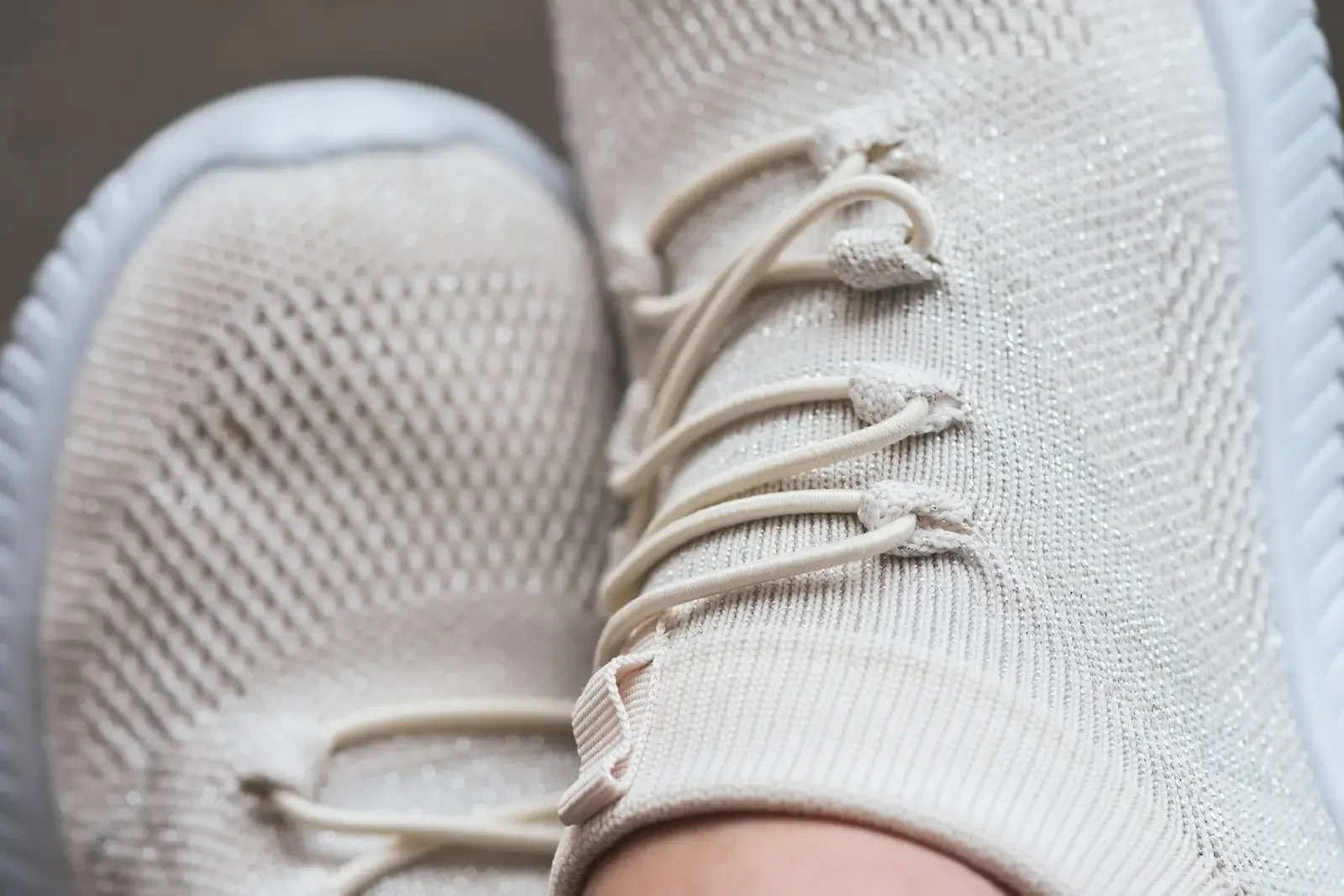
The defining feature of mesh is porosity. Unlike a solid textile surface, mesh is produced with deliberate gaps between yarns, and those gaps do most of the performance work. When the foot heats up inside a shoe, warm air rises and escapes through the open structure, while cooler air is drawn in from outside. This continuous air exchange, often described as convection, carries sweat vapor away from the skin before it can accumulate, which is why mesh-lined shoes feel noticeably cooler during activity.
Mesh linings come in several construction grades, and the differences matter for spec sheets:
- Single-layer mesh: A lightweight, economical open knit used in casual and entry-level athletic shoes where cost and airflow are the priorities.
- Engineered spacer mesh: A three-dimensional knit with two outer surfaces connected by spacer yarns, creating a springy, breathable layer used in premium running and training shoes.
- Composite mesh laminates: A mesh face bonded to a functional membrane and a backing layer, combining ventilation with waterproofing or moisture transfer; a moisture-wicking mesh fabric of this type can move perspiration outward while blocking water from penetrating inward.
The strengths of mesh lining are its extreme light weight, rapid drying and high air permeability. Its weaknesses are equally structural: the open net offers little insulation in cold weather, admits dust and fine debris, and can snag or tear more easily than a continuous fabric. Mesh also provides less structural support, so shoes that use it heavily often need reinforcing overlays in high-stress zones.
What Is Fabric Shoe Lining?
Fabric shoe lining is a continuous textile layer, woven or knitted from materials such as tricot, polyester interlock, poly-cotton or microfiber, that forms a smooth, unbroken surface between the foot and the upper.
Because fabric shoe lining has no open pores, its performance depends on fiber properties and fabric density rather than airflow. Polyester, the most common lining fiber, has low moisture absorption and good wicking capability, which allows it to draw perspiration away from the skin and release it gradually, according to a review of textile fabrics in the footwear industry. This wicking-based moisture management is slower than mesh convection but more controlled, which is why fabric linings feel stable and comfortable over long hours of mixed activity.
The main types of fabric shoe lining each occupy a distinct position in the market:
Tricot Lining
Tricot is a warp-knit fabric with a smooth face and a fine, slightly ribbed back. It is soft against the skin, resists snagging and runs, and holds its shape well. Tricot is the standard choice for jacket-style and boot linings where a clean, comfortable interior finish matters.
Polyester Knits and Woven Fabrics
Knitted or woven polyester linings, usually in the 120 to 180 GSM range, dominate athletic and casual footwear. They balance breathability, quick drying and low cost, and they accept moisture-wicking and antimicrobial treatments well.
Poly-Cotton Blends
Blending polyester with cotton adds softness and absorbency, which improves the immediate feel against the foot. Poly-cotton linings are common in casual and canvas-style shoes, though they dry more slowly than pure synthetics.
Microfiber and Brushed Fabrics
Microfiber linings simulate the hand feel of natural suede at a lower cost. Brushed variants add warmth, making them a frequent choice for winter and lifestyle footwear where insulation matters more than ventilation.
Across all types, fabric lining provides a consistent surface that hides seams, cushions pressure points and protects the inside of the upper from abrasion and sweat damage, which extends the usable life of the shoe.
Mesh vs Fabric Shoe Lining: Key Differences
The core difference between the two linings is structure: mesh spends its surface area on open pores for airflow, while fabric spends it on continuous coverage for durability, softness and insulation. Everything else follows from that single trade-off.
The table below compares the two shoe lining materials across the attributes that decide most sourcing and design conversations:
| Aspect | Mesh Shoe Lining | Fabric Shoe Lining |
| Breathability | Excellent; air passes directly through open pores | Moderate; relies on wicking and fiber properties |
| Weight | Very light; open structure removes mass | Light to moderate; density varies by GSM |
| Moisture management | Rapid evaporation through airflow | Controlled wicking from skin to upper layers |
| Durability | Moderate; can snag, tear or deform under abrasion | High; continuous surface resists wear and runs |
| Insulation | Low; air moves freely in both directions | Better; traps a stable layer of warm air |
| Next-to-skin feel | Textured, sometimes rough in coarse knits | Smooth, soft and consistent |
| Climate suitability | Hot weather, high sweat output | Cold weather, all-day mixed wear |
| Maintenance | Traps dust and debris; needs frequent cleaning | Resists dirt penetration; easier to wipe clean |
| Cost | Low to moderate; less yarn per square meter | Low to moderate; higher for microfiber and blends |
Two rows of that table deserve a closer look. On breathability, mesh is not merely better than fabric; it operates on a different mechanism. A closed fabric can only manage moisture by transporting it along yarns, while mesh simply opens a path for air, which is why breathable materials for shoes are so often built on open-knit structures in hot-climate markets. On durability, the relationship reverses. The same pores that ventilate a mesh lining are mechanical weak points, and a snagged yarn can unravel a hole, whereas a tricot or polyester fabric lining tends to wear gradually and predictably.
There is also a seasonal dimension. In summer, mesh’s low insulation is an advantage, and in winter it becomes the main reason consumers report cold feet. Fabric linings, particularly brushed polyester and poly-cotton, retain warmth but can feel stuffy during intense activity, which is why many footwear lines specify different linings for summer and winter versions of the same silhouette.
Which Is Better for Shoes, Mesh or Fabric?
Neither material is universally better. Mesh is the better lining for athletic, warm-weather and sweat-intensive footwear where ventilation and light weight matter most, while fabric is the better lining for casual, cold-weather, work and premium shoes where durability, softness and insulation are the priorities.
The honest answer to whether mesh shoes are better is that mesh is better at specific things. Breaking the decision down by shoe category makes the trade-offs concrete:
| Shoe Type | Recommended Lining | Reasoning |
| Running and training shoes | Mesh, often spacer or composite mesh | Maximum heat and sweat dissipation during high output |
| Hiking and outdoor shoes | Fabric or mesh-fabric composite | Durability and weather resistance on the trail |
| Casual sneakers | Either, or zoned hybrid | Comfort and styling drive the choice more than climate |
| Winter boots | Fabric, brushed or poly-cotton | Insulation and consistent dry feel |
| Work and safety boots | Fabric with reinforced zones | Abrasion resistance and long service life |
| Waterproof shoes | Mesh face with membrane laminate | Ventilation without sacrificing water protection |
Research on textile footwear design supports this scenario-based approach. A study published in the National Library of Medicine on spacer-knit footwear construction found that lining structure directly shapes the microclimate inside the shoe, with openwork knit layers improving ventilation and hygiene comfort compared with denser conventional layers. In other words, the lining is not a cosmetic layer; it is a functional component whose structure measurably changes conditions inside the shoe.
For brands, the practical implication is that lining choice should be made per model rather than per brand. A running line may standardize on mesh, a lifestyle line on tricot, and an outdoor line on laminated composites, with each decision justified by climate data from the target market.
What Is the Best Material for Shoe Lining?
The best shoe lining material depends on the shoe’s purpose: open or engineered mesh for sports and hot-climate footwear, soft tricot or poly-cotton fabric for casual comfort, microfiber or brushed fabric for insulation, and leather for premium dress construction.
There is no single winner across the entire footwear market because the three main lining families solve different problems:
- Mesh and engineered knits lead where ventilation, weight and sweat management dominate the requirement list. They dominate athletic footwear and increasingly appear in summer casual shoes.
- Woven and knitted fabrics lead where surface quality, durability and cost efficiency dominate. They cover the broad middle of the market, from sneakers to boots.
- Leather leads where longevity and a premium interior feel justify a higher cost, typically in dress and heritage-style shoes.
For sourcing teams, material family is only the first question. The second is specification quality. A lining that looks right on a sample board can fail in production if the details are not locked down. Key spec items include fabric weight, since linings below roughly 120 GSM tend to lose durability and moisture-handling capacity; the bonding method used to attach the lining, which determines whether it delaminates after repeated wetting; and whether the fabric carries functional treatments such as moisture-wicking or antimicrobial finishes, which materially affect long-term odor and hygiene.
The best lining material is therefore the one whose spec sheet matches the shoe’s use case at the right cost, verified by wear testing rather than hand feel alone.
Are Mesh Shoes Still in for 2026?
Yes. Mesh remains a mainstream upper and lining construction in 2026, and the market has moved toward more sophisticated versions of it: engineered zoned mesh, spacer constructions and recycled-polyester mesh rather than basic single-layer open knit.
Three forces keep mesh relevant through 2026. First, the consumer shift toward lightweight, comfort-first footwear has continued across both sport and lifestyle categories, and mesh is the cheapest way to deliver real airflow and low weight. Second, mesh engineering has matured. Contemporary designs place open mesh in high-heat zones such as the toe box and tongue, and denser mesh in structural zones such as the eyestay and heel, giving a single shoe the ventilation benefits of mesh and the support of tighter knits. Third, sustainability requirements have changed the material itself, with recycled polyester now a standard option for mesh linings and uppers at only a modest cost premium over virgin fiber.
The styling story has shifted as well. Mesh is no longer read purely as a sport code; it now appears in smart-casual silhouettes, where consumers accept the technical texture as part of a lightweight aesthetic. For B2B buyers, the takeaway is that mesh should be treated as a permanent construction category with its own spec standards, not a passing trend, and that specifying recycled-content and zoned-engineered mesh is quickly becoming a baseline expectation in Western markets.
How Manufacturers Choose Between Mesh and Fabric Linings
Manufacturers choose between mesh and fabric linings by matching the lining construction to the shoe category, target climate and cost band, then validating the choice through fabric weight, bonding strength and moisture-management testing with their supplier.
A disciplined selection process usually follows five steps:
- Define the use case. Establish the shoe category, typical activity level and the climate of the primary market, since these three factors eliminate most material options immediately.
- Set the specification. Determine fabric weight, fiber content, stretch requirements and any functional treatments, and decide whether the model needs a single lining or zoned combinations of mesh and fabric.
- Evaluate composite options. For shoes that need conflicting properties, such as ventilation plus waterproofing, specify laminated structures that bond a mesh face to a membrane and backing layer.
- Test before committing. Confirm air permeability, moisture absorption, abrasion resistance and lining-to-upper bond strength on trial production, not on samples alone.
- Align with the supplier. Confirm the supplier’s production consistency for the chosen construction, because lining quality failures, such as delamination or pilling, surface after weeks of consumer wear.
Many experienced teams use a hybrid strategy rather than an either-or decision. A single model can pair an open mesh lining in the forefoot and tongue with a smooth fabric lining at the heel and collar, combining airflow where heat builds with structure and softness where the foot needs stable contact.
Choosing the right construction is ultimately a supplier conversation as much as a design one, and a capable shoe material supplier should be able to recommend lining structures based on the target shoe, provide test data for each option, and support small-batch sampling before full production commitment.
FAQs
How often should shoe lining be replaced?
Shoe lining generally does not get replaced in consumer footwear. Once a lining wears through, delaminates or loses its moisture-handling ability, the practical option is replacing the shoe or resoling it if the upper is still sound. Wearing shoes past the point where the lining has collapsed accelerates damage to the upper and insole, which is why rotating pairs extends the life of both the lining and the shoe.
Does shoe lining affect foot odor and hygiene?
Yes, lining material and treatment have a direct effect on odor. Linings that trap moisture against the skin create the warm, damp environment where odor-causing bacteria multiply, while linings that move sweat outward and dry quickly slow that process significantly. Antimicrobial and moisture-wicking finishes help, but the underlying structure of the lining does most of the work, so consumers prone to odor should favor breathable constructions and allow shoes to dry fully between wears.
Can a worn shoe lining be repaired?
Minor lining damage can sometimes be patched by a shoe repair professional, particularly in boots and leather shoes where the lining is a distinct layer. In most athletic and casual footwear, however, the lining is bonded to the upper during assembly, which makes effective repair impractical. The better strategy is preventive: choosing quality lining materials, cleaning shoes regularly and avoiding machine washing that weakens the adhesive bond between lining and upper.