Breathability is one of the first questions a footwear buyer raises and one of the last things to get right. An upper can pass every abrasion and tear test and still leave feet hot and damp within an hour, because airflow, moisture vapor escape, and weather protection pull against each other. Choices made by feel or by price tend to show their limits during wear trials.
The most breathable materials for shoes are engineered mesh and engineered knit, because their open structures move both air and moisture vapor rather than only one of the two. Woven fabrics, canvas, and uncoated leather sit in the middle of the range, while coated synthetic leather and solid rubber or plastic panels are the least breathable options in common use. Breathability is really three properties: air permeability, moisture vapor transmission, and liquid moisture management.
What follows breaks those three properties down, ranks the common upper materials against them, and shows how membranes, linings, and construction decide what a finished shoe does in the field.
What breathability actually measures
Breathability in footwear is three separate measurements, not one. Air permeability is how much air passes through the material, moisture vapor transmission rate is how much water vapor escapes through it, and moisture management is how quickly liquid sweat is drawn away from the skin and dried. A material can score well on one and badly on another, so a single “breathable” label says very little.
Treating it as a yes-or-no attribute leads buyers to compare materials that were never measured the same way.
Moisture vapor transmission rate (MVTR)
MVTR measures the mass of water vapor passing through a given area of material in a set time, usually in grams per square meter per 24 hours. Higher values mean more sweat vapor leaves the shoe. Reporting conditions matters as much as the figure, because temperature and humidity gradients change results sharply, and a number quoted without them cannot be compared with any other (moisture vapor transmission rate). Porous fabrics such as knit need careful method choice, since some techniques under-report them (standard test methods for moisture vapor transmission).
Air permeability
Air permeability measures how much air flows through a material under a fixed pressure difference, usually in millimeters per second. It is the metric behind the immediate cool feeling of a mesh shoe, because moving air carries heat away by convection rather than only by diffusion. Open mesh can exceed 1,000 mm/s at a test pressure of 100 Pa, while a flat single-layer knit typically stays below 400 mm/s in the same test (supplier-published mesh test data).
Evaporative resistance and moisture management
Evaporative resistance points the opposite way, measuring how much the material resists vapor and heat leaving the body, so a lower number is better. Moisture management covers liquid sweat rather than vapor, and a lining with good MVTR can still feel clammy if it spreads liquid poorly.
| Metric | What it measures | Common unit | Direction that helps the foot |
|---|---|---|---|
| Moisture vapor transmission rate | Water vapor passing through the material | grams per square meter per 24 hours | Higher is better. |
| Air permeability | Air flowing through under set pressure | millimeters per second | Higher is better. |
| Evaporative resistance | Resistance to vapor and heat leaving | square meter pascal per watt | Lower is better. |
| Moisture management | How fast liquid sweat spreads and dries | wicking rate, drying time | Faster is better. |
Most breathable shoe upper materials, ranked
Engineered mesh tops the ranking, followed by engineered knit, then open woven fabrics and canvas. Uncoated and perforated leather sit in the middle, and coated synthetic leather is the least breathable material in everyday use. The order matters less than the match between material and wear condition.
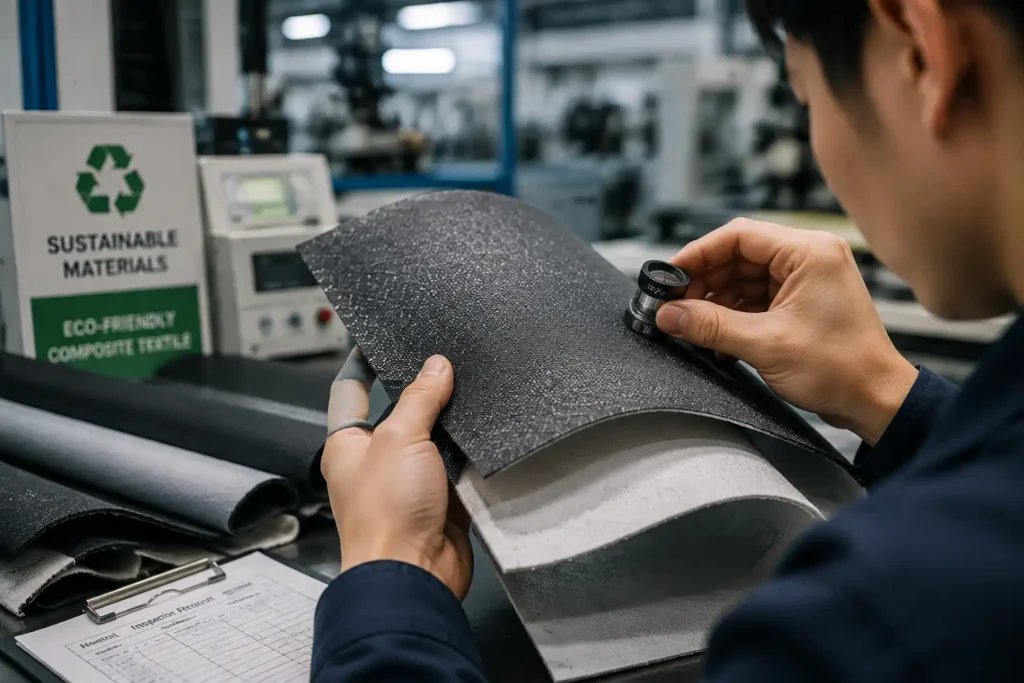
Upper material decides most of a shoe’s breathability, which is why suppliers treat it as the core specification. A composite upper can arrive already bonded and surface-treated, ready to cut, sew, and shape, so the breathability it reaches at the mill is the breathability the shoe keeps (shoe upper material).
Engineered mesh
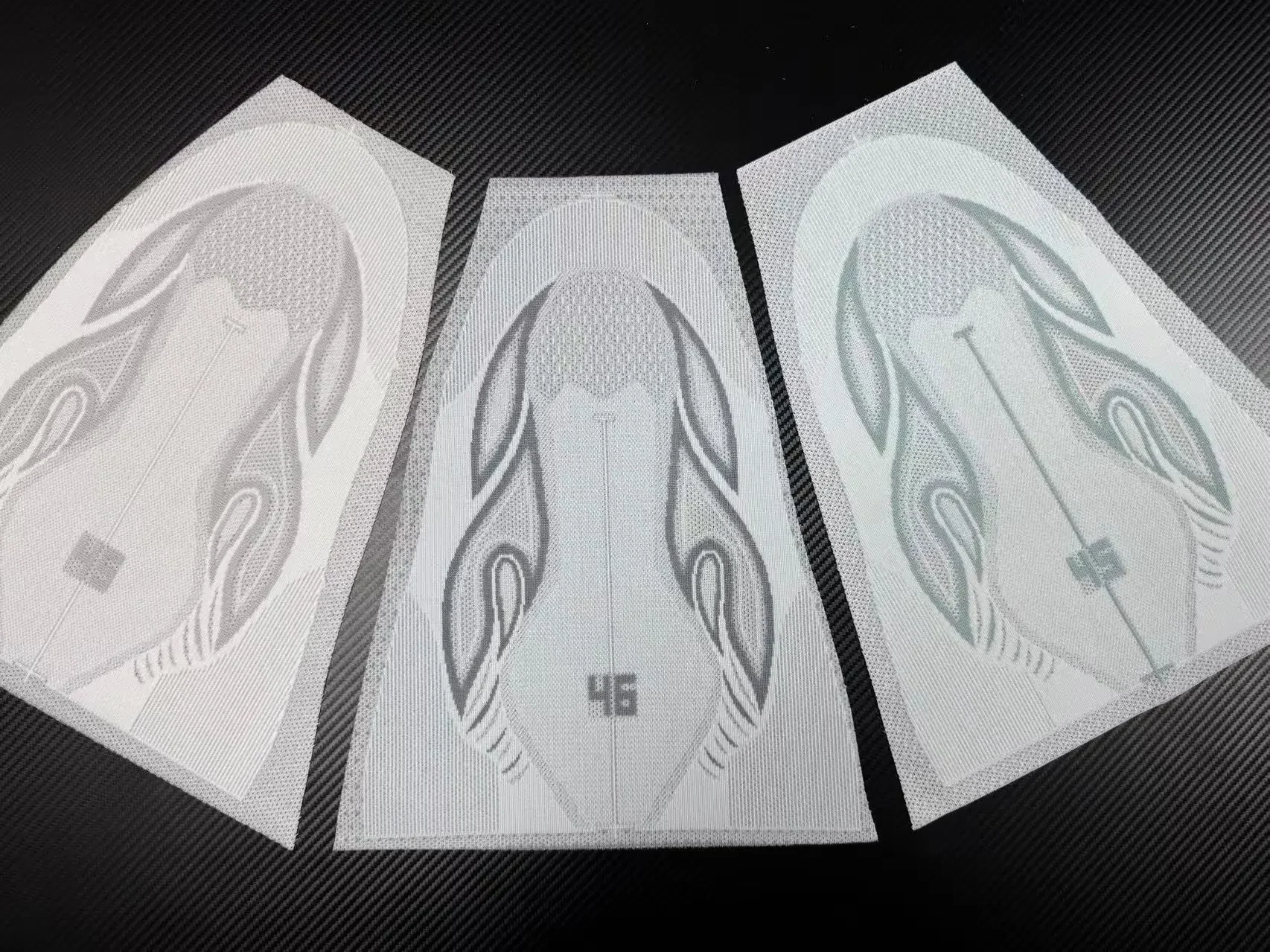
Engineered mesh is a knitted or woven synthetic structure with deliberately designed openings. Those openings allow convective air exchange rather than only vapor diffusion, which is why mesh outranks every solid material. The trade-off is protection: little weather resistance, less structural support, and fine mesh that clogs with dust and loses airflow.
Engineered knit
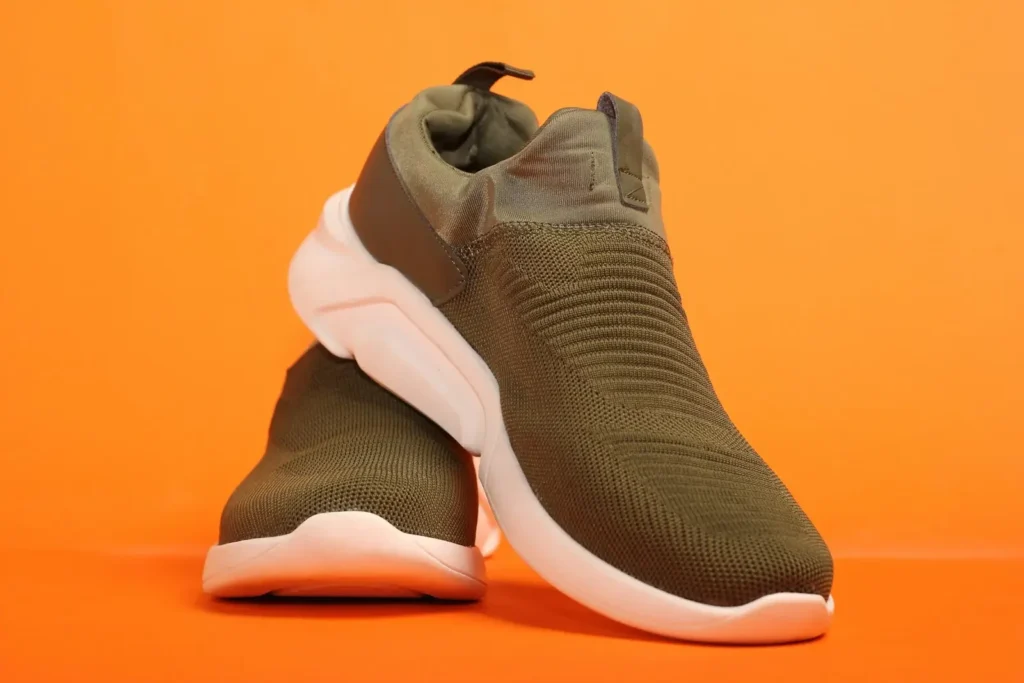
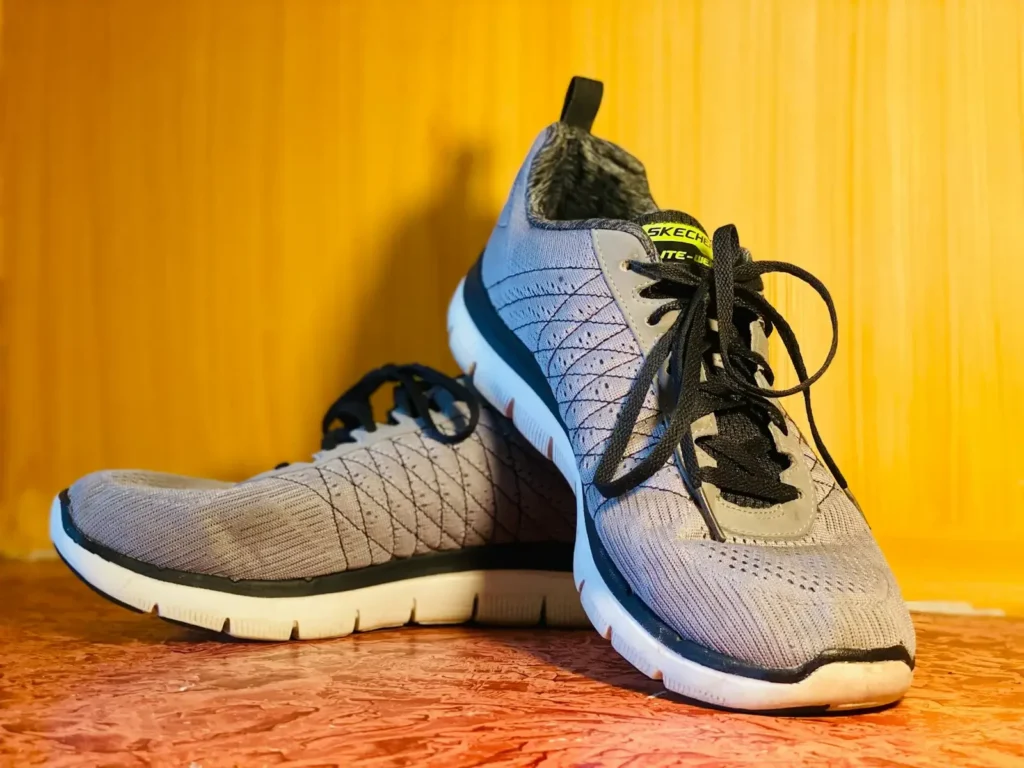
Engineered knit forms the whole upper of many athletic shoes from a single knitted piece, closer to a structured sock than a traditional shoe. Its breathability comes from the spaces between yarn loops rather than punched holes, so it transmits vapor well without mesh’s open structure. It avoids pressure points that concentrate sweat but shares mesh’s weakness on weather protection.
Woven textiles and Oxford constructions
Woven uppers use tighter, more regular structures than knit and hold their shape better. Plain woven nylon and polyester are common, and Oxford constructions give a denser, more abrasion-resistant surface for casual, outdoor, and work footwear. A woven upper trades a little airflow for durability, which is why woven constructions often carry the reinforcement panels on a mixed-material shoe (Oxford fabric upper).
Canvas, linen, and hemp
Canvas is a woven cotton or cotton-blend fabric with moderate vapor transmission and low cost. It breathes acceptably when dry, but cotton absorbs sweat and holds it, so canvas stays damp longer than synthetic mesh in humid conditions. Linen and hemp dry faster and suit warm-weather casual footwear.
Leather and split leather
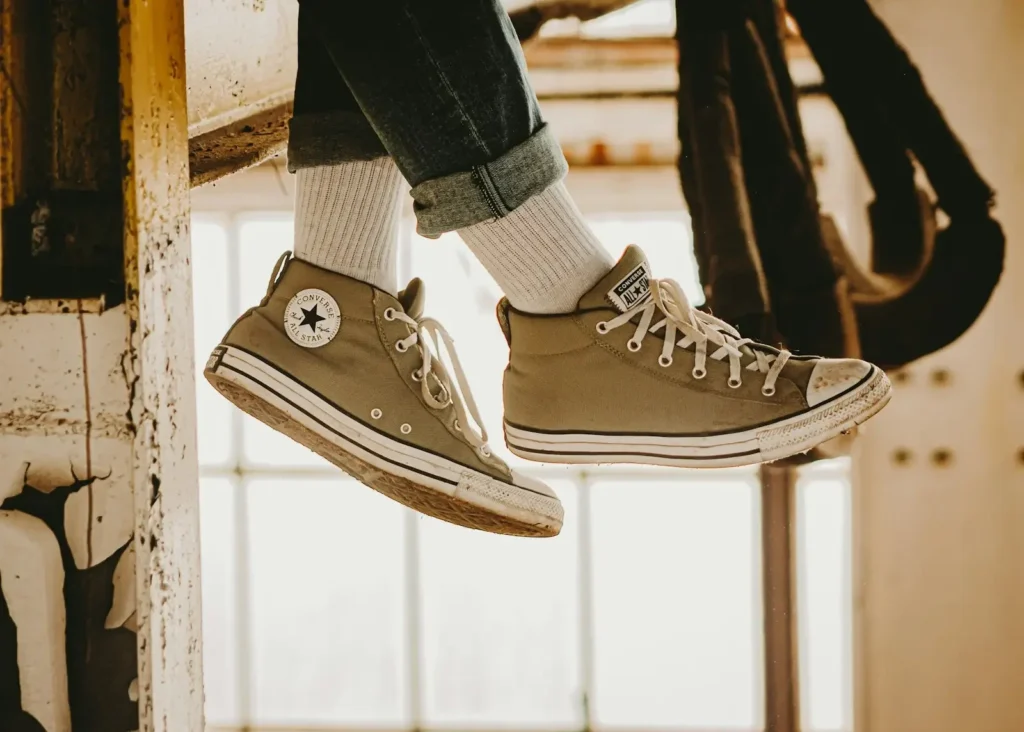
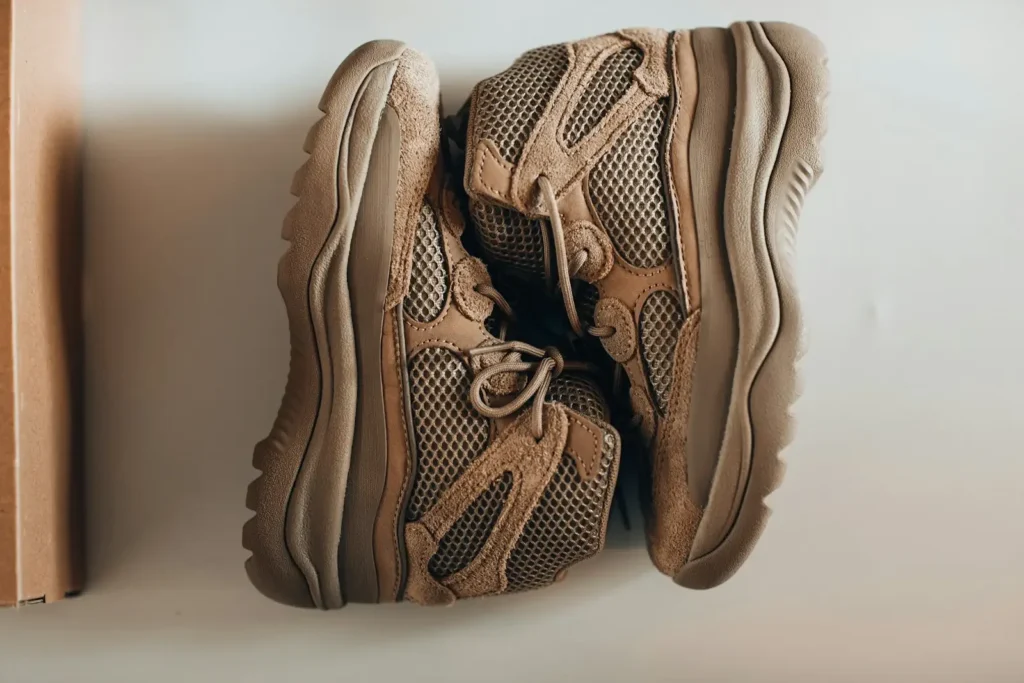
Uncoated full-grain and top-grain leather keeps the microscopic pores of the hide’s fiber network, so it breathes. The catch is the finish, since most footwear leather carries a polymer coating that seals those pores and turns a premium-looking material into a heat trap. Perforation restores useful airflow at the cost of some water resistance, and suede breathes reasonably because of its brushed, open surface.
Synthetic leather and coated PU
Coated synthetic leather is built on a solid polymer film that blocks vapor transfer almost completely unless the material is perforated or built with mesh panels. Synthetic uppers are consistent and cheap to produce, which keeps them common in court and budget footwear, but for a closed summer shoe, they are the poorest choice in the range.
| Material | Breathability | Main trade-off | Typical use |
|---|---|---|---|
| Engineered mesh | Very high | Minimal weather protection, clogs with dirt | Running, training, warm-weather casual |
| Engineered knit | High | Limited weather resistance | Everyday trainers, athletic wear |
| Woven and Oxford | Moderate to high | Less airflow than mesh, more durability | Casual, outdoor, work footwear |
| Canvas, linen, hemp | Moderate | Absorbs and holds moisture | Casual and summer footwear |
| Uncoated or perforated leather | Moderate | Coating or perforation decides performance. | Boots, dress, and durable casual |
| Coated synthetic leather | Low | Solid film traps vapor | Court and budget footwear |
Durability does not follow the breathability order, since canvas is generally more abrasion-resistant than mesh. And recycled polyester behaves much like virgin polyester in vapor transmission, so a recycled upper is not a downgrade.
Waterproof membranes that still let shoes breathe
A waterproof membrane can breathe because liquid water and water vapor interact with it differently. A microporous membrane holds pores far smaller than a water droplet but far larger than a vapor molecule, so rain cannot pass while sweat vapor can. A hydrophilic membrane has no pores and carries vapor across its polymer structure instead. Waterproofing and breathability are not opposites.
The membrane sits between the outer fabric and the lining, and its type sets the balance between water resistance and vapor transfer for the whole shoes membrane.
Microporous membranes
Microporous membranes are made from expanded polytetrafluoroethylene, stretched into a structure with billions of pores per square inch. Each pore is roughly 20,000 times smaller than a water droplet, so liquid cannot pass, and around 700 times larger than a water vapor molecule, so vapor escapes freely through polytetrafluoroethylene. This produces the highest vapor transfer of any waterproof barrier.
Hydrophilic membranes
Hydrophilic membranes use no pores. Polymer chains in the film absorb vapor at the warm, humid inner face and release it at the cooler outer face. With no open channels, they resist contamination from body oils and detergents better than porous films.
Lamination and three-layer builds
A membrane is only as good as the bond around it. Two-layer and three-layer constructions stack the outer fabric, the membrane, and a protective lining, and the lamination has to hold without blocking the surface it protects. Every stitch line and tape joint at the seams is both a path for water and a restriction on airflow.
Surface water repellency is a separate treatment and wears off with abrasion. When it fails, the outer fabric absorbs water and that saturated layer blocks vapor even though the membrane is intact.
Linings and insoles: the layers buyers overlook
A breathable upper cannot compensate for a non-breathable lining or a solid foam footbed. The layer against the skin decides whether vapor and liquid sweat leave the foot area, and cheap closed-cell foam insoles trap both. Linings and insoles are the cheapest place to improve or destroy a shoe’s breathability.
A soft lining of pigskin or a synthetic wicking knit pulls sweat away from the skin and dries quickly, which cuts odor and bacterial growth. Open-cell foam insoles with interconnected cells let air and vapor move under the foot, unlike closed-cell foams that insulate. A thin lining beats a thick one on airflow but offers less padding, so the trade-off has to be set against the shoe’s intended use (shoe lining material).
What decides real-world breathability beyond the material
Material specification sets the ceiling, and construction decides how much of that ceiling the shoe reaches. Perforation, ventilation zones, toe box volume, lining thickness, and whether the upper is fully fabric all shift real breathability by more than most buyers expect.
Perforation and ventilation zones
Physical openings let air move in and out directly instead of relying on vapor diffusion. Laser and die-cut perforation in leather or synthetic uppers creates precise, fray-resistant holes, and placing them in high-sweat areas such as the forefoot and midfoot helps more than spreading them evenly.
Fit and internal air volume
A tight toe box cancels a breathable material, because air cannot circulate where there is no space for it. A last with enough volume around the toes and forefoot lets air move and reduces the friction that drives blister formation.
Can a shoe be made entirely from fabric?
Yes, and many are. Casual shoes, sneakers, and some trainers use woven, knit, and mesh constructions for the whole upper, with no leather or coated panels. Breathability then depends on the fabric structure, the membrane if one is used, and the lining, since there is no solid material to compensate. A fully fabric upper is generally the most breathable option available, at the cost of water resistance and structural stiffness.
How to specify, test and source breathable materials
Write breathability into the specification as a measured value with a test method and conditions, not as a word. Ask for a stated minimum vapor transmission figure and the conditions it was measured under, test the sample against a wear standard you define, and re-check the same property at bulk to catch drift.
A workable sourcing sequence runs like this:
- Define the wear condition first, then the target, because warm-weather casual, high-intensity sport and wet-weather outdoor use point to different materials.
- Ask for vapor transmission and air permeability figures with the test method, temperature, and humidity conditions attached.
- Request physical samples and test them against your own wear standard rather than the supplier’s summary.
- Confirm the laminated or composite structure, thickness, weight, and roll width against the shoe part it will be cut from.
- Re-test the same properties on a bulk shipment sample, since lamination and finishing changes shift airflow more than buyers expect.
| Application | What to prioritize | Material direction |
|---|---|---|
| Warm-weather casual | Airflow and quick drying | Open mesh, knit, canvas, or linen |
| High-intensity sport | Vapor transfer and moisture management | Engineered mesh with a wicking lining |
| Wet-weather outdoor | Waterproofing without losing vapor transfer | Microporous or hydrophilic membrane in a laminated build |
| Work and uniform footwear | Durability with steady vapor transfer | Woven or Oxford upper and a breathable lining |
| Formal and dressed | Appearance with usable airflow | Uncoated or perforated leather, thin lining |
The sample stage is where a material is accepted or rejected, and the sealed sample becomes the reference for every later batch.
FAQ
What is the single most breathable shoe material?
Engineered mesh, because it allows convective air exchange rather than only vapor diffusion. A fully mesh upper reaches the highest air permeability of any common footwear material, though it gives up weather protection and some structural support.
Can a shoe be fully waterproof and still breathe?
Yes, if the waterproofing comes from a membrane rather than a solid coating. Microporous and hydrophilic membranes block liquid water while allowing water vapor to pass, which is how waterproof footwear avoids becoming airtight. A solid rubber or coated plastic layer cannot do this.
Does a thicker lining always reduce breathability?
It reduces it, but not in a straight line, and thickness is only one variable. A thick lining of open-cell wicking foam can outperform a thin lining of a non-wicking synthetic, because moisture management depends on how the material moves sweat, not only on how much sits between foot and outer.