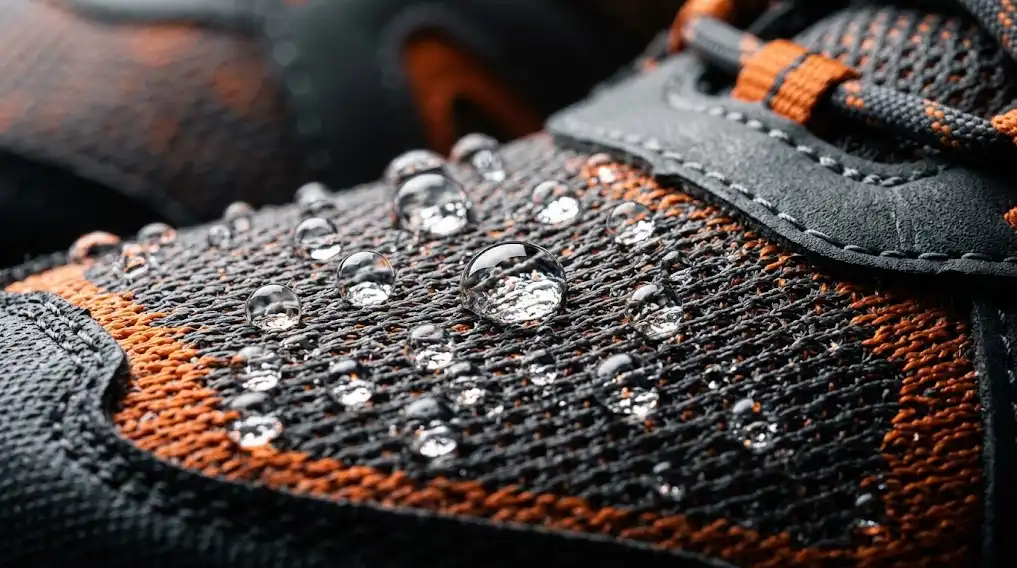
For footwear manufacturers and material engineers, sourcing the right waterproof shoe materials is a critical decision. Whether you are producing rugged outdoor hiking boots, protective safety shoes, or daily casual waterproof sneakers, the challenge is always the same: how to keep water out while allowing sweat and moisture to escape.
In this comprehensive guide, we will break down the most popular types of waterproof materials for shoes, key performance metrics to watch, and how to choose the right composite solutions for your production line.
Why Technical Waterproof Shoe Materials Matter
Modern consumers are no longer satisfied with heavy, unbreathable rubber boots. They demand lightweight, flexible, and comfortable footwear that performs well in extreme weather conditions. This shift has driven footwear brands to move away from traditional solid barriers and embrace functional footwear materials.
The secret to modern waterproof footwear lies in advanced membrane technologies and laminated composite structures that offer a perfect balance of waterproofness and breathability.
Common Types of Waterproof Materials for Shoes
When sourcing materials for your next footwear project, you will generally encounter three main categories of waterproof solutions:
1. TPU Waterproof Membranes
Thermoplastic Polyurethane (TPU) is one of the most widely used materials in the footwear industry. A TPU membrane provides excellent elasticity, durability, and waterproofing. It is highly flexible, making it ideal for sports shoes and outdoor footwear where foot movement is constant. Additionally, TPU is known for being more environmentally friendly compared to traditional PVC.
2. PTFE Breathable Membranes
Polytetrafluoroethylene (PTFE) membranes represent the high-end tier of waterproof and breathable footwear materials. These membranes contain millions of microscopic pores per square inch. These pores are incredibly small—much smaller than a drop of water, but large enough for water vapor (sweat) molecules to pass through. This ensures maximum breathability for high-performance trekking and hiking shoes.
3. Laminated Composite Fabrics
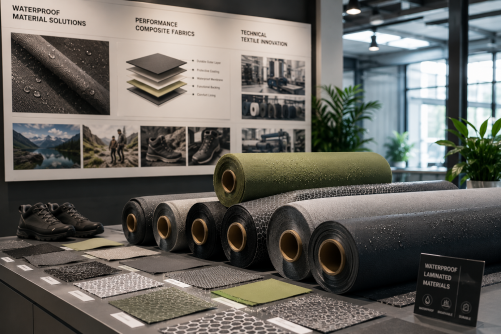
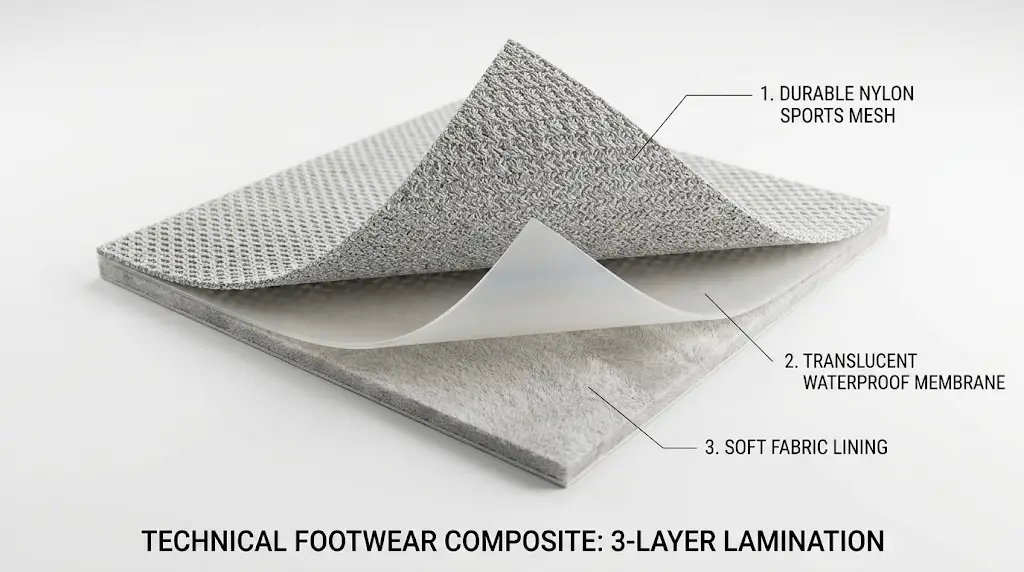
Most shoe factories do not use raw membranes directly, as handling ultra-thin films can slow down the shoe assembly process. Instead, they source ready-to-use composite shoe materials. By laminating the waterproof membrane with various shoe upper materials (such as nylon mesh, knitted fabrics, or non-woven linings), suppliers provide a robust, easy-to-cut, and easy-to-sew fabric.
Key Performance Metrics You Must Know
When communicating with your materials supplier, always specify your testing requirements. Two critical metrics define the quality of waterproof breathable shoe materials:
- Hydrostatic Pressure (Water Resistance): Measured in mmH2O. This indicates how much water pressure the material can withstand before leaking. Safety and outdoor shoes usually require high hydrostatic pressure ratings.
- MVTR (Moisture Vapor Transmission Rate): This measures breathability (how much water vapor can pass through the fabric in 24 hours). A higher MVTR means the wearer’s feet will stay drier and more comfortable.
Always ensure your materials are tested according to recognized international guidelines, such as ISO or SATRA testing standards.
Applications of Waterproof Footwear Materials
Different shoes require different material configurations:
- Hiking and Outdoor Shoes: Require high durability, abrasion resistance, and excellent MVTR to handle sweat during long walks.
- Safety and Work Shoes: Focus heavily on chemical resistance, tear strength, and reliable waterproofing to protect workers in harsh environments.
- Running Shoes: Demand ultra-lightweight and highly flexible waterproof uppers to maintain athletic performance.
Sourcing Reliable Materials with Galetex
Finding a supplier that understands the delicate balance of functional textiles can save your factory significant time and money. At Galetex, we specialize in technical footwear materials, providing tailored laminated solutions for global shoe manufacturers.
Whether you need a specific TPU waterproof membrane, highly breathable PTFE structures, or customized composite shoe uppers, we offer stable production, quality consistency, and application-specific solutions designed for your unique footwear projects.
FAQ About Waterproof Footwear Materials
What is the difference between waterproof and water-resistant shoe materials? Water-resistant materials treat the surface (like DWR coating) to repel light rain, but water will eventually soak through. True waterproof shoe materials utilize a physical barrier (like a PU or TPU membrane) to completely block water penetration under pressure.
Can waterproof materials be lightweight? Yes. Modern lamination technology allows for the creation of ultra-thin composite materials that add minimal weight to the final shoe, making them perfect for athletic and running footwear.
How do I choose between PU and TPU membranes? TPU generally offers better elasticity, cold resistance, and environmental benefits compared to standard PU. For high-performance footwear, TPU is usually the preferred choice.