Fabric decides how a shoe breathes, flexes, and holds up in daily wear. For footwear brands and contract manufacturers, choosing among shoe fabric suppliers is a sourcing decision that shapes product performance, production cost, and time to market. Demand is moving with the wider footwear business: according to Grand View Research, the global footwear market was valued at USD 476.8 billion in 2025 and is projected to reach USD 675.6 billion by 2033, growing at a CAGR of 4.5% from 2026 to 2033. This guide profiles ten shoe fabric suppliers worldwide, from membrane specialists to synthetic leather producers, and explains what to check before you place an order.
| Company Name | Region | Brief Introduction |
|---|---|---|
| W. L. Gore & Associates | USA | Developer of GORE-TEX waterproof, windproof, and breathable product technologies used in footwear, outerwear, and gloves. |
| Toray Industries, Inc. | Japan | Diversified materials group producing nylon, polyester, and acrylic fibers plus ultruede microfiber materials for footwear and apparel. |
| Schoeller Textil AG | Switzerland | Technical fabric mill with more than 150 years of history, supplying performance textiles for footwear, sports, and workwear. |
| Sympatex GmbH | Germany | Producer of a recyclable polyester-based waterproof and breathable membrane used in outdoor footwear and apparel laminates. |
| Freudenberg Performance Materials | Germany | Technical textiles company supplying footwear components, including reinforcements, insoles, uppers, linings, and insulation. |
| San Fang Chemical Industry Co., Ltd. | Taiwan, China | PU synthetic leather and film manufacturer serving sports shoes, balls, bags, and automotive interior markets. |
| Tiong Liong Industrial Co., Ltd. | Taiwan, China | Functional textile supplier focused on waterproof, durable, and jacquard fabrics for footwear and bags. |
| Huafon Microfibre (Shanghai) Co., Ltd. | China | Microfiber synthetic leather manufacturer with production bases in Shanghai and Qidong, exporting to more than 40 countries. |
| Apex Mills | USA | American custom textile mill making warp knits, mesh nettings, and 3D spacer fabrics for technical footwear applications. |
| Galetex | China | Shoe material specialist laminating TPU and PTFE waterproof, breathable membranes and Oxford fabrics for global footwear makers. |
1. W. L. Gore & Associates
Introduction
W. L. Gore & Associates is headquartered in Newark, Delaware, USA, and was founded in 1958. The company is best known in footwear for its GORE-TEX product technologies, which combine waterproof, windproof, and breathable protection in laminates built into shoes and boots. Its footwear portfolio includes constructions such as GORE-TEX Invisible Fit and GORE-TEX SURROUND, developed for different fits and climate demands. Gore works directly with leading global footwear brands, tailoring each product technology for uses that range from everyday wear to aerobic and extreme outdoor activities.
Features
- GORE-TEX footwear laminates with durably waterproof, windproof, and breathable performance
- Multiple footwear constructions, including Invisible Fit and SURROUND, for different shoe designs
- Decades of membrane and laminate know-how across apparel, footwear, and gloves
- Direct co-development model with global shoe brands
Best for
Best for: outdoor, hiking, running, and work footwear brands that need a proven waterproof, breathable laminate with strong consumer recognition.
2. Toray Industries, Inc.
Introduction
Toray Industries is headquartered in Tokyo, Japan. Its fiber business focuses on three major synthetic fibers: nylon, polyester, and acrylic, supplied from raw yarn through processed and spun yarn for clothing, industrial, and everyday applications. For footwear sourcing, Toray is relevant through its high-performance knit, mesh, and microfiber materials, including the Ultrasuede brand. The company has also invested in environmentally oriented products, such as its &+ recycled fiber made from used plastic bottles, which supports brands building recycled-content shoe lines.
Features
- Nylon, polyester, and acrylic fiber platforms covering many shoe upper and lining needs
- Ultrasuede microfiber material for premium footwear and lifestyle products
- Recycled fiber options such as the &+ upcycled polyester line
- Global supply network serving major apparel and footwear programs
Best for
Best for: large athletic and lifestyle footwear brands that need consistent synthetic fiber and microfiber materials at a global scale.
3. Schoeller Textil AG
Introduction
Schoeller Textil AG is headquartered in Sevelen, Switzerland, where the company also operates its main production site, with a second mill in Balingen, Germany. Founded in 1868 as Switzerland’s first worsted yarn spinning mill, Schoeller now develops and produces technical fabrics and finishing technologies for sports, lifestyle, fashion, footwear, workwear, and medical markets. The company serves more than 500 brand partners in 50 countries and produces over six million meters of performance textiles per year. It was one of the founding developers of the Bluesign system.
Features
- Stretch softshell and abrasion-resistant fabrics used in footwear and outdoor products
- Proprietary technologies including the c_change membrane, 3XDRY, ecorepel, and coldblack
- In-house weaving, dyeing, lamination, and coating in Switzerland and Germany
- Early bluesign adoption and long-standing OEKO-TEX certification history
Best for
Best for: European outdoor and work footwear brands that want high-function fabrics with verified environmental credentials.
4. Sympatex GmbH
Introduction
Sympatex GmbH is headquartered in Unterföhring, near Munich, Germany. The company produces a polyester-based membrane and laminate range positioned around one idea: high function plus full recyclability. Its hydrophilic, non-porous membrane is waterproof, breathable, windproof, and durable, and it can be recycled like a PET bottle. Sympatex works closely with outdoor brands on closed-loop product concepts, which makes it a frequent choice for footwear programs that market sustainability alongside weather protection.
Features
- Hydrophilic non-porous membrane that moves water vapor outward along molecular chains
- Waterproof, breathable, windproof, and durable performance profile
- Polyester-based membrane designed for recycling within a closed loop
- Laminate development in cooperation with brand partners
Best for
Best for: outdoor footwear brands that want a waterproof, breathable membrane with a credible recycling story for EU markets.
5. Freudenberg Performance Materials
Introduction
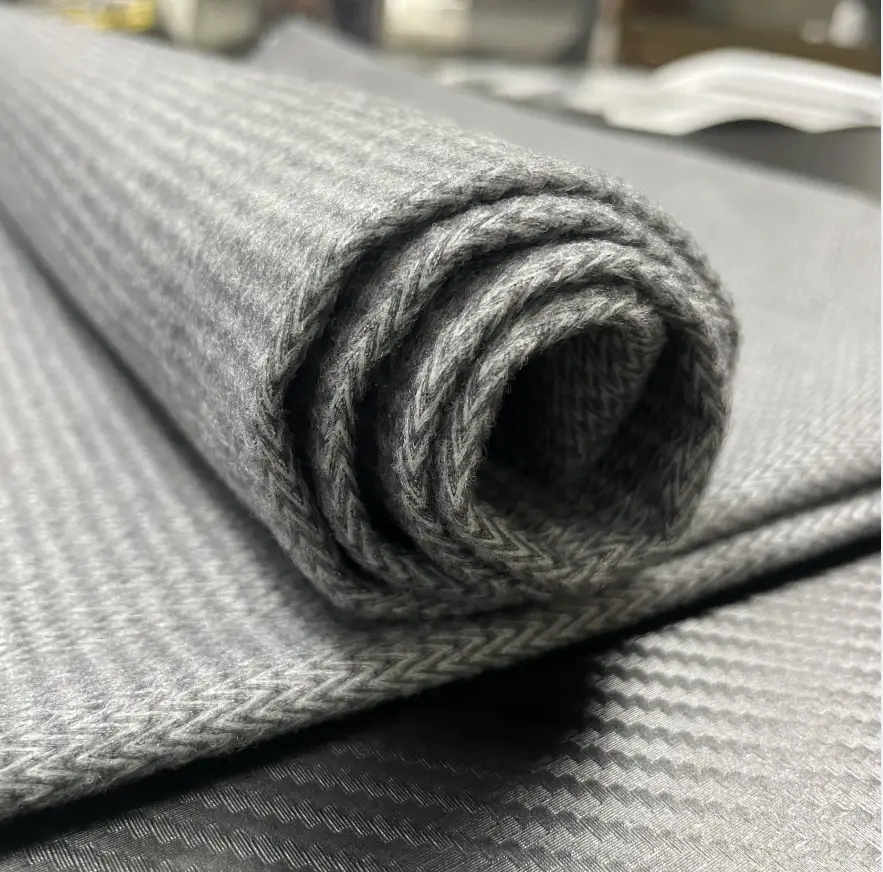
Freudenberg Performance Materials is headquartered in Weinheim, Germany, and is part of the Freudenberg Group, a technology group founded in 1849. The company describes itself as a global leader in interlinings and footwear components. Its footwear portfolio covers reinforcement materials, insoles, uppers and linings, insulation, and functional components that improve durability, comfort, and manufacturing efficiency. With 36 production sites worldwide, Freudenberg supports shoe programs from early design through series production.
Features
- Complete footwear component range: reinforcements, insoles, uppers, linings, and insulation
- comfortemp thermal insulation for cold-weather footwear
- Textile-to-textile recycled product range for footwear applications
- OEKO-TEX certified products and a global production footprint
Best for
Best for: footwear manufacturers and brands that want one supplier for multiple shoe components rather than single fabrics.
6. San Fang Chemical Industry Co., Ltd.
Introduction
San Fang Chemical Industry was founded in 1973 and is headquartered in Kaohsiung, Taiwan, China. The company manufactures artificial leather, synthetic resin, films, hot melt adhesives, and functional fibers. Its PU synthetic leathers, TPU films, and hot melt films are widely used in sports shoes, balls, bags, bicycle saddles, and vehicle interiors. San Fang runs factories in Taiwan, mainland China, Vietnam, and Indonesia, with offices in additional markets, and works with global sports brands under GRS, OEKO-TEX, ISO, and bluesign certification frameworks.
Features
- Wet-process PU synthetic leather and microfiber artificial leather for shoe uppers
- TPU and hot melt films for footwear lamination and assembly
- Multi-country production base across Taiwan, mainland China, Vietnam, and Indonesia
- Certified against GRS, OEKO-TEX, ISO, and Bluesign standards
Best for
Best for: sports and casual footwear brands sourcing synthetic leather uppers with multi-country production backup.
7. Tiong Liong Industrial Co., Ltd.
Introduction
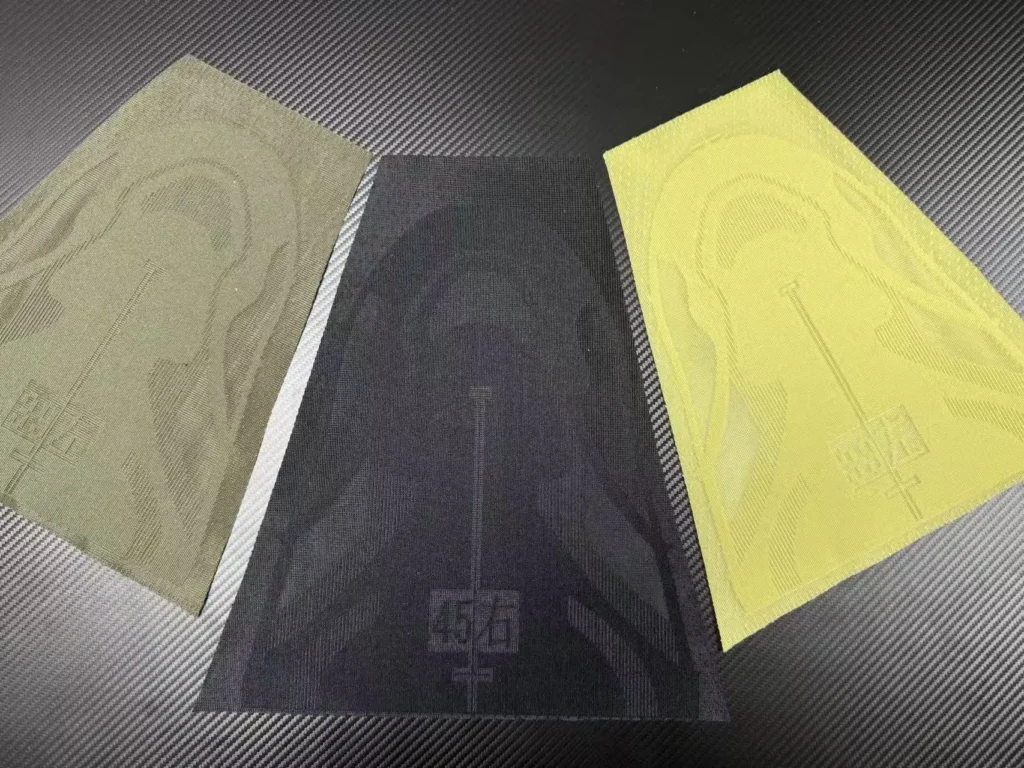
Tiong Liong Industrial was founded in 1979 and is headquartered in Taichung, Taiwan, China, as part of the Namliong Group. The company supplies functional textiles with a strong footwear focus: waterproof and breathable fabrics, durable textiles, engineering jacquard fabrics, and eco-friendly materials. It operates shoe fabric factories in mainland China and Vietnam and delivers locally from Taiwan, mainland China, and Vietnam. Tiong Liong is the exclusive Asian distributor of CORDURA AFT breathable fabric and offers its ARIAPRENE material family for footwear and accessories.
Features
- Waterproof, breathable, abrasion-resistant, and engineering jacquard shoe fabrics
- Exclusive Asian distribution of CORDURA AFT fabric
- ARIAPRENE foam package materials, including recyclable Terra variants
- GRS certification and Higg Index adoption, with factories in mainland China and Vietnam
Best for
Best for: athletic, outdoor, and protective footwear brands that need functional knit and jacquard uppers with fast regional delivery in Asia.
8. Huafon Microfibre (Shanghai) Co., Ltd.
Introduction
Huafon Microfibre is headquartered in Jinshan District, Shanghai, China, and was founded in 2002. The company specializes in microfiber polyurethane synthetic leather, covering microfiber base, micro suede, and microfiber leather products. It runs two manufacturing bases, in Shanghai and Qidong, Jiangsu, with a full production chain from PU resin to finished material, and its products serve footwear, bags, upholstery, automotive, and apparel markets in more than 40 countries and regions. Huafon also helped draft Chinese industry standards for microfiber synthetic leather used in shoe uppers.
Features
- Full-chain microfiber synthetic leather production, from resin to finishing
- Microfiber base, micro suede, and coated microfiber leather lines
- Two production bases in Shanghai and Qidong
- Exports to more than 40 countries and regions
Best for
Best for: brands and trading companies buying leather-like microfiber shoe upper materials in high volumes.
9. Apex Mills
Introduction
Apex Mills is headquartered on Long Island, New York, USA, with production facilities in North Carolina. Founded in 1943, the company designs and manufactures custom textiles in the United States, including elastomerics, circular knits, mesh nettings, and 3D spacer fabrics. For footwear, Apex Mills works as a development partner: in one documented case, it engineered a texturized polyester lining that met footwear abrasion standards while keeping the foot cooler, then adjusted the knit structure to reach a workable cost.
Features
- Custom warp knits, mesh nettings, and 3D spacer fabrics
- Made in the USA, with design and production since 1943
- Collaborative development process for application-specific fabrics
- Experience meeting footwear industry abrasion and wear standards
Best for
Best for: North American footwear brands that need custom mesh or lining fabrics from a domestic supply chain.
10. Galetex
Introduction
Galetex was founded in 2008 and is located in Chendai Town, Jinjiang City, Quanzhou, Fujian Province, China, a region known as the shoe capital of China. The company integrates research, development, production, and trade and specializes in the lamination of shoe materials. Its core lines include TPU membranes, PTFE waterproof breathable membranes, and Oxford fabric that can be processed with anti-siphon, water-repellent, and anti-yarn-pull-out treatments. The factory runs standardized production workshops and professional testing laboratories and supplies footwear manufacturers and B2B buyers worldwide with shoe upper material, shoe lining material, and waterproof shoe membrane products.
Features
- TPU and PTFE waterproof, breathable composite fabrics for outdoor footwear
- Oxford fabric with anti-siphon, water-repellent, and anti-yarn pull-out finishes
- Customizable GSM, thickness, waterproof grade, width, and surface technology
- Free samples, small trial orders, and OEM/ODM support for global buyers
Best for
Best for: outdoor and functional footwear manufacturers that need custom-laminated waterproof shoe fabrics with flexible order sizes.
How to choose the right shoe fabric supplier
Company reputation alone will not tell you whether a supplier fits your shoe program. A practical evaluation should weigh material compatibility, verified quality, production capability, customization support, lead time, and after-sales service together. The following factors cover what matters most when comparing shoe fabric suppliers.
Evaluate material and technical fit.
Start with the shoe, not the supplier catalog. Define whether you need upper fabrics, linings, membranes, synthetic leather, or reinforcement components, then check waterproof rating, breathability, abrasion resistance, and weight against your target shoe type. A supplier strong in PU synthetic leather may not be the right source for engineered jacquard uppers, and the reverse is also true.
Verify quality standards and certifications.
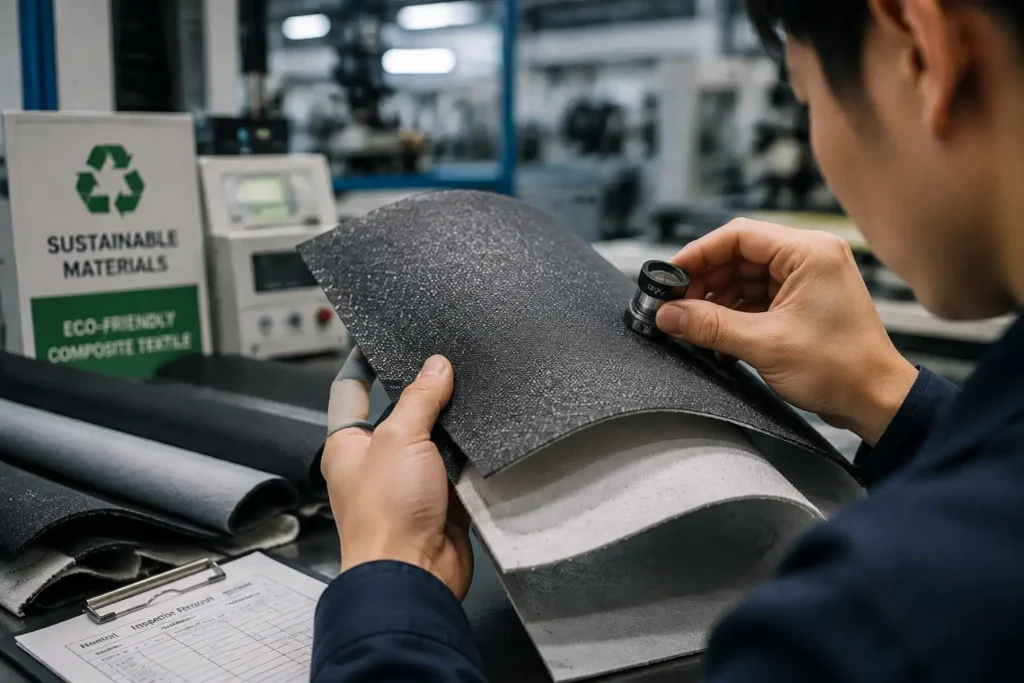
Ask for current OEKO-TEX, GRS, Bluesign, or ISO documentation and confirm the certificates cover the exact material you plan to buy, not just the company in general. Request test reports for water pressure resistance, lamination fastness, and harmful substance limits, especially for waterproof composite fabrics where delamination is a common defect.
Review production capacity and lead times.
Confirm monthly capacity, sampling speed, and realistic bulk lead times in writing. If your volumes are small or seasonal, check minimum order quantities and whether the supplier accepts trial orders. Suppliers with multiple production bases can also reduce risk when one region faces disruption.
Consider customization and support.
Footwear materials often need adjustments in GSM, thickness, width, color, or surface finish. Check how much of this the supplier can do in-house, whether engineers join development discussions, and how after-sales issues such as claim handling and replacement shipments are managed.
Conclusion
The ten shoe fabric suppliers in this list cover four broad sourcing routes. Membrane specialists such as Gore and Sympatex supply waterproof, breathable technology; technical textile mills such as Schoeller, Toray, Tiong Liong, and Apex Mills cover performance fabrics and custom knits; synthetic leather producers such as San Fang and Huafon Microfibre serve leather-alternative uppers; and component suppliers such as Freudenberg provide everything from reinforcements to insoles.
Lamination specialists like Galetex sit between these groups, combining fabrics and membranes into ready-to-use composites. Match the supplier type to your shoe category first, then apply the checks in the previous section on certifications, capacity, customization, and support. That process will narrow this list to the two or three partners that actually fit your production plan.