A pair of feet can release a surprising amount of moisture during an ordinary day of walking, standing, or commuting, and the heat that builds inside a closed shoe has nowhere to go unless the material lets it out. Shoe material is the single biggest factor in whether that warmth and sweat leave the shoe or stay trapped against the skin, which is why buyers and manufacturers keep asking the same two questions: What actually makes a material breathable, and can a material keep water out while still letting the foot breathe? The answer sits at the intersection of fabric structure, membrane science, and how a shoe is built layer by layer.
Breathable shoe material is any upper, lining, or membrane that lets air and water vapor escape so feet stay dry and cool, while a waterproof material for shoes blocks liquid water from getting in; modern footwear combines both through microporous membranes, so the best waterproof material for shoes today is usually a breathable membrane laminated into the lining rather than a solid, sealed shell.
The sections below explain how these materials work, compare the main options side by side, and show where breathable and waterproof shoes fit different climates and activities, starting with the shoes’ membrane that makes both possible.

What a breathable shoe material actually is
A breathable shoe material moves heat and moisture away from the foot instead of holding them in, which keeps the skin dry and reduces the conditions that cause odor, irritation, and discomfort.
Breathability is not one single property. It is the combined result of two separate mechanisms working together inside the shoe microclimate.
Air permeability and ventilation
Air permeability is the material’s ability to let air pass through its structure. An open mesh upper moves far more air than a tightly woven coated fabric, and that moving air carries heat away from the foot. Ventilation also depends on shoe design, not just the fabric: a thin perforated tongue, breathable collar lining, and internal channels all help air circulate around the top and sides of the foot. When air flows, the foot runs cooler, and cool feet sweat less.
Moisture vapor transmission
The second mechanism is moisture vapor transmission, often shortened to MVTR. Feet sweat even when they are not hot, and that sweat leaves the skin as invisible vapor. A breathable material lets that vapor pass outward through the upper or lining so it can evaporate on the outside. This is different from absorbing liquid. Cotton, for example, takes in sweat and holds it against the skin, which is why many people ask whether 100% cotton is a breathable fabric. Cotton does let air through, so it feels airy in dry conditions, but it absorbs moisture rather than moving it away, so it stays damp and clammy once the foot perspires. A material can be air-permeable and still poor at moisture management if it traps liquid the way cotton does.
The footwear research association SATRA measures this behavior with its TM47 test, which recreates the warm, humid conditions inside a worn shoe and tracks how much water vapor passes through a material or a layered combination. That method is the basis for comparing how well different linings and membranes actually perform.
How breathable shoe materials work
Breathable materials work by giving vapor and air a path out of the shoe, using either an open physical structure, natural pores in the fiber, or engineered ventilation built into the shoe.
The mechanism changes with the material, and most shoes use more than one approach at once.
Open-weave synthetics
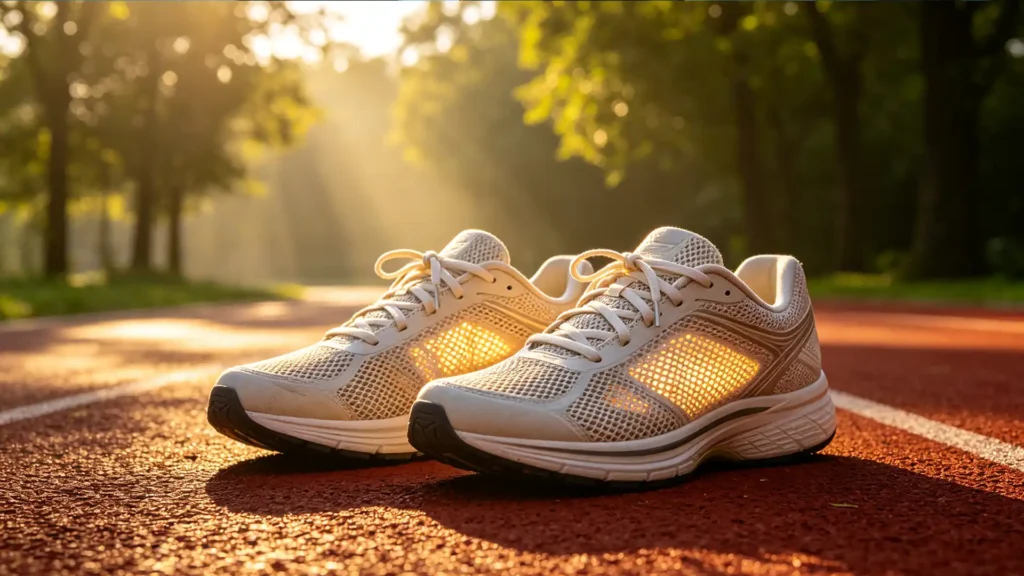
Engineered mesh and knit uppers are the most direct route to breathability. Mesh is a woven or knitted structure with visible pores, so air moves through it with almost no resistance. Knit uppers work the same way but with a tighter, more flexible construction that wraps the foot like a sock while still letting air through. Both rely on physical openness: the more open the weave, the more air and vapor escape, and the cooler the foot stays. The trade-off is protection. An open mesh keeps almost nothing out, so a puddle or a shower means wet feet.
Leather, canvas and natural pores
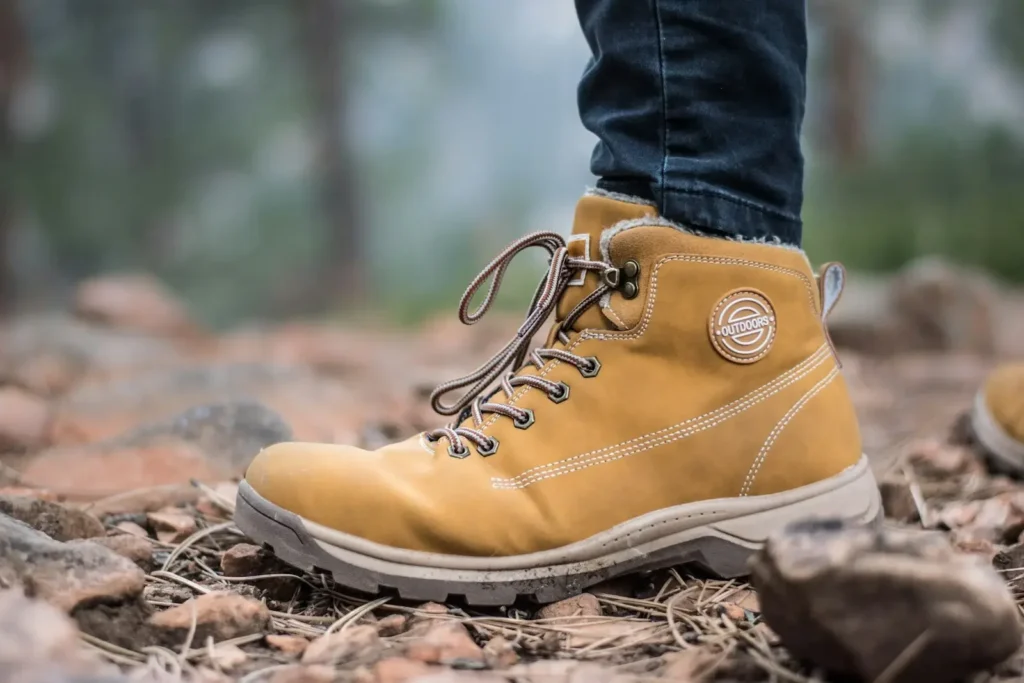
Leather breathes through its natural fiber structure. Full-grain leather has inherent pores that let moisture vapor escape, though not as freely as mesh. Suede is even more porous because of its soft, napped surface, which gives better airflow than smooth leather at the cost of more care. Canvas, a tight cotton weave, sits in the middle: it is air-permeable and light, but like cotton, it tends to hold moisture rather than shed it, and it offers little resistance to water. For buyers weighing natural options, the practical split is simple. Leather and canvas give structure, a more formal look, and moderate breathability, while mesh and knit give the highest airflow for warm or active use.
Built-in ventilation design
Material is only half the story. Tongue and collar construction, perforated footbeds, and internal air channels add ventilation beyond the upper itself. A breathable lining behind the upper helps pull vapor toward the surface, and a removable perforated insole lets air reach the underside of the foot, where heat builds fastest. When you choose an upper, the supporting layers matter just as much, which is why many manufacturers look at the full shoe’s upper material stack rather than a single fabric when they spec a breathable model.
Do breathable waterproof shoes exist
Yes, breathable waterproof shoes exist, and they work by pairing a tightly woven or coated outer layer with a microporous membrane that blocks liquid water while letting water vapor through.
The idea sounds contradictory until you look at scale. A drop of liquid water is huge next to a molecule of water vapor, and a microporous membrane is engineered around that difference.
The microporous membrane principle
A microporous membrane contains billions of tiny pores. Each pore is large enough for a water vapor molecule to pass through, but roughly twenty thousand times smaller than the smallest raindrop, so liquid water cannot push through under normal pressure. The membrane sits laminated between the outer fabric and the lining, acting as the barrier layer. Rain and puddles stay out, while the sweat vapor your foot produces moves outward and evaporates. The measurement that matters here is hydrostatic head, the height of a water column the material can hold before it leaks, tested to standards such as ISO 811. A light rain needs around 5,000 mm, moderate rain around 10,000 mm, and heavy downpours 15,000 mm or more.
Balancing waterproof rating and breathability
Waterproofing and breathability pull against each other. A higher hydrostatic head usually means a denser barrier, which can slow vapor escape. That is why the second number, MVTR, matters: it shows how much vapor the assembly still lets through, expressed in grams per square meter over 24 hours. A strong breathable waterproof shoe scores high on both. The third useful figure is RET, the resistance to evaporative heat transfer measured on a sweating hotplate to ISO 11092. RET under 6 is considered very breathable and suited to high-exertion use, while 6 to 13 is breathable for moderate activity. The membrane layer is where this balance is set, and it is the reason modern waterproof shoes no longer feel like heavy, stiff rubber boots.
What is the most breathable material for shoes
Engineered mesh is generally the most breathable shoe material because its open structure lets the most air and vapor through, with knit close behind and perforated leather or canvas further down the scale.
If pure ventilation is the goal, the ranking is fairly consistent across materials.
| Material | Breathability | Durability | Water resistance | Best use |
| Engineered mesh | Very high | Moderate | Low | Running, hot weather, gym |
| Knit | High | Moderate | Low | Casual, travel, daily wear |
| Canvas | Good | Moderate | Low | Summer, light casual use |
| Perforated leather | Fair to moderate | High | Low to moderate | Office, smart casual |
| Full-grain leather | Moderate | High | Low to moderate | All-season, formal |
Engineered mesh
Mesh leads to airflow because nothing blocks the path. It is the standard for running and athletic shoes, and premium meshes place larger holes in high-heat zones while keeping structure where the foot needs support. The downside is protection and cleaning: mesh sheds water poorly and traps less dirt but shows stains more easily.
Knit uppers
Knit gives a sock-like fit with excellent flexibility and strong breathability. It conforms to the foot and uses varying stitch density to open breathable zones where they help most. It stretches over time and offers less structural support than a built shoe, which is why it suits casual and lifestyle wear more than rugged terrain.
Leather, canvas and other options
Leather and canvas trade some airflow for durability, weather resistance, and appearance. Perforated leather improves ventilation while keeping a formal look, and suede breathes a little better than smooth leather. For buyers who need one shoe across seasons and settings, leather or canvas is the balanced pick even though neither matches mesh for raw cooling.
Best waterproof material for shoes
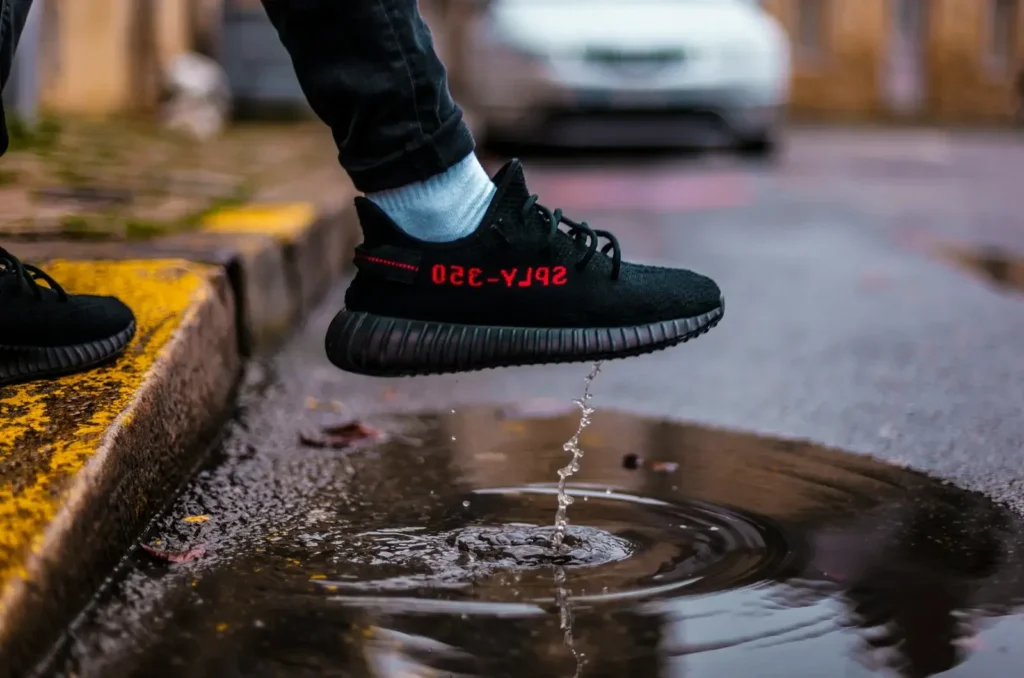
The best waterproof material for shoes is usually a microporous membrane laminated into the lining, backed by a water-resistant upper, because it keeps rain out while still letting the foot breathe.
Waterproofing comes from three places: the membrane, the upper coating, and the construction that seals the seams.
Waterproof membranes
Membranes do the real work, and three polymer types dominate. Expanded PTFE (ePTFE) uses a physical microporous structure with the highest breathability and the longest flex life. Polyurethane (PU) is cheaper and flexible but loses breathability as body oils clog its hydrophilic chain. Thermoplastic polyurethane (TPU) sits between them, with better durability than PU at a lower cost than ePTFE. The numbers show the split clearly.
| Membrane | Waterproof rating (mm H₂O) | MVTR (g/m²/24h) | RET | Flex life (cycles) |
| ePTFE | 10,000 to 28,000 | 8,000 to 15,000 | 4 to 8 | 100,000 plus |
| PU | 5,000 to 10,000 | 3,000 to 5,000 | 8 to 15 | 30,000 to 50,000 |
| TPU | 5,000 to 15,000 | 4,000 to 8,000 | 6 to 12 | 50,000 to 80,000 |
Waterproof rubber and coated uppers
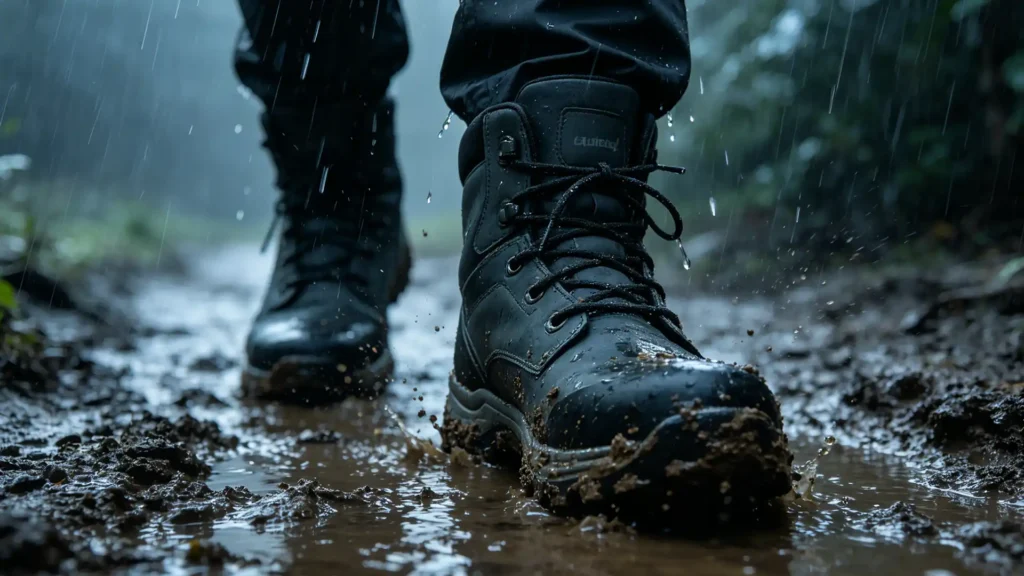
Waterproof rubber shoes use a solid rubber shell that blocks water completely, which is why they suit wet, messy, or industrial settings. The cost is breathability: solid rubber traps heat and vapor with no path out, so rubber shoes are best where staying dry matters more than staying cool. Coated and laminated fabric uppers sit between rubber and mesh. A waterproof fabric upper pairs a treated face fabric with a membrane, giving rain protection with far better airflow than rubber. For most everyday buyers, a membrane-based waterproof shoe beats a fully rubber one unless the environment is consistently flooded or chemically wet.
The shoe’s lining material behind the membrane carries much of the comfort load. A moisture-wicking liner pulls sweat off the skin and passes it to the membrane, so the lining choice is as important as the membrane itself when you judge real-world performance.
How to make shoes more breathable
You can make shoes more breathable by managing what touches the foot, giving each pair time to dry, and keeping the materials clean and aired.
Even a breathable shoe underperforms if the rest of the system works against it.
Sock and insole choices
Socks decide a large share of foot climate. Cotton socks absorb sweat and hold it against the skin, which cancels out a breathable upper. Merino wool blends and synthetic wicking socks move moisture away and dry faster, so they pair with mesh or knit uppers far better. A breathable or perforated aftermarket insole also helps by letting air reach the sole of the foot, where heat gathers.
Care and rotation habits
Rotation is the simplest habit. Wearing one pair every day gives it no time to dry, so moisture builds in the lining and the shoe feels hotter each wear. Alternate two pairs so each has a full day to air out. After wear, loosen the laces, pull the tongue, and let the shoes dry in a ventilated spot away from direct heat, which protects the adhesives and the membrane. A light brush keeps mesh and knit open because packed dirt closes the very pores that do the breathing.
How to choose between breathable and waterproof shoes
Choose breathable shoes for hot, dry, or high-sweat use and waterproof shoes for rain, wet ground, or cold damp conditions, then look for a membrane model when you need both.
The decision is mostly about environment and effort level. For warm climates, gym sessions, and daily summer wear, maximum airflow wins, so mesh or knit is the right call. For commuting in rain, hiking, or outdoor work, a waterproof shoe keeps you dry and healthy, and a breathable membrane version avoids the old problem of a hot, stiff boot. If you face both in one week, a membrane-based waterproof shoe is the safer single purchase, since it handles rain yet still breathes during the dry parts of the day. Match the material to the worst condition you expect, not the average one, and the shoe will hold up when it matters.
FAQ
Can waterproof shoes still breathe in hot weather?
Yes, but with limits. A microporous membrane keeps vapor moving even when it is warm, so a breathable waterproof shoe runs cooler than a rubber one. In sustained heat, though, an open mesh shoe will still vent more freely because it has no barrier layer at all.
Is mesh or leather more breathable?
Mesh is more breathable by a clear margin because its open weave lets air and vapor pass almost freely. Leather breathes through natural pores and stays comfortable, but it cannot match mesh for cooling during heavy sweat or hot weather.
How long does a waterproof breathable membrane last?
A well-made ePTFE membrane holds its breathability for years and survives over 100,000 flex cycles, while PU membranes lose some breathability as body oils build up. Care, drying, and avoiding excess heat extend the life of any membrane shoe.