Footwear has moved far beyond leather and rubber. Today a large share of the shoes people wear every day rely on textile materials—fabrics woven, knitted, or bonded from natural and synthetic fibers. For brands building fabric-based models, the range of available shoe upper material options now spans cotton canvas, performance mesh, and technical synthetics. For buyers, designers, and sourcing teams, understanding these materials matters because the fabric choice decides how a shoe feels, breathes, and holds up.
Textile materials in footwear are sheet materials made from natural or synthetic fibers — such as cotton, wool, polyester, and nylon — that are woven, knitted, or laminated into uppers, linings, tongues, and collars. They cover everything from breathable mesh in running shoes to waterproof membranes in hiking boots, and they form one of the largest groups of footwear raw materials used in modern shoemaking.
The sections below break down the main fiber families, explain how fabric construction changes performance, and show how to match a textile to a shoe type.
What counts as a textile material in footwear
A textile material in footwear is any fiber-based sheet used to build a shoe part—most often the upper, but also linings, tongues, and collars—made by weaving, knitting, or bonding fibers rather than cutting from animal hide or molding from a solid polymer.
Textiles sit alongside leather, rubber, foam, and thermoplastics as core footwear-making materials. What sets them apart is the way they are built: fibers are spun into yarn, and yarn is turned into cloth. That cloth can then be cut, laced, bonded, or laminated onto other layers. Because the same fiber can be woven tight or knitted loose, textiles give shoemakers unusual control over weight, stretch, and ventilation.
Most shoe fabrics also pass through finishing before they are useful. A fresh weave is soft and shapeless, so mills apply sizing resins and backing coatings that give it body and toughness. Surface treatments such as durable water-repellent (DWR) sprays or brushing add function and feel. These steps are part of the material, not an afterthought, and they explain why two fabrics that look alike can perform very differently on the line.
Natural vs synthetic fibers at a glance
Natural fibers come from plants or animals—cotton, wool, jute, and hemp are among them. They tend to feel soft, breathe well, and break down more easily at the end of life. Synthetic fibers come from petrochemical or bio-based polymers—polyester, nylon, and polypropylene leading the field. They are usually stronger for their weight, resist water and abrasion better, and hold shape under repeated stress. Most modern shoes blend the two, pairing a synthetic upper with a natural or regenerated lining to balance cost, comfort, and durability.
Natural fiber textiles used in shoes
Natural fiber textiles bring breathability, softness, and a lower environmental footprint, which is why cotton, wool, and plant fibers still appear across casual, formal, and cold-weather footwear despite the rise of synthetics.
Natural fibers are not a single category. Each behaves differently on the foot, and each suits a different part of the shoe.
Cotton and canvas
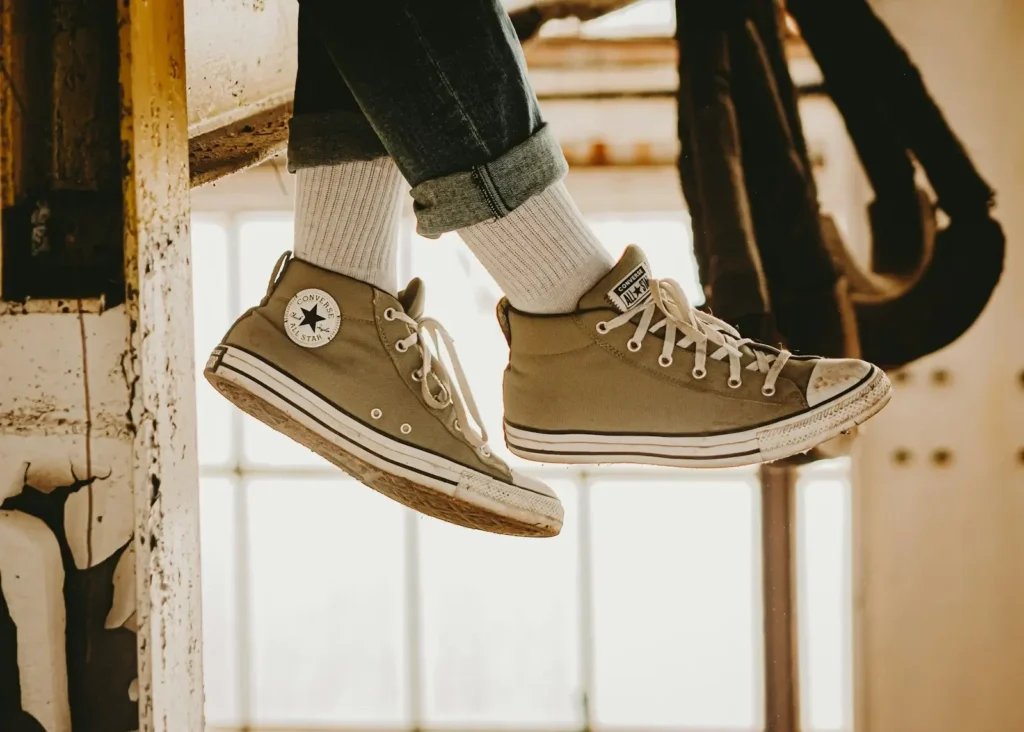
Cotton is the most common natural shoe fabric. When woven into a tight plain weave, it becomes canvas, the material behind classic sneakers, espadrilles, and vulcanized styles. Canvas takes dye and print well, washes easily, and costs little. For vulcanized construction, it is almost required because synthetic fibers can melt under the heat used to fuse the sole. Cotton can also be stone-washed or waxed for character, though waxed cotton must be finished after assembly since the coating blocks the glue bond to the outsole.
Wool
Wool regulates temperature and pulls moisture away from the skin, which makes it useful in winter shoes, slippers, and some athletic styles. It also carries natural antimicrobial properties that cut odor. Merino and other fine wools feel soft against the foot, while coarser wool adds warmth and structure in boots. Because wool insulates even when damp, it suits cold and variable weather better than cotton.
Jute and other plant fibers
Jute is a long plant fiber spun into coarse, strong thread. It is best known as the rope sole of espadrilles, but it also appears in insoles and summer uppers, where its breathability helps in heat. Hemp and linen play smaller roles, valued for strength and a natural look. Plant fibers are biodegradable and need few inputs to grow, though they absorb water and lose strength when wet, so they fit dry-weather and decorative uses more than rugged outdoor wear.
Synthetic fiber textiles used in shoes
Synthetic fiber textiles deliver the strength, light weight, and weather resistance that modern performance shoes depend on, with polyester and nylon forming the backbone of most uppers, linings, and meshes.
Synthetics dominate athletic and outdoor footwear because they can be engineered for a spec. A mill can tune denier, weave, and finish to hit a target for breathability or abrasion resistance. Fiber weight is measured in denier — roughly the mass per length of yarn — with light shoe fabrics near 110D, common uppers around 420D to 600D, and boots and bags pushing past 1000D. That single number tells you a lot about how a fabric will wear.
Polyester and nylon
Polyester is the workhorse fiber in shoes. It shows up as smooth tricot linings, fuzzy fleece for warmth, and sturdy canvas-like uppers. It resists UV, holds color, and dries fast. Nylon adds even more strength and elasticity, which is why it appears in hard-wearing forms such as Cordura for hiking boots, ballistic nylon for work boots, and ripstop weaves for lightweight trail shoes. Both fibers take coatings and laminations cleanly, making them the base for most technical builds.
Mesh and knit constructions
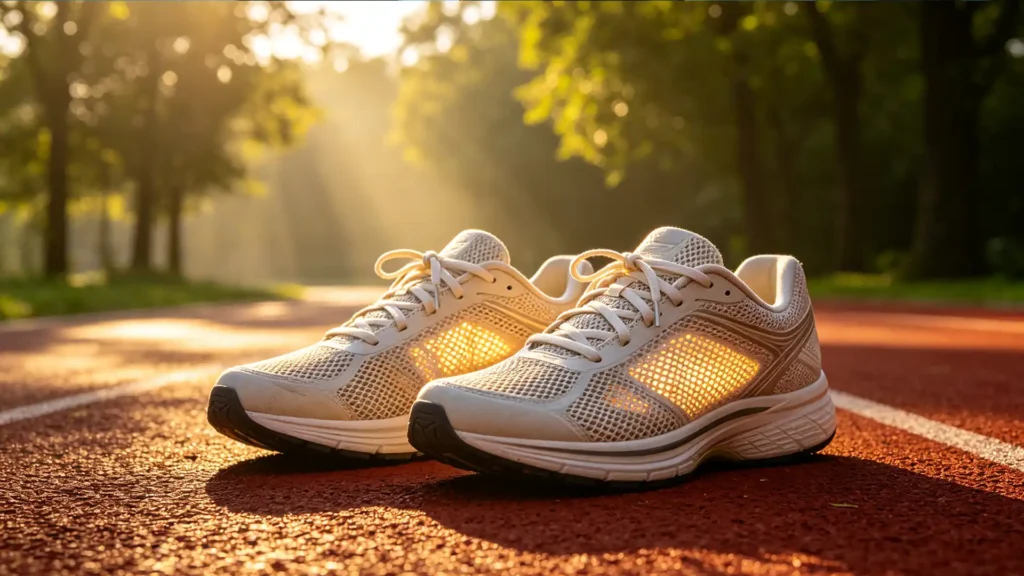
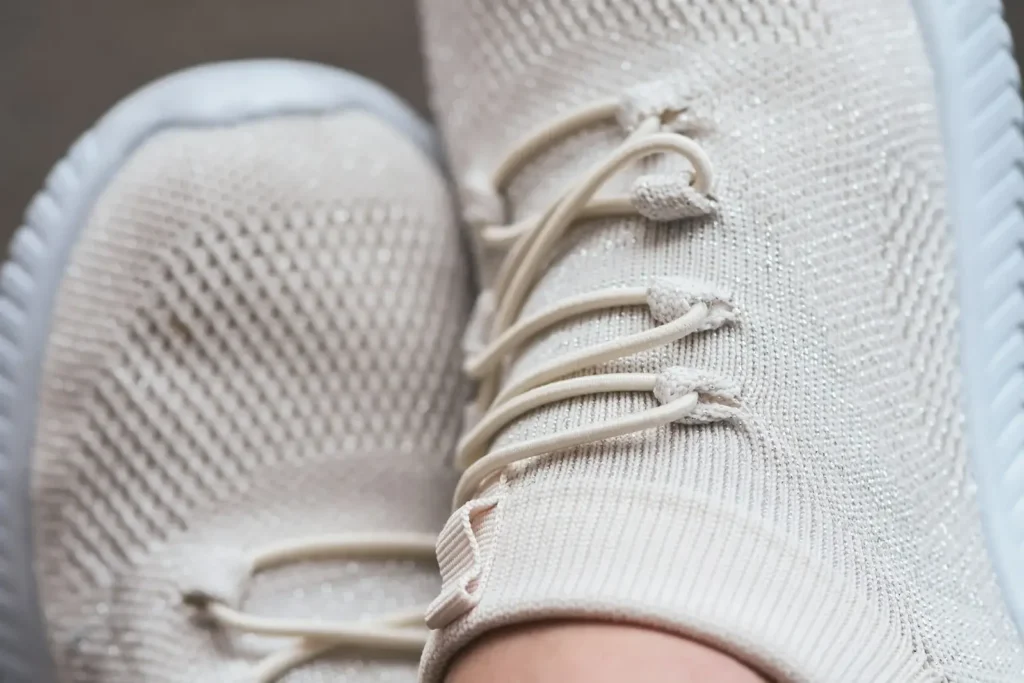
Mesh is a net-like fabric, usually polyester or nylon, built to let air pass through. It is the standard upper and lining material in running and training shoes. Knit constructions go further: a single piece of engineered yarn forms the upper with zones of stretch and support, cutting waste and seams. Three-dimensional or “sandwich” mesh adds a raised inner surface that cushions the foot and acts as a built-in lining. These structures explain why modern sports shoes feel lighter and cooler than older cut-and-stitched uppers.
How weave and knit structures change performance
The way fibers are joined — woven tight or knitted into loops — changes a fabric’s strength, stretch, and breathability more than the fiber type alone, so construction is as important as material when selecting footwear textiles.
Two shoes can use the same polyester yet perform nothing alike because one is woven and the other is knitted. Understanding the difference helps buyers judge a spec sheet and helps designers avoid surprises at wear tests.
Woven fabrics
Woven cloth crosses two yarn sets at right angles—warp running lengthwise, weft across. Plain weave is balanced and hard-wearing; twill shows diagonal ribs and drapes better; satin is smooth and dressy; and ripstop weaves in a grid of heavier yarn to stop tears. Woven fabrics hold their shape, resist stretching, and give a crisp surface, which suits structured uppers and reinforcement.
Knitted fabrics
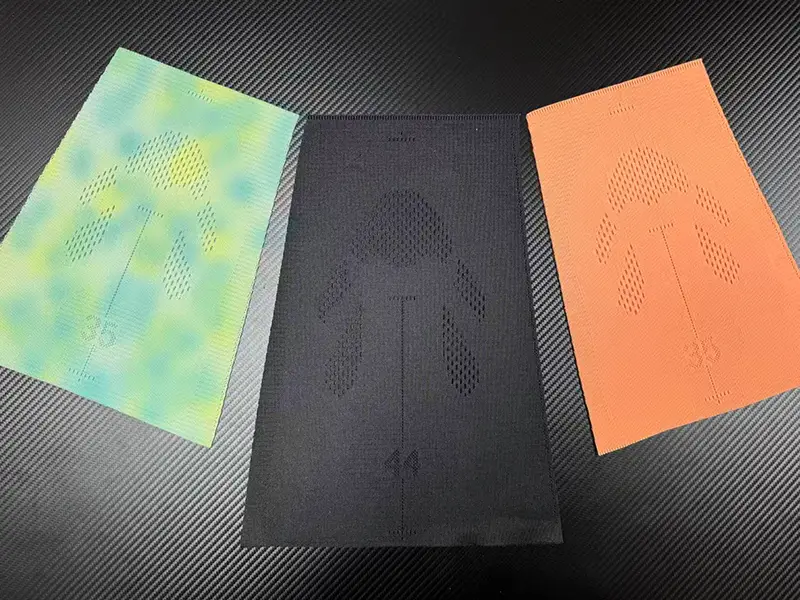
Knitted fabric forms linked loops, so it stretches in every direction and springs back. Jersey, interlock, and rib are common variants. Knits mold to the foot, need fewer seams, and breathe through their open structure. The trade-off is less dimensional stability, so knits often get a backing or foam layer to keep their shape during lasting. For an engineered upper, a knitting machine can place support exactly where the foot needs it and open the weave where heat builds.
| Construction | Stretch | Breathability | Shape retention | Typical use |
| Woven plain | Low | Medium | High | Canvas uppers, reinforcement |
| Woven twill | Low | Medium | High | Structured casual uppers |
| Woven ripstop | Low | Medium | High | Trail and tactical shoes |
| Knit jersey | High | High | Low to medium | Engineered uppers |
| Knit mesh | Very high | Very high | Low | Running shoe uppers, linings |
Waterproof and breathable textile builds
Waterproof textile shoes keep rain out while letting sweat vapor escape, achieved by pairing a microporous membrane with a durable water-repellent coating rather than by making the fabric solid and sealed.
Keeping water out usually means blocking air too, which would leave feet soaked from the inside. The solution is a membrane with pores small enough to stop liquid water but large enough to pass vapor.
Membranes and coatings
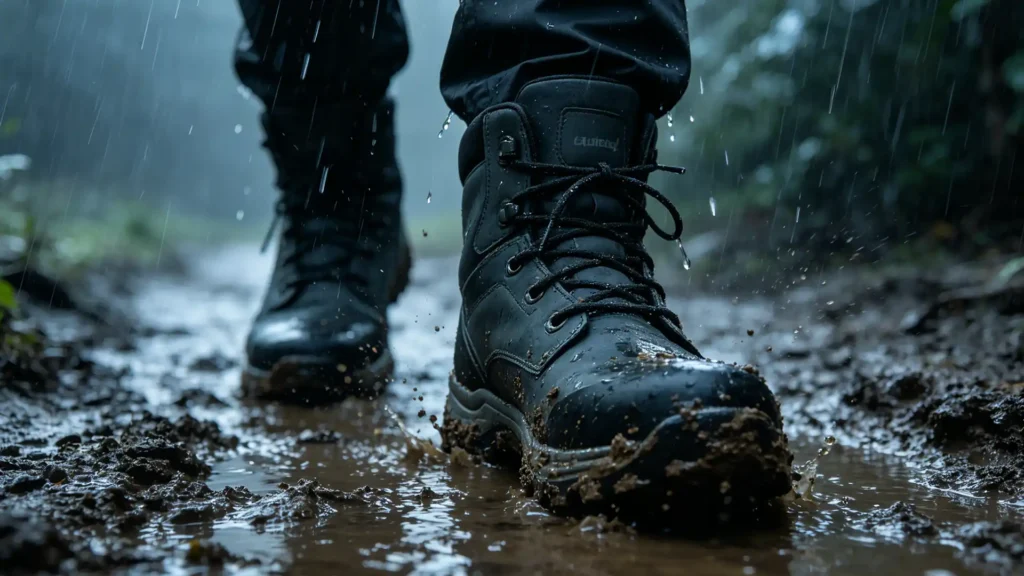
A shoe membrane layer sits between the outer fabric and the lining, bonded into a three-layer sandwich. Common chemistries include PTFE and TPU films, all thin, flexible, and microporous. On top, a durable water-repellent (DWR) finish makes water bead and roll off the surface so the fabric never saturates. Backing resins such as PU or PVC add body and a second water barrier, with PU being lighter and PVC more solid. Together these layers turn a normal textile into a weatherproof shell without trapping the foot in still air.
Why breathability matters
A shoe that traps sweat quickly feels clammy and cold, and prolonged dampness raises the risk of blisters and odor. Breathable builds let perspiration leave as vapor so the feet stay dry during activities. For hiking, commuting, and work footwear, this difference decides whether a shoe is wearable for a full day. Waterproofing without breathability only moves the problem from outside to inside. Care matters too: dirt and oils clog membrane pores, so cleaning the surface protects both water resistance and airflow over the life of the shoe.
Linings and interior textiles
Linings are the textiles that touch the foot, and they handle comfort, moisture, and friction, which is why the choice of interior fabric affects wear time as much as the upper does.
The lining sits against the skin for every step, so its feel and function shape the whole experience of the shoe. A poor lining can ruin an otherwise good upper, while a smart one extends comfort deep into a long day.
Common lining fabrics
Shoe lining material options range from brushed tricot and microfiber to lightweight mesh. Tricot, a knit polyester, is smooth on one side and textured on the other, common in athletic linings for its moisture-wicking feel. Microfiber mimics suede, breathes, and resists stains; it is often used in dress and vegan shoes. Mesh linings maximize airflow in hot conditions. Many linings are laminated to a thin foam layer that controls wrinkles during assembly and stops inner structures from showing through thin uppers. A good lining pulls sweat to the outer layers and reduces rub, extending both comfort and shoe life.
Footwear made from recycled and sustainable materials
Recycled and bio-based textiles are moving from niche to mainstream as brands chase lower-impact footwear raw materials, with recycled polyester and plant fibers leading the shift.
Sustainability in shoe textiles now centers on cutting virgin plastic and using renewable feedstocks. The change is visible across price points, not just premium lines, and it reaches both uppers and linings.
Recycled polyester and ocean plastics
Recycled polyester, or rPET, comes from used bottles and post-industrial waste spun back into fiber. It performs close to virgin polyester in strength and hand feel, so it drops into the same uppers, linings, and meshes without re-engineering the shoe. Industry data on preferred fiber uptake shows that recycled polyester now makes up a large and growing share of new polyester volumes, a trend tracked by material-focused groups such as Textile Exchange. Ocean-bound plastics add a sourcing story brands use to close the loop on waste, though the fabric itself behaves like any other polyester on the line.
Bio-based and natural options
Bio-based synthetics draw from corn, sugarcane, or castor oil instead of crude oil, lowering fossil input. Natural linings such as wool and jute bring biodegradability at the end of life. These choices trade some cost and water resistance for a smaller footprint, and they suit brands whose buyers weigh environmental impact alongside price. The practical limit is durability in wet use, where synthetics still lead, so most sustainable shoes pair a bio-based or natural face with a synthetic support layer.
How to choose the right textile for each shoe type
Matching a textile to a shoe type means weighing breathability, water resistance, weight, and cost against how and where the shoe will be worn, then picking the simplest fabric that meets the need.
There is no single best fabric for shoes—only the best fit for a job. A running shoe and a winter boot pull from opposite ends of the textile range, and a dress shoe cares about hand feel where a work boot cares about abrasion.
| Shoe type | Best textile choices | Key property to prioritize |
| Running and training | Knit mesh, polyester mesh | Breathability, low weight |
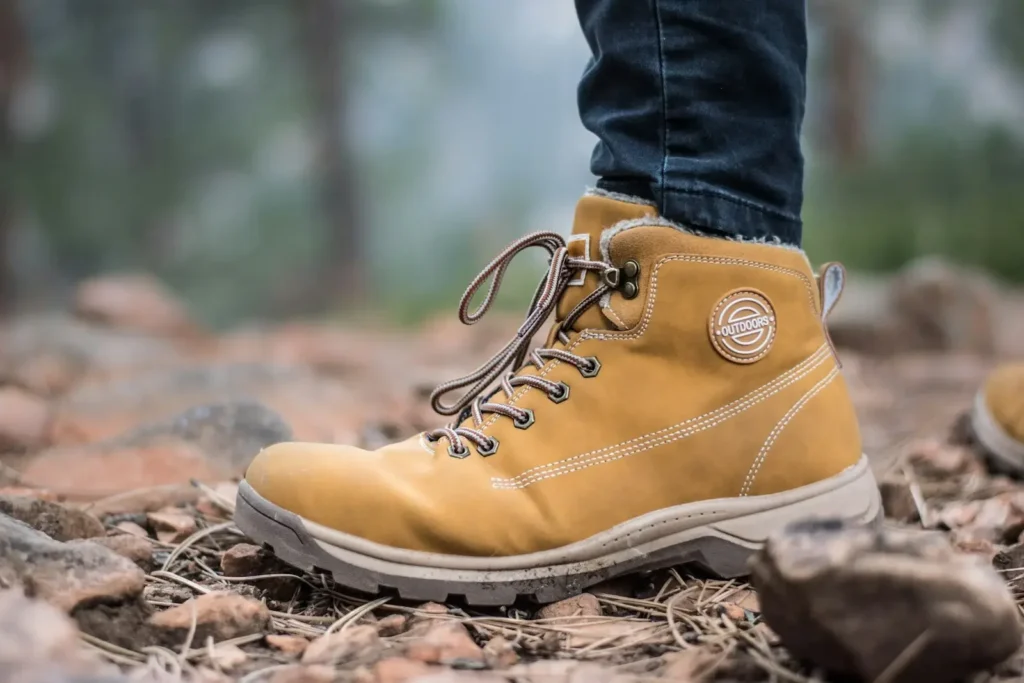
| Hiking and outdoor | Woven nylon, ripstop, membrane laminate | Abrasion resistance, waterproofing |
| Casual and sneakers | Cotton canvas, polyester canvas | Cost, washability |
| Winter and cold weather | Wool, polyester fleece lining | Insulation, moisture control |
| Formal and dress | Satin, microfiber lining | Appearance, smooth hand |
| Summer and espadrille | Jute and linen blends | Natural look, breathability |
When sourcing, start from the use case, then check the fabric weight in denier, the weave or knit type, and any membrane or finish. Request a sample and wear-test before scaling a run, because lab specs rarely capture how a lining feels after a full day. Budget for backing and lamination, since most shoe textiles need a support layer to survive assembly and wear. Finally, weigh the total cost, not just the cloth price: a cheaper fabric that needs extra reinforcement or fails a wear test can cost more than a stronger one bought in volume.
Frequently asked questions
What is the best fabric for shoes?
The best fabric depends on the shoe’s job. Knit and woven mesh suit running shoes for breathability, while nylon with a waterproof membrane fits hiking and wet commuting. Cotton canvas works for casual wear, and wool or microfiber linings add comfort. Match the fabric to use, not to a single “best” label, and weigh weight, water resistance, and cost together.
Can you waterproof fabric shoes at home?
You can improve water resistance with a spray-on durable water-repellent treatment, which makes water bead on the surface. This helps for light rain but will not match a built-in microporous membrane, and it needs reapplying as the coating wears. For heavy rain, choose shoes with a laminated membrane rather than treating a plain fabric upper, and clean them often so the membrane stays open.
Are textile shoes as durable as leather shoes?
Durability depends on the fiber and construction. Heavy woven nylon and ripstop uppers outlast soft leather in abrasion and wet use, while thin knits and cotton canvas wear faster. Synthetics resist water and rot better than natural fibers, but leather can be renewed and resoled. For daily rough use, technical synthetics generally last longer than fabric uppers, while leather leads for long-term repair.