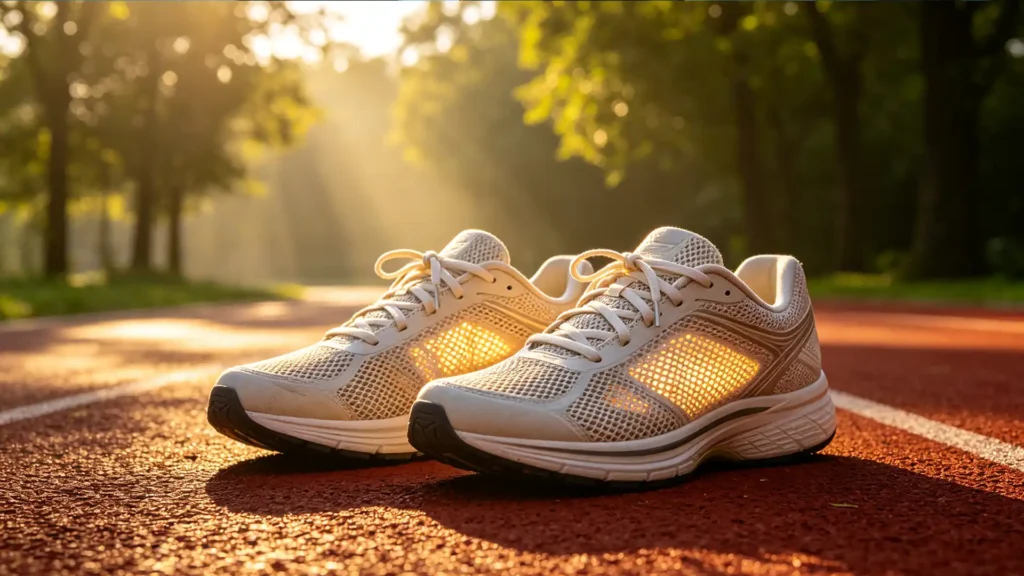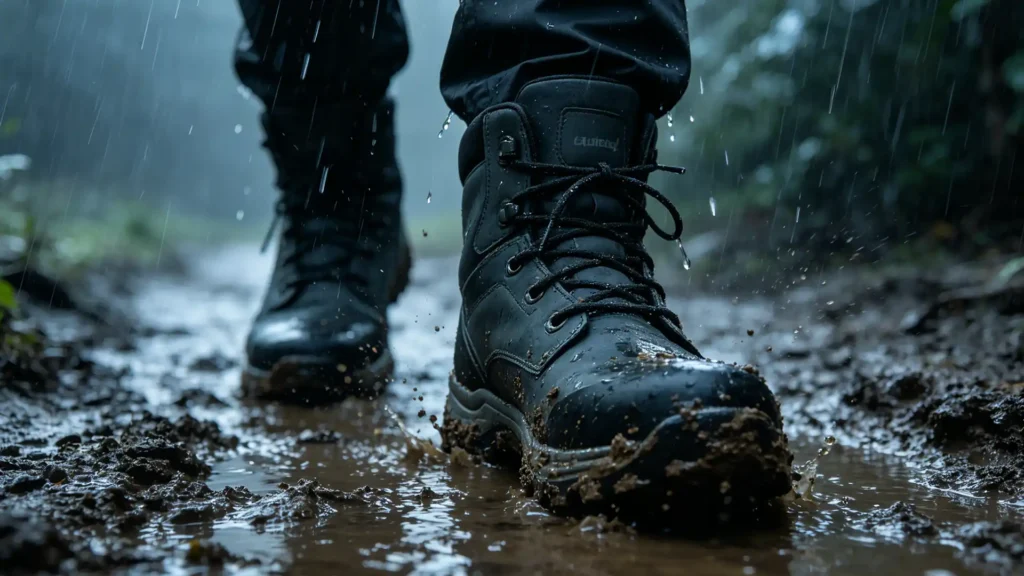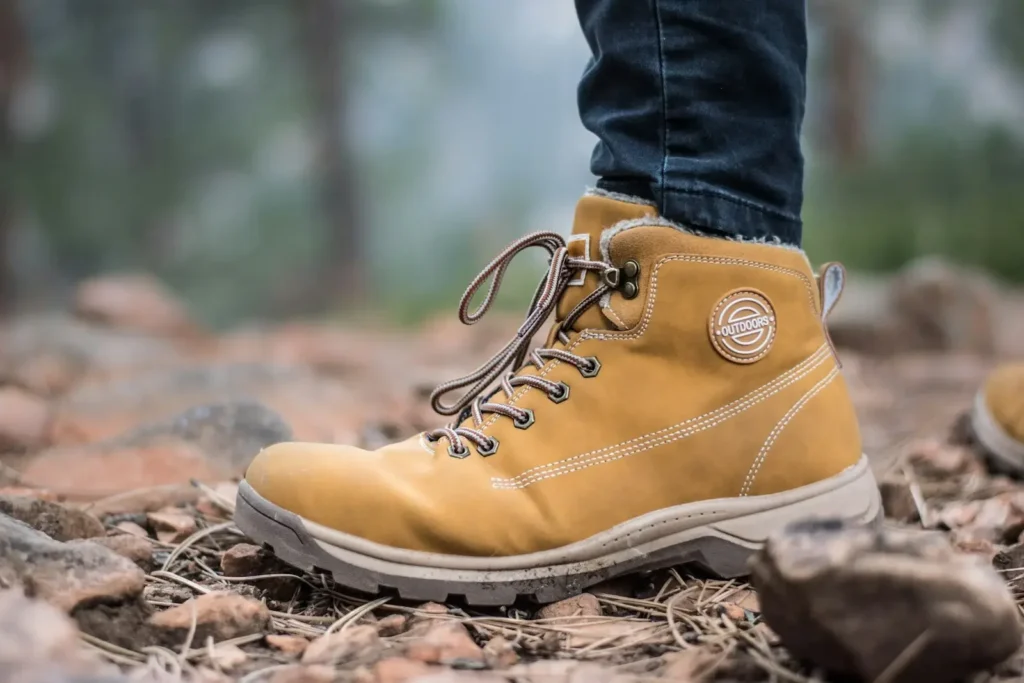
Wet weather puts real pressure on footwear. Buyers want dry feet, and manufacturers face the harder job of delivering that without trapping sweat or adding weight. Most teams weighing the best waterproof material for shoes start at the upper, where a laminated shoe-upper material decides whether water stays out or soaks through.
The best waterproof material for shoes depends on where and how the shoe is worn. Rubber blocks water completely and suits wet-work and rainy commutes. Treated leather and breathable membranes such as PTFE or PU keep feet dry while letting vapor escape, which matters for all-day wear. Neoprene adds insulation for cold, wet use. No single material wins; the right pick matches the condition.
The sections below break down how each material works and where it earns its place.
How waterproof shoe materials actually block water
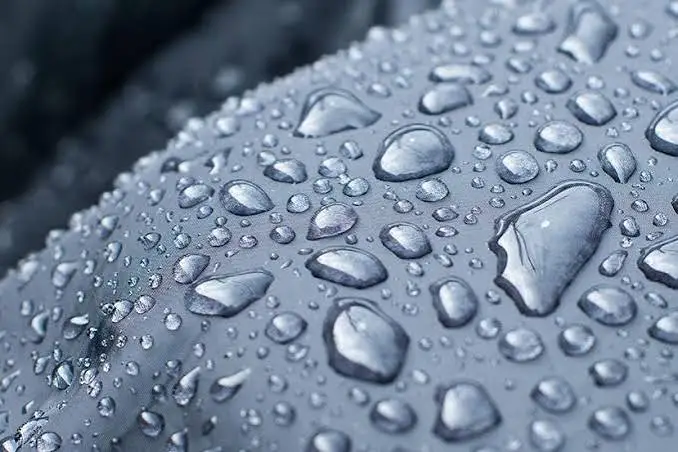
Waterproofing works by placing a barrier between your foot and the rain: a dense polymer water cannot cross, a microporous film with pores smaller than raindrops, or a hydrophilic layer that moves vapor out molecule by molecule.
A shoe is waterproof because a layer in its build stops liquid while letting sweat vapor leave. Three mechanisms do this, and most shoes mix two of them. Laboratories measure the liquid side as hydrostatic head, the height of water a material holds before it leaks, so a rated shoe states its real limit instead of a vague claim. Shoppers see this stated as a millimeter or kPa rating on the product page, which turns a vague waterproof claim into a comparable number.
Microporous membranes
A microporous film carries billions of tiny holes, each large enough for a water-vapor molecule but far too small for a raindrop held together by surface tension. Expanded PTFE is the best-known version. A review in Modern Textile Technology (South China University of Technology) describes its pores as about one twenty-thousandth the diameter of a raindrop yet roughly 700 times larger than a water-vapor molecule and reports laminates reaching a hydrostatic head above 9.8 kPa. That scale gap is the whole trick.
Hydrophilic non-porous membranes
Hydrophilic films have no pores. The polymer attracts vapor on the inside, carries it through by absorption and diffusion, then releases it outside. PU and TPU films work this way. They resist clogging and hold a high hydrostatic head, though breathability leans on the humidity gap between the two sides.
Coatings, DWR, and laminates
Membranes are laminated to a face fabric in a 2-layer or 3-layer build, with a durable water repellent (DWR) on top to shed surface water before it reaches the film. DWR wears off with use, which is why reproofing appears later in this article.
Rubber stays the most reliable fully waterproof material
Rubber is the only common shoe material that is waterproof on its own, with no membrane or coating needed, which is why it dominates outsoles and full waterproof boots.
Rubber forms a solid barrier water cannot cross, so it is the default when total exclusion matters more than weight or ventilation. Where the upper meets a fabric collar, a sealed seam keeps the joint from leaking since rubber alone cannot cover every stitch. Natural and synthetic rubber both work; synthetic blends tend to stay flexible in the cold, where natural rubber stiffens.
Where rubber works best
Rubber earns its place in waterproof rubber shoes built for wet commutes, farm and garden work, fishing, and any job that means standing in water. Molded boots seal the lower foot, and rubber outsoles grip slick ground. For buyers who want the simplest path to dry feet, rubber is it.
Limits of rubber
Rubber traps heat and sweat, so long wear gets warm, and it adds weight. That is why rubber pairs with breathable uppers higher on the shoe rather than covering the whole foot for active use.
Leather and treated uppers for durable, waterproof shoes
Full-grain leather resists water naturally and performs better once treated, making it a strong choice for durable waterproof shoes where lifespan and look matter.
Leather’s closed, oily fibers shed light rain, and a wax or proofer extends that through sustained damp. It molds to the foot, so comfort grows with wear, and a well-made pair often outlasts synthetics. A good break-in period lets the upper conform before proofing, so the treatment seals a settled shape rather than a shifting one. Full-grain hides perform better than split or bonded leather because the tight surface takes treatment more evenly. The trade-off is care: conditioning, reproofing, and slow drying once soaked. Suede and nubuck need a protector spray and suit light rain more than heavy exposure. For rainy-season city shoes that must also look right in a meeting, treated leather is hard to beat.
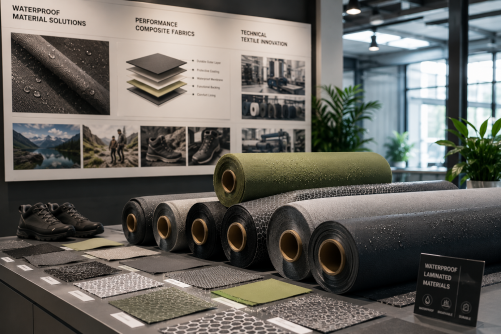
Breathable waterproof membranes for all-day comfort
Breathable membranes laminated into the upper give the best balance of dry feet and vented sweat, which is why they lead most performance and everyday waterproof shoes.
A purpose-built shoe membrane sits between the face fabric and the lining, blocking liquid while passing vapor. This is the layer that turns a waterproof shoe from a rubber boot into something you can wear all day.
PTFE (expanded PTFE) membranes
An expanded PTFE membrane uses the microporous mechanism described above. It delivers top-tier waterproofing with strong breathability for hiking and trail use. Cost is higher, and traditional PTFE chemistry has drawn environmental scrutiny over long-chain fluorochemicals, which is pushing many suppliers toward short-chain or fluorine-free builds.
PU and TPU membranes
PU and TPU films use the hydrophilic route. They cost less, stay soft, and have no pores to clog, which helps in dirty conditions. Breathability is good rather than class-leading, so they suit everyday and light-activity shoes where price and comfort lead. They also stay flexible in low temperatures better than some microporous films, which helps shoulder-season wear.
Choosing a membrane by climate
Warm, humid places favor high breathability, so microporous PTFE or a hybrid leads. Cold, dry conditions care more about insulation, where a hydrophilic film paired with neoprene fits. Buyers comparing options should ask for MVTR and RET figures, since those numbers show real vapor transport instead of marketing claims. Hybrid builds that pair a microporous layer with a thin hydrophilic film cut clogging and hold performance in dirty, high-output use.
| Membrane type | Waterproofing | Breathability | Typical cost | Best for |
| Microporous (ePTFE/PTFE) | Very high | High | Higher | Hiking, all-day wear |
| Hydrophilic (PU, TPU) | High | Good | Lower | Everyday, light activity |
| Coating + DWR | Moderate | Low to moderate | Lowest | Budget, light rain |
Synthetic textiles and mesh uppers for lightweight waterproof shoes
Synthetic uppers built from nylon, polyester, or mesh and paired with a membrane give the lightest waterproof shoes, which is why they lead in running and warm-weather use.
A waterproof fabric upper pairs a woven or knit face with a laminated membrane and a DWR finish. The result shrugs off rain yet stays light enough for fast movement.
Mesh and breathability
Mesh uppers move the most air. On their own, they are not waterproof, but laminated with a membrane, they balance ventilation and protection for trail runners in hot climates. If water does get in, mesh also dries faster than leather or rubber, which limits discomfort. Knit uppers stretch with the foot for a closer fit, while woven faces resist abrasion on rough trails.
DWR treatments and reapplication
Synthetic uppers rely on DWR to keep the surface dry. That treatment breaks down with abrasion and washing, and once it fails, the fabric wets out even when the membrane underneath still works. Reapplying a spray or wash-in proofer restores the bead-up effect and keeps the shoe feeling dry. Most synthetic uppers need reproofing once or twice a season, sooner for daily wet wear.
Neoprene for insulated wet and cold conditions
Neoprene keeps feet warm and dry in cold water and wet cold air, which makes it the choice for fishing, surfing, and winter wet-weather boots.
Neoprene is a closed-cell foam that neither absorbs nor lets water through, and its trapped air adds insulation. That combination is why cold-water shoes use it. It flexes well, so the foot moves freely, and it adds little weight. The limit is breathability: neoprene holds heat, so it suits low temperatures and not warm, active use. Used as a lining under a membrane or rubber shell, it extends a shoe’s comfort range into the cold without losing the waterproof barrier. Thickness usually runs from about 3 mm for flexible linings to 5 mm or more for standing cold, with thicker foam trading feel for warmth.
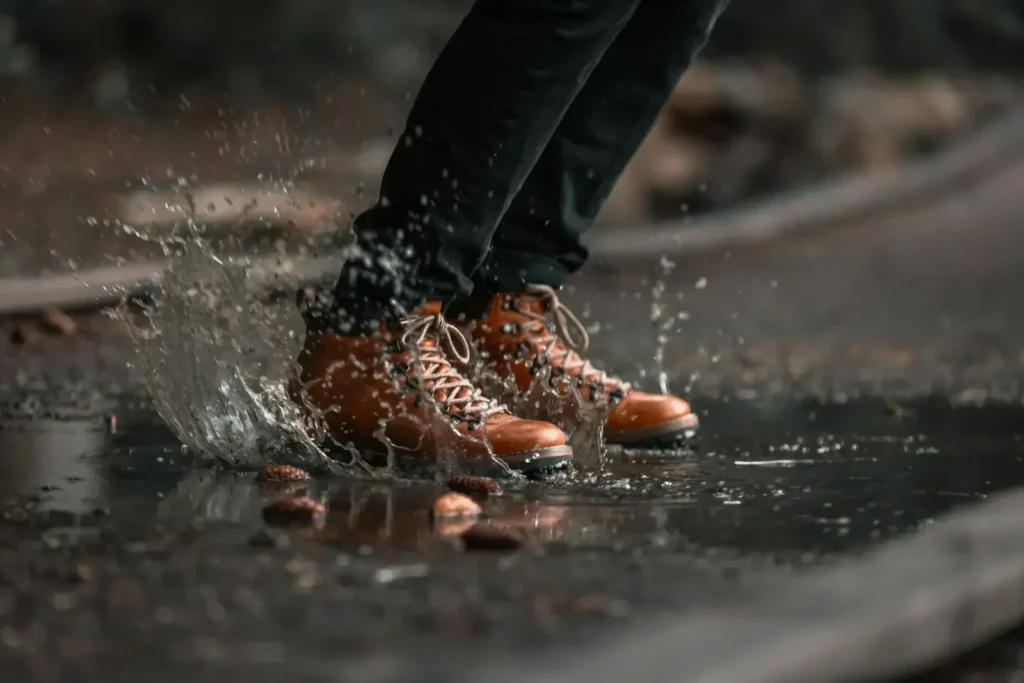
How to choose the best waterproof material for shoes by use case
The best waterproof material for shoes changes with the job: light and breathable for rainy commutes, protective and grippy for trails, fully sealed for wet work, and insulated for cold.
Picking a material starts with the condition, not the spec sheet. Budget shapes the call too: rubber and coating build the least cost, membranes cost more, and PTFE sits at the top of the range. The guide below maps common needs to materials.
Everyday rainy-season commuting
For waterproof shoes for rainy-season commutes, weight and easy care lead. A treated leather or PU-membrane synthetic upper with a rubber outsole handles city rain and slick pavement and looks normal enough for the office. Lightweight synthetics also pack small for travel, which commuters value.
Hiking and trails
Trails need breathability plus grip. A microporous PTFE membrane with a lugged rubber outsole stays dry through stream crossings while venting sweat on the climb. Sealed seams matter as much as the membrane, since a single needle hole lets water in. Durability matters more than price here.
Wet-work and industrial
Jobs that mean standing in water call for full rubber or a high hydrostatic head membrane with sealed seams. Comfort drops, but total exclusion and easy cleaning are the point in dirty settings. Boots in this class often reach the highest hydrostatic ratings of any footwear, trading breathability for certainty.
| Need | Recommended material | Why |
| Rainy-season commute | Treated leather or PU-membrane synthetic | Light, presentable, easy care |
| Hiking and trails | PTFE membrane + rubber outsole | Breathable yet sealed, grippy |
| Wet-work and industrial | Full rubber or high-head membrane | Complete exclusion, simple cleaning |
| Cold and wet | Neoprene-lined membrane | Insulated and waterproof |
Caring for waterproof shoe materials to extend performance
Waterproof shoes stay dry longer when cleaned gently, reproofed on schedule, and dried without heat, because most failures come from worn treatments rather than failed materials.
Care is where waterproofing is won or lost. A membrane rarely breaks; the DWR and the seams do. Clean mud and salt after each wet use with a soft brush and mild soap, then let the shoe dry at room temperature away from heaters, which can crack coatings. Once the surface stops beading water, reproof with a spray or wash-in treatment made for the material. Wash-in proofers coat the whole upper evenly, whereas spray targets the surface; either works if the shoe is clean first. Store shoes uncrumpled in a cool, dry place, and keep them out of direct sun for long stretches. A soft nylon brush clears dried mud from seams where leaks start, and stuffing damp shoes with paper speeds drying without heat.
FAQ
What is the difference between water-resistant and waterproof shoes?
Water-resistant shoes slow water with tight weaves and a DWR finish but will soak through under pressure or time. Waterproof shoes carry a membrane or rubber barrier rated by hydrostatic head, measured in millimeters or kPa, that holds back standing water. For heavy rain or puddles, only a rated waterproof build counts.
Can you make regular shoes waterproof with a spray?
A waterproofing spray adds a DWR layer that helps fabric shed light rain, but it cannot seal seams or create a true barrier, so it will not make a mesh sneaker safe in a downpour. Sprays work best on leather and tight-weave shoes for drizzle and splashes. For full protection, the shoe needs a built-in membrane or rubber construction.
Which waterproof shoe material is most breathable?
Microporous PTFE membranes are the most breathable common option, moving vapor through physical pores. Hydrophilic PU and TPU films breathe well but depend on the humidity gap. Rubber and sealed coatings breathe the least. For active wear, a PTFE membrane with a mesh or synthetic upper gives the driest feel during effort.