Introduction
Sustainability has become one of the most influential factors shaping the global footwear industry. Consumers, international brands, and manufacturers are placing greater emphasis on reducing environmental impact while maintaining high product quality. Among the many innovations driving this transformation, advanced lamination technology has emerged as an effective solution for lowering carbon emissions, improving material efficiency, and supporting environmentally responsible manufacturing.
Traditional material bonding processes often consume significant amounts of energy and generate unnecessary production waste. Modern lamination technology, however, enables manufacturers to combine multiple functional layers with greater precision, reducing material loss while improving product performance. As footwear brands continue to adopt sustainable manufacturing practices, advanced lamination has become a key technology for producing lightweight, durable, and eco-friendly shoe materials.
What Is Advanced Lamination Technology?
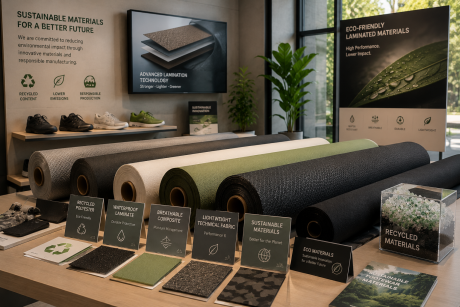
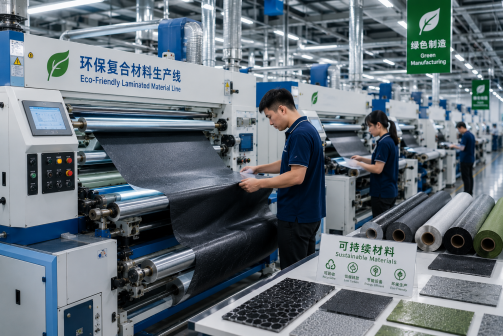
Advanced lamination technology is a manufacturing process that permanently bonds two or more layers of materials into a single high-performance composite. Depending on the product requirements, manufacturers may laminate woven fabrics, knitted textiles, nonwoven materials, TPU films, PU membranes, recycled fibers, or breathable waterproof layers.
Unlike conventional bonding methods, modern lamination systems provide greater consistency, stronger adhesion, and lower material waste. Computer-controlled equipment ensures precise pressure, temperature, and adhesive application, allowing manufacturers to produce composite materials with stable quality while minimizing energy consumption.
For footwear manufacturers, laminated materials offer improved durability, flexibility, waterproof performance, and appearance without significantly increasing weight.
Environmental Benefits of Advanced Lamination
One of the primary advantages of advanced lamination technology is its ability to reduce the environmental impact of footwear production.
Reduced Material Waste
Precision lamination minimizes trimming waste by improving bonding accuracy and reducing defective products during manufacturing.
Lower Energy Consumption
Modern lamination equipment is designed to optimize heating and pressure systems, reducing electricity consumption compared with older production technologies.
Longer Product Lifespan
Durable laminated materials extend the service life of footwear, reducing replacement frequency and lowering overall resource consumption.
Compatibility with Recycled Materials
Many advanced lamination systems are capable of processing recycled polyester fabrics, recycled TPU films, and bio-based materials, supporting circular manufacturing initiatives.
Applications of Laminated Composite Materials
Advanced laminated materials are widely used across multiple footwear categories because they combine lightweight construction with excellent functional performance.
| Footwear Category | Lamination Advantage |
| Running Shoes | Lightweight and breathable |
| Hiking Boots | Waterproof protection |
| Safety Footwear | High durability |
| Casual Sneakers | Improved appearance and comfort |
| Outdoor Footwear | Weather resistance |
Typical Technical Specifications
| Property | Typical Value |
| Material Weight | 180–350 GSM |
| Thickness | 0.8–2.5 mm |
| Bonding Strength | ≥35 N/5cm |
| Abrasion Resistance | ≥50,000 Cycles |
| Water Resistance | Customizable |
| Recycled Material Content | Up to 100% (depending on application) |
How Advanced Lamination Supports Sustainable Manufacturing
Sustainability in footwear manufacturing is no longer limited to using recycled materials. Manufacturers are increasingly focusing on optimizing the entire production process to reduce energy consumption, carbon emissions, and manufacturing waste. Advanced lamination technology contributes to these goals by improving production efficiency and material utilization throughout the supply chain.
Compared with conventional bonding methods, precision lamination systems require fewer process adjustments, resulting in more consistent product quality and lower rejection rates. Digital temperature control and automated pressure regulation help reduce unnecessary energy consumption while ensuring stable adhesion across different composite materials.
Many modern lamination lines also support solvent-free adhesives, water-based bonding technologies, and recyclable composite structures. These innovations help manufacturers comply with increasingly strict environmental regulations while supporting the sustainability goals of international footwear brands.
International quality and environmental management standards, including ISO guidelines, provide important frameworks for responsible manufacturing practices.
For suppliers serving global footwear manufacturers, adopting advanced lamination technology demonstrates a commitment to responsible manufacturing and continuous innovation.
Future Development of Low-Carbon Lamination Technology
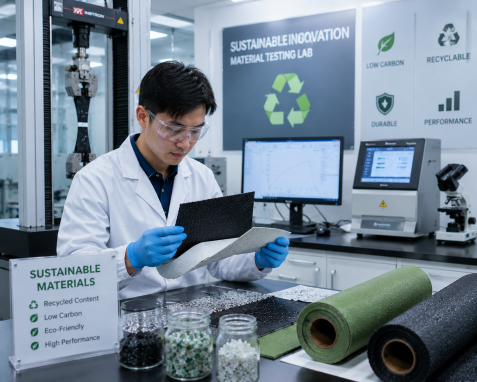
As environmental standards continue to evolve, lamination technology will play an increasingly important role in reducing the carbon footprint of footwear manufacturing.
Organizations such as the Ellen MacArthur Foundation promote circular economy principles and sustainable resource management to help industries reduce environmental impact.
Several emerging trends are driving future development:
- Solvent-free lamination systems
- Water-based adhesive technologies
- Recyclable composite structures
- Bio-based functional films
- Energy-efficient laminating equipment
- AI-assisted production monitoring
- Digital quality inspection systems
These innovations not only improve manufacturing efficiency but also help footwear brands achieve long-term sustainability targets without compromising product performance.
Why Sustainable Lamination Matters for Footwear Brands
Consumers are becoming more aware of the environmental impact of the products they purchase. International brands are therefore looking for material suppliers that can provide reliable, high-performance laminated materials while supporting responsible manufacturing practices.
By reducing waste, improving production consistency, and enabling the use of recycled materials, advanced lamination technology helps brands strengthen their sustainability strategies and enhance product value in competitive global markets.
Choosing an experienced composite material supplier also ensures stable quality, customized material development, and long-term production reliability.
Conclusion
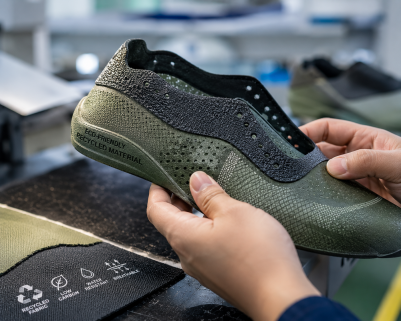
Advanced lamination technology is transforming footwear manufacturing by combining high-performance material engineering with environmentally responsible production practices. Through improved bonding precision, lower energy consumption, reduced waste, and compatibility with recycled materials, manufacturers can significantly reduce their carbon footprint while maintaining excellent product quality.
As sustainability continues to influence purchasing decisions worldwide, investing in advanced lamination technology will become an essential strategy for footwear manufacturers seeking long-term growth, operational efficiency, and global competitiveness.
Frequently Asked Questions (FAQ)
1. What is advanced lamination technology?
Advanced lamination technology permanently bonds multiple material layers into a single composite structure with improved durability, flexibility, and functional performance.
2. How does lamination reduce carbon emissions?
It reduces production waste, improves material utilization, lowers energy consumption, and supports recyclable material applications.
3. Can laminated materials use recycled fabrics?
Yes. Modern lamination systems are compatible with recycled polyester, recycled TPU films, recycled microfiber, and other sustainable textile materials.
4. Which footwear products commonly use laminated materials?
Running shoes, hiking boots, outdoor footwear, safety shoes, casual sneakers, and fashion footwear all widely use laminated composite materials.
5. Why is sustainable lamination important?
Sustainable lamination helps manufacturers meet environmental regulations, reduce operating costs, improve product consistency, and strengthen brand reputation.