In the complex world of functional footwear manufacturing, producing a truly 100% waterproof boot requires far more than just selecting a premium outer shell. Footwear engineers can source the most expensive, high-tech barrier films available on the market, but the moment a sewing machine needle passes through those materials, the waterproof integrity of the entire shoe is instantly compromised.
Every single stitch creates a microscopic hole. In a standard hiking boot or safety shoe, there are thousands of these structural needle punctures. Left untreated, water will immediately leak through these holes during heavy rain or when stepping into a deep puddle. This is exactly where the application of a high-quality seam sealing tape becomes the most critical, yet often overlooked, step on the assembly line.
In this comprehensive, long-form manufacturing guide, we will explore the science behind this vital thermoadhesive material, analyze the different variations used in footwear production, and detail the 5 best reasons why integrating it is absolutely essential for your next waterproof project.
What is a Seam Sealing Tape?
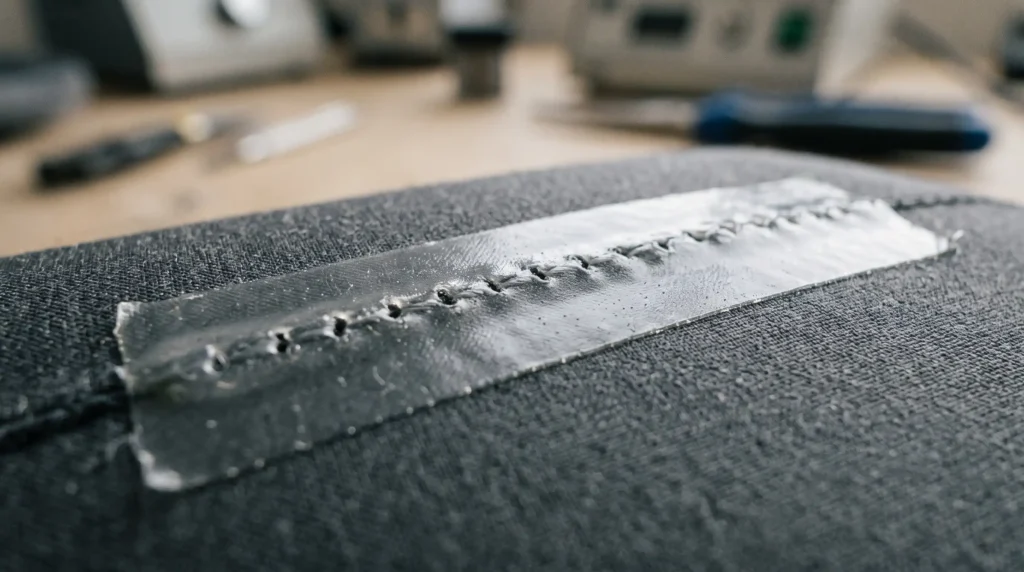
A seam sealing tape is a specialized, multi-layered thermoadhesive strip designed specifically to cover, melt into, and seal the stitched seams of waterproof garments and footwear.
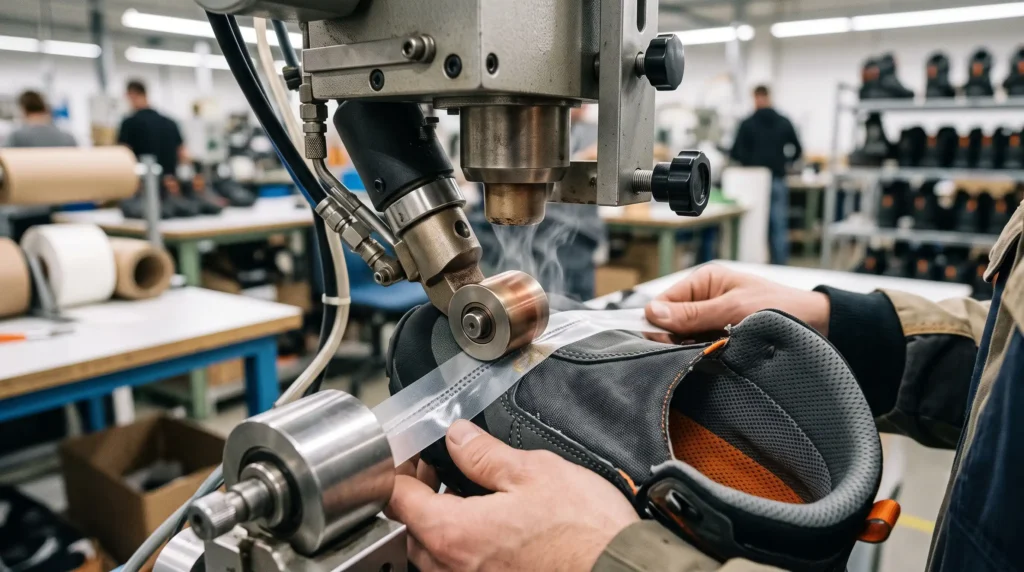
In footwear construction, waterproof shoes are typically built using a “bootie construction” method. This involves creating a sock-like inner layer out of a waterproof membrane. To guarantee that liquid water cannot breach this inner bootie, the tape is welded directly over every exposed stitched seam using high-temperature hot air machinery. The heat temporarily melts the adhesive layer of the tape, allowing it to flow into the needle holes and bond permanently with the membrane fabric.
The 5 Essential Reasons to Use Seam Sealing Tape
Why do the world’s leading outdoor and safety footwear brands refuse to manufacture shoes without this technology? Here are the top five engineering reasons.
1. Eliminating the Needle Hole Problem
The primary function of the tape is simple but profound: it completely blocks water ingress at the weakest points of the shoe. When you laminate a premium waterproof breathable fabric, the broad surface is perfectly sealed. However, the seams where different pattern pieces join are vulnerable. A proper tape application acts as a permanent, impenetrable bridge over these microscopic gaps, ensuring absolute waterproof integrity.
2. Enhancing Structural Durability
Seams undergo immense stress as the wearer walks, runs, and bends their feet. The constant mechanical flexing can weaken the stitching over time. Applying a strong thermoadhesive tape over the seam not only seals it against water but also adds significant tensile strength to the joint. It locks the threads in place, preventing them from unraveling or breaking under high-friction conditions.
3. Maintaining Ultimate Flexibility
A common misconception is that adding layers of tape will make the shoe stiff and uncomfortable. However, premium tapes are engineered with high elasticity. They move, stretch, and recover in perfect harmony with the shoe’s upper, ensuring the wearer experiences no hot spots or rigid areas during dynamic movement.
4. Passing Strict Global Waterproof Standards
If a footwear brand intends to market a product as legally “waterproof” (such as achieving an EN ISO 20345 WR rating), the finished shoe must pass brutal laboratory testing. A taped seam is the only reliable way to ensure the footwear survives thousands of underwater flexes during a rigorous hydrostatic head test without a single drop of water entering the interior.
5. Preserving Interior Comfort
Modern tapes are designed to be extremely lightweight and smooth. When applied to the inside of the waterproof bootie, they create a seamless, frictionless surface against the inner lining. This prevents the abrasive stitching threads from rubbing against the wearer’s socks or skin, significantly reducing the risk of blisters during long hikes or strenuous work shifts.
Types of Seam Sealing Tapes Used in Footwear
Not all tapes are created equal. Depending on the construction of the shoe and the type of membrane being used, factories must select the correct layer configuration to ensure a perfect bond.
2-Layer Seam Sealing Tapes
These are incredibly flexible, lightweight, and thin. They typically consist of a tough outer layer (like TPU) and an inner thermoadhesive PU layer that melts into the fabric. 2-layer tapes possess excellent malleability, making them ideal for complex, tightly curved shoe patterns. They bond exceptionally well when paired directly with a bare TPU membrane.
3-Layer Seam Sealing Tapes
For heavier-duty applications, such as military boots or extreme mountaineering footwear, a 3-layer tape is indispensable. It adds a durable backing fabric (often a PA Tricot) on top of the TPU and PU layers. This extra layer provides superior abrasion resistance, ensuring the tape itself is not worn away by internal friction over years of heavy use.
Mesh Tapes for Injected Soles
In specific footwear constructions where a polyurethane (PU) midsole is directly injected onto the upper, a specialized open-mesh tape is used at the bottom edge of the membrane. During the injection process, the liquid PU foam penetrates the open mesh tape, creating a flawless, waterproof chemical anchor between the sole and the waterproof bootie.
The Hot-Air Welding Process
The application of a seam sealing tape requires precision machinery. Footwear factories utilize hot-air tape welding machines equipped with adjustable nozzles and motorized pressure rollers.
During production, the machine blows highly controlled hot air (often between 300°C and 600°C, depending on the material) directly onto the adhesive side of the tape just milliseconds before it is fed under the pressure roller. The roller then immediately presses the molten adhesive into the stitched seam, creating a permanent, waterproof weld in a matter of seconds. Calibrating the perfect balance of temperature, speed, and roller pressure is a highly specialized skill that defines a top-tier footwear manufacturing facility.
Partner with Galetex for Complete Waterproof Solutions
Building a world-class waterproof shoe requires a holistic approach to materials. You cannot pair a high-end membrane with a low-quality sealing tape and expect success.
At Galetex, we provide comprehensive, fully integrated material solutions for global footwear manufacturers. From advanced fluorine-free barrier films to perfectly calibrated composite laminations, we ensure every component of your upper works in harmony. Contact the Galetex engineering team today to ensure your next footwear line is perfectly sealed, highly durable, and ready to conquer any environment.