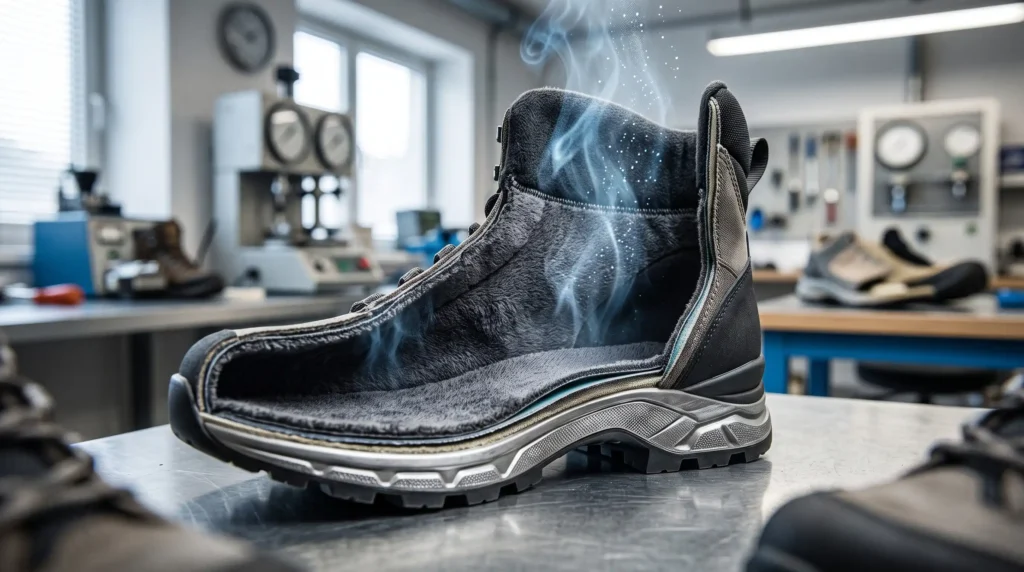
When designing weather-resistant footwear, most brands spend their marketing budget talking about the outer leather or the hidden high-tech membrane. However, the most crucial component for the wearer’s actual comfort is the inner layer that touches the foot.
A high-quality waterproof shoe lining is the unsung hero of any functional boot. It acts as the final barrier between the skin and the external environment, managing sweat, preventing blisters, and protecting the delicate waterproof film hidden beneath it.
If you are a footwear manufacturer or sourcing manager, choosing the right interior fabric is essential. In this guide, we break down the top 5 characteristics that define the best inner materials for modern technical shoes.
1. Moisture-Wicking Capabilities
The primary job of the inner layer is not just to feel soft, but to actively move sweat away from the foot. Even if you use the most breathable TPU membrane in the world, if the interior fabric traps moisture, the wearer’s feet will feel wet and clammy. Premium linings are made from hydrophobic synthetic fibers (like specialized polyester) that pull sweat from the skin and quickly push it toward the breathable membrane to evaporate outside the shoe.
2. The Lamination Bond Strength
An inner fabric never works alone. It must be permanently bonded to the waterproof membrane and the outer shell. When sourcing composite shoe materials, the bonding process between the lining and the barrier film must be flawless. If the adhesive is too heavy, it will block the breathable pores. If it is too weak, the layers will separate (delaminate) when the wearer walks, destroying the shoe. Using advanced PUR dot lamination ensures the interior stays securely attached while maintaining maximum breathability.
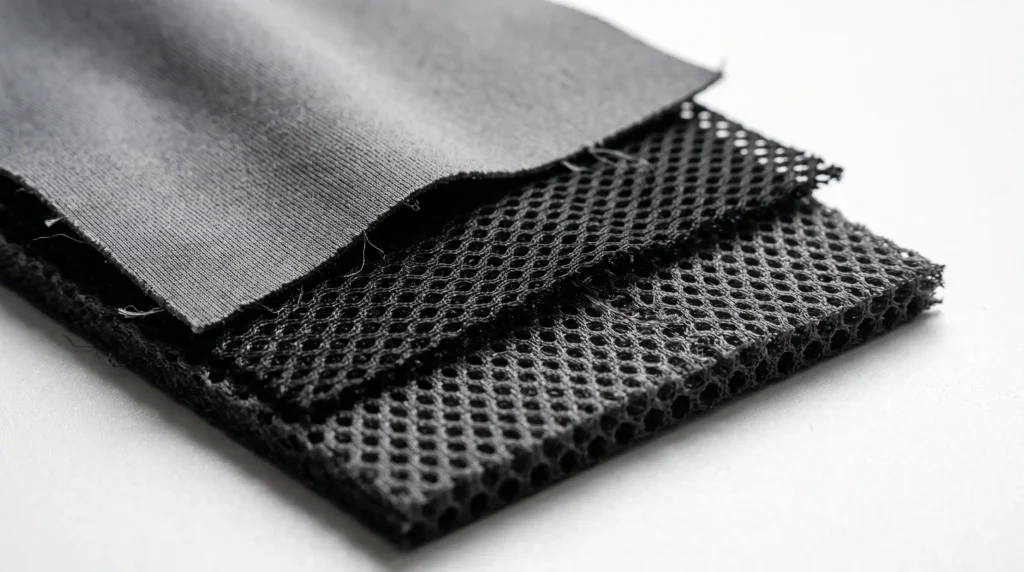
3. The Right Fabric Structure: Tricot vs. Spacer Mesh
Choosing the correct textile construction for your waterproof shoe lining depends entirely on the shoe’s intended use:
- Tricot (Warp-Knitted Fabric): Incredibly thin, smooth, and lightweight. It is the most popular choice for sleek running shoes and lifestyle sneakers because it adds almost zero bulk to the upper design.
- BK Mesh & 3D Spacer Mesh: These are thicker and highly porous. They provide excellent cushioning and airflow, making them the standard choice for heavy-duty safety boots and winter hiking shoes that require extra structural support.
4. Abrasion Resistance for Longevity
Friction is the enemy of all footwear. The constant rubbing of a sock against the heel collar and toe box can quickly tear through cheap interior fabrics. Once the lining tears, the delicate waterproof membrane is exposed and easily punctured. Top-tier linings are engineered with high tensile strength and undergo rigorous abrasion testing to meet SATRA testing standards. A durable interior ensures the shoe remains weather-resistant for years, not just months.
5. Anti-Microbial and Odor Control Treatments
In sealed, weather-resistant shoes, bacteria thrive in the warm, dark environment. To combat this, the best inner fabrics are treated with eco-friendly anti-microbial finishes during the dyeing process. This prevents the buildup of odor-causing bacteria and fungi, keeping the footwear fresh even after extreme outdoor excursions.
Elevate Your Footwear with Galetex
At Galetex, we understand that the interior of the shoe is just as important as the exterior. We specialize in producing fully laminated, multi-layer packages that feature the industry’s most advanced waterproof shoe lining textiles.
From ultra-soft moisture-wicking tricots to heavy-duty abrasion-resistant meshes, our functional laminated fabrics are designed to meet the exact specifications of global footwear brands. Contact our engineering team today to build a better, more comfortable shoe from the inside out.