Introduction
Lamination technology plays an essential role in modern footwear material manufacturing. By combining multiple functional layers into a single composite structure, laminated materials provide improved durability, waterproof performance, breathability, and lightweight characteristics for sports shoes, outdoor footwear, safety shoes, and fashion footwear.
However, during the lamination process, manufacturers may encounter various production issues that affect final product quality. Common lamination defects such as poor bonding strength, bubbles, wrinkles, uneven adhesive distribution, and delamination can reduce material performance and increase manufacturing costs.
For footwear brands and material buyers, understanding these defects and knowing how to prevent them is critical when selecting reliable composite material suppliers.
Advanced production control, proper equipment adjustment, and strict quality inspection systems can significantly reduce lamination problems and ensure consistent material performance.
What Are Lamination Defects?
Lamination defects refer to quality problems that occur when multiple material layers fail to bond correctly during the manufacturing process.
In footwear material production, lamination usually involves combining:
- Textile fabrics
- Waterproof membranes
- TPU films
- Foam layers
- Recycled materials
- Functional coatings
A stable lamination process requires accurate control of:
- Temperature
- Pressure
- Adhesive amount
- Processing speed
- Material compatibility
Even small variations can influence the final performance of composite materials.
8 Common Lamination Defects in Footwear Materials
1. Poor Bonding Strength
Poor adhesion between layers is one of the most common lamination problems.
Possible Causes:
- Insufficient adhesive application
- Incorrect temperature settings
- Contaminated material surfaces
- Incompatible materials
Solutions:
Manufacturers should optimize adhesive formulas, improve surface preparation, and maintain accurate production parameters.
Regular bonding strength testing helps ensure every batch meets quality requirements.
2. Delamination Between Layers
Delamination occurs when laminated layers separate after production.
This problem can affect:
- Waterproof performance
- Durability
- Product lifespan
Common reasons include:
- Weak adhesive bonding
- Improper curing time
- Excessive mechanical stress
Using advanced lamination technology and strict quality control can significantly reduce delamination risks.
3. Air Bubbles and Blisters
Air bubbles appear when trapped air remains between laminated layers.
Causes include:
- Uneven pressure
- Incorrect lamination speed
- Poor material preparation
Solutions:
- Improve pressure control
- Remove surface contamination
- Optimize production speed
4. Wrinkles and Surface Deformation
Wrinkles can affect both appearance and product performance.
Common causes:
- Uneven material tension
- Incorrect feeding speed
- Poor equipment calibration
High-precision lamination equipment helps maintain smooth and consistent surfaces.
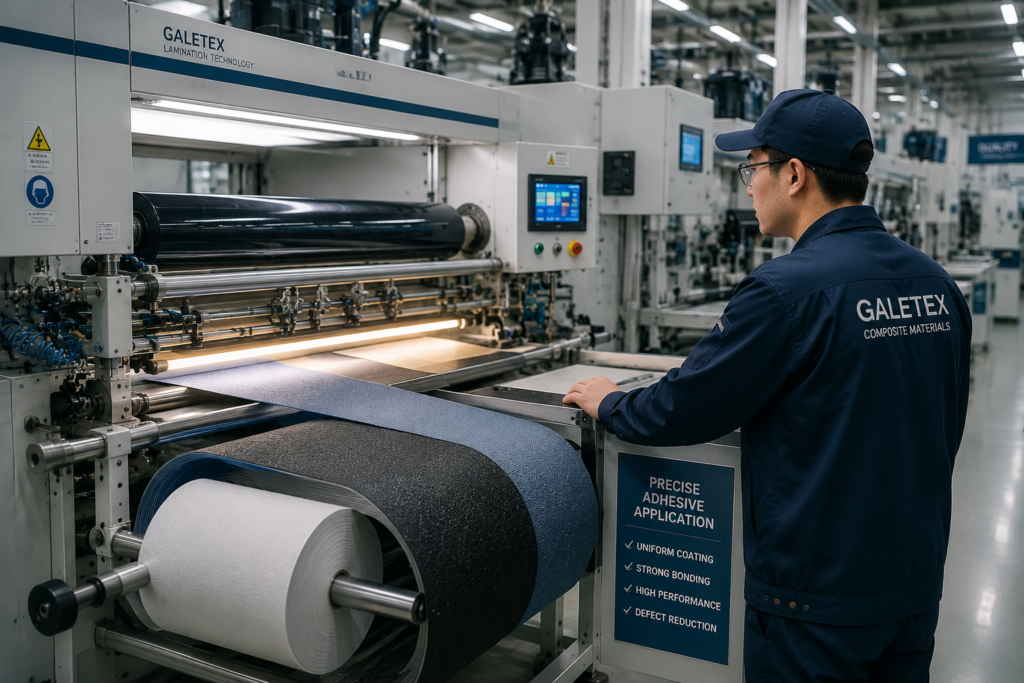
5. Uneven Adhesive Distribution
Too much or too little adhesive can create quality issues.
Problems include:
- Hard material feeling
- Reduced flexibility
- Weak bonding areas
Precise adhesive control systems are necessary for stable production.
How Manufacturers Can Prevent Lamination Defects
1. Use High-Quality Raw Materials
Material compatibility is the foundation of successful lamination.
Manufacturers should evaluate:
- Fabric structure
- Surface treatment
- Chemical compatibility
- Thermal resistance
Selecting suitable materials reduces production instability.
2. Optimize Lamination Parameters
Important production parameters include:
| Parameter | Importance |
|---|---|
| Temperature | Controls adhesive activation |
| Pressure | Ensures layer bonding |
| Speed | Influences bonding consistency |
| Adhesive Amount | Determines bonding strength |
Continuous monitoring helps maintain stable production quality.
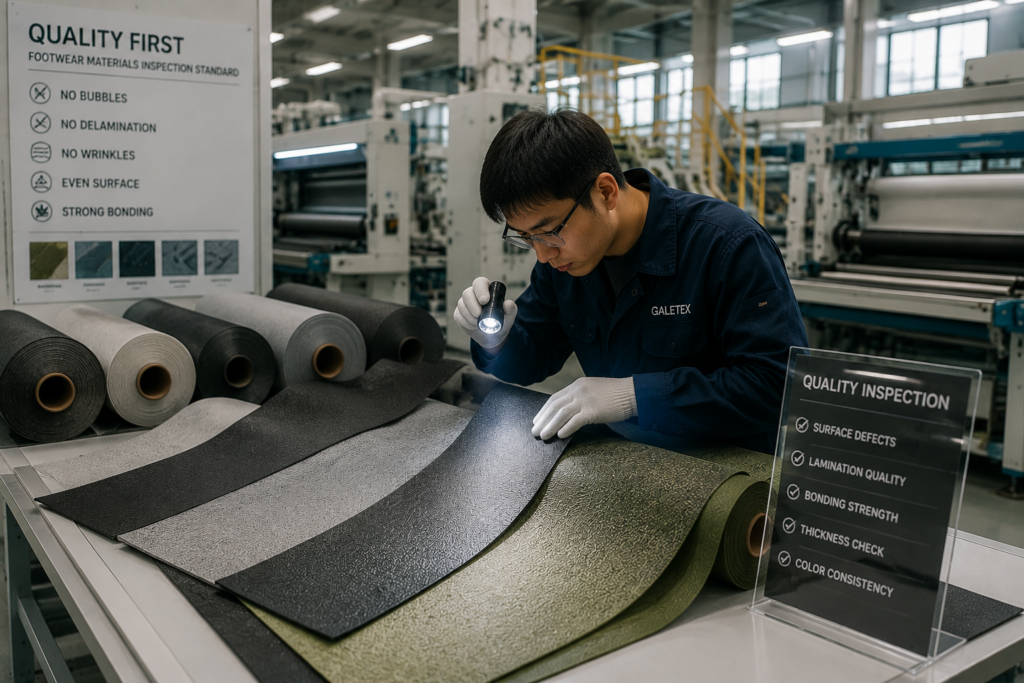
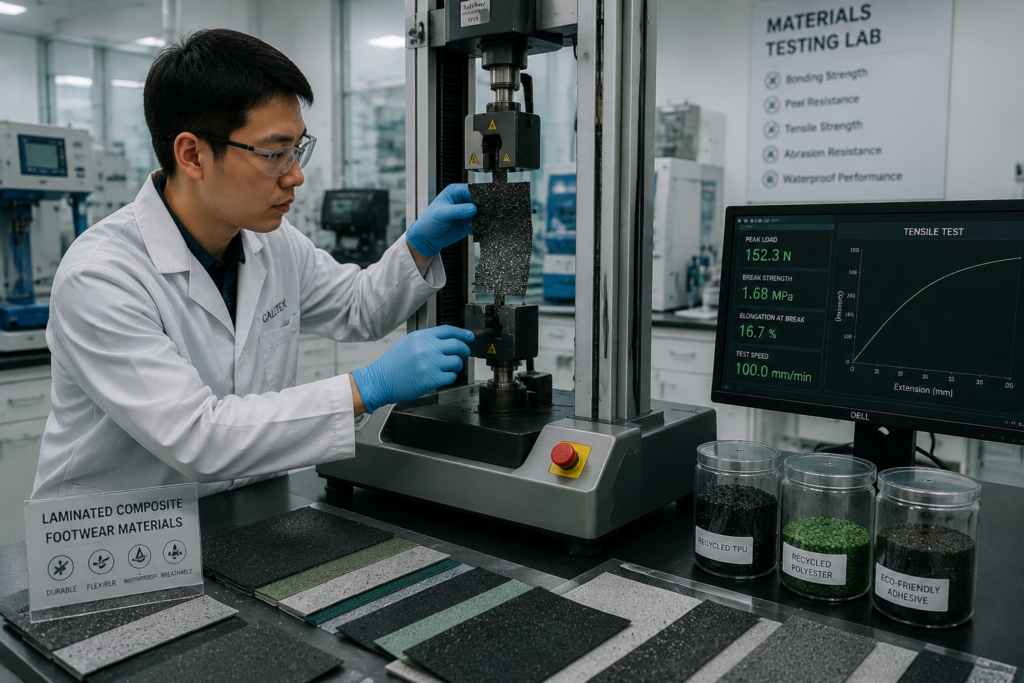
3. Implement Quality Testing
Professional manufacturers should perform:
- Peel strength testing
- Abrasion testing
- Waterproof testing
- Flex resistance testing
These inspections ensure laminated materials meet footwear application requirements.
The Role of Advanced Lamination Technology
Modern lamination systems help manufacturers achieve better consistency through:
- Automated temperature control
- Precise pressure regulation
- Digital production monitoring
- Advanced adhesive systems
These technologies reduce manufacturing waste and improve overall material reliability.
For footwear manufacturers, investing in advanced lamination processes creates stronger, lighter, and more durable composite materials.
Why Lamination Quality Matters for Footwear Buyers
For international footwear brands, material quality directly affects:
- Product durability
- Customer satisfaction
- Brand reputation
- Production efficiency
Choosing an experienced composite material supplier helps buyers avoid quality risks and ensure stable product development.
Reliable suppliers should provide:
- Technical support
- Customized solutions
- Quality documentation
- Production consistency
Conclusion
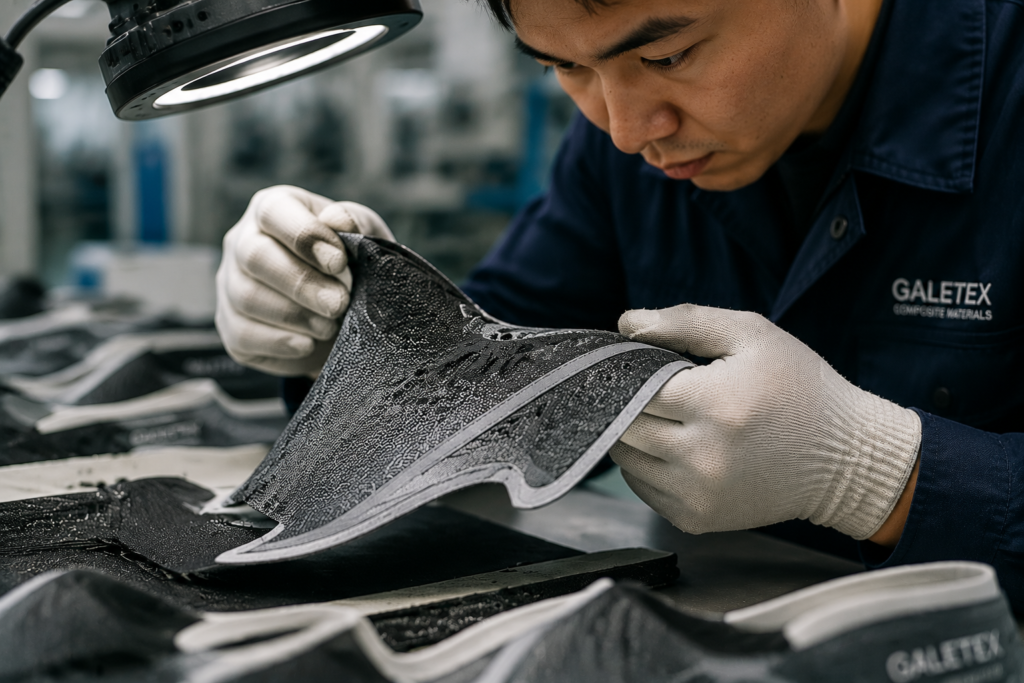
Common Lamination Defects can significantly influence the performance, appearance, and durability of footwear composite materials. By controlling production parameters, selecting compatible materials, and implementing strict quality inspection systems, manufacturers can reduce defects and improve product reliability.
As footwear brands continue demanding lightweight, durable, and sustainable material solutions, advanced lamination technology will remain a key factor in developing high-quality footwear products.
Working with an experienced composite material supplier ensures better quality control, customized development, and long-term manufacturing success.
FAQ
1. What are the most common lamination defects?
The most common defects include poor bonding strength, delamination, air bubbles, wrinkles, and uneven adhesive distribution.
2. Why does delamination happen?
Delamination usually occurs because of weak bonding, incorrect processing parameters, or incompatible materials.
3. How can manufacturers prevent lamination defects?
Manufacturers can reduce defects through proper equipment adjustment, material testing, and strict production control.
4. Why is lamination important in footwear materials?
Lamination improves waterproof performance, durability, flexibility, and multifunctional performance.
5. How should buyers choose a lamination supplier?
Buyers should evaluate production capability, quality systems, testing processes, and technical support.