
Introduction
Sustainable Footwear Materials have become one of the most important factors influencing the future development of the global footwear industry. As brands, manufacturers, and material buyers face increasing environmental requirements, choosing the right sustainable materials has become essential for creating high-performance footwear while reducing environmental impact.
Modern footwear buyers are no longer focused only on appearance, price, and durability. They are increasingly looking for material suppliers that can provide environmentally responsible solutions, stable quality, advanced technology, and reliable supply chain support.
From recycled textiles and bio-based materials to lightweight laminated composites, sustainable footwear materials are helping manufacturers develop shoes that combine comfort, performance, and environmental responsibility.
For global footwear brands and shoe manufacturers, understanding material technology, production processes, and supplier capabilities is critical when selecting sustainable solutions.

What Are Sustainable Footwear Materials?
Sustainable footwear materials refer to materials designed to reduce environmental impact throughout their lifecycle, from raw material sourcing and manufacturing to product use and disposal.
Unlike traditional materials that may rely heavily on virgin resources and energy-intensive production methods, sustainable materials focus on improving resource efficiency, reducing waste, and supporting environmentally responsible manufacturing.
Common examples include:
| Material Type | Application | Advantages |
|---|---|---|
| Recycled Polyester Fabrics | Shoe uppers and lining | Reduces reliance on virgin materials |
| Recycled TPU Films | Waterproof layers | Durable and recyclable |
| Bio-based Materials | Sustainable footwear components | Lower environmental impact |
| Laminated Composite Fabrics | Performance footwear | Lightweight and multifunctional |
| Water-based Adhesive Materials | Bonding processes | Reduced chemical emissions |
For footwear manufacturers, sustainable materials must maintain the same or better performance compared with conventional alternatives.
Why Buyers Are Choosing Sustainable Footwear Materials
1. Meeting Global Environmental Requirements
International footwear brands are facing stricter sustainability goals and environmental regulations. Material suppliers must provide solutions that support responsible production practices and help brands achieve their sustainability targets.
Sustainable Footwear Materials allow manufacturers to reduce waste, improve material efficiency, and develop products aligned with changing consumer expectations.
2. Improving Product Performance
Sustainability does not mean sacrificing performance.
Advanced sustainable materials can provide:
- Lightweight construction
- Waterproof protection
- Breathability
- Abrasion resistance
- Flexibility
- Long-term durability
Modern composite technologies allow manufacturers to combine multiple functional layers into one high-performance material structure.
3. Supporting Brand Value
Consumers are increasingly interested in environmentally responsible products. Footwear brands using sustainable materials can strengthen brand reputation and create stronger connections with environmentally conscious customers.
For buyers, selecting reliable sustainable material suppliers is becoming an important competitive advantage.
Key Factors Buyers Should Consider When Selecting Sustainable Materials
Choosing the right sustainable footwear material supplier requires careful evaluation.
1. Material Performance
Buyers should evaluate:
| Property | Typical Requirement |
|---|---|
| Material Weight | Lightweight construction |
| Thickness | Customized according to application |
| Abrasion Resistance | High durability |
| Water Resistance | Optional waterproof performance |
| Breathability | Improved wearing comfort |
| Flex Resistance | Long-term reliability |
2. Manufacturing Capability
A qualified supplier should provide:
- Stable production capacity
- Consistent material quality
- Customized development
- Technical support
- Quality inspection systems
- International shipping experience
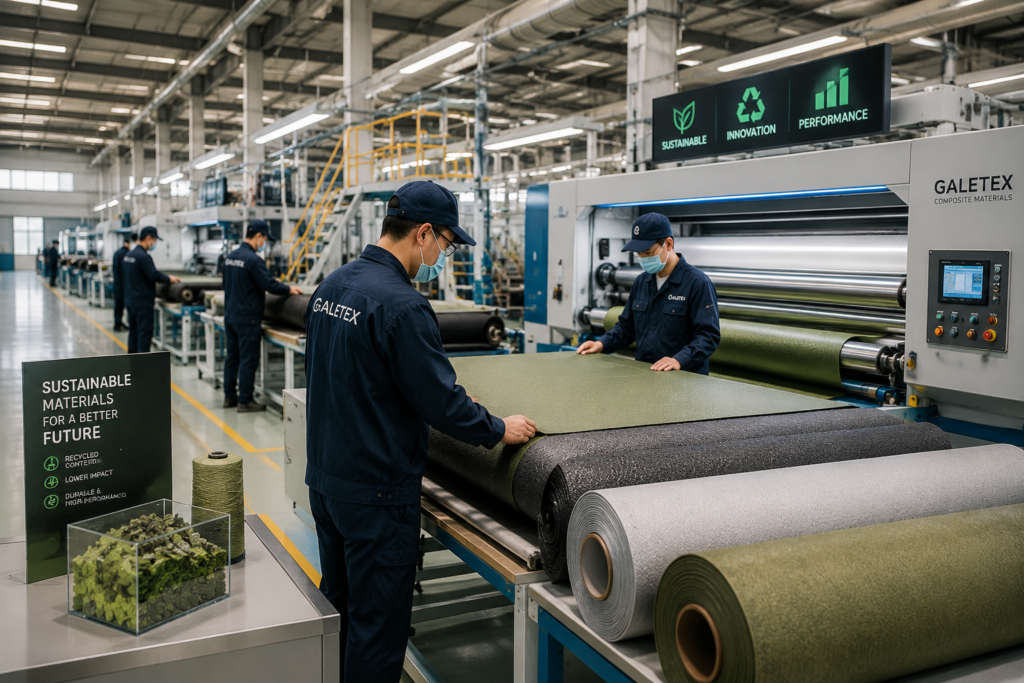
Advanced production technologies such as lamination, coating, and composite manufacturing help ensure consistent performance.
3. Sustainability Certifications and Standards
Buyers should also consider whether suppliers follow recognized environmental management practices.
Organizations such as the International Organization for Standardization provide internationally recognized standards that help manufacturers improve environmental and quality management systems.
External reference:
Advanced Technologies Behind Sustainable Footwear Materials
Modern sustainable footwear production increasingly relies on advanced material technologies.
Laminated Composite Materials
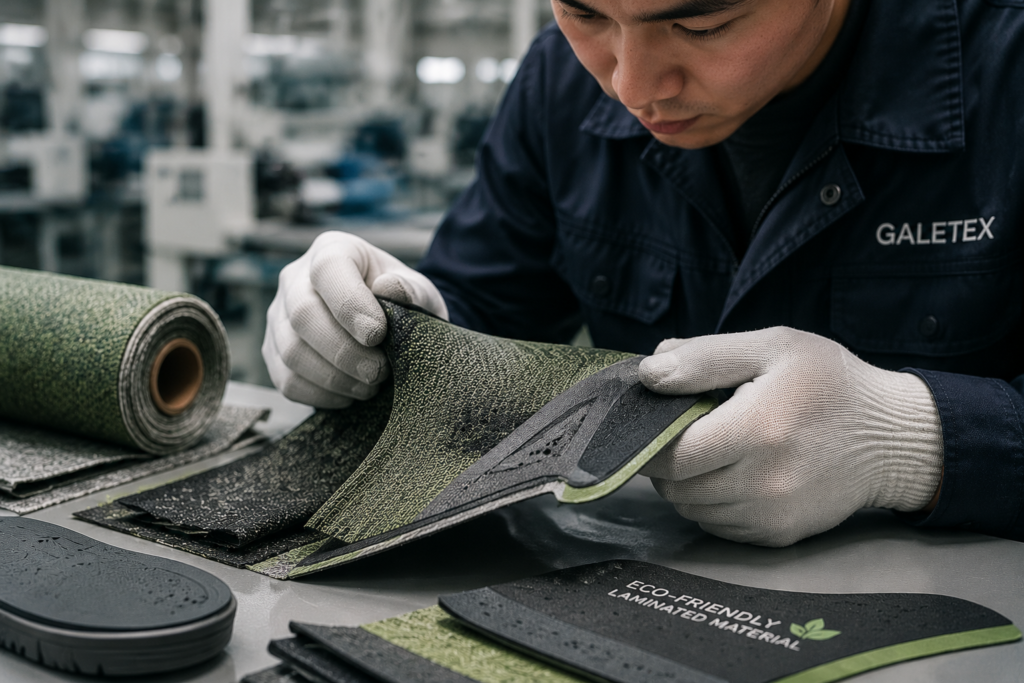
Lamination technology combines different material layers to achieve improved performance while reducing unnecessary material usage.
Applications include:
- Waterproof footwear
- Outdoor shoes
- Sports footwear
- Safety shoes
Recycled Material Integration
Many manufacturers are adopting recycled:
- Polyester fibers
- TPU films
- Textile waste materials
These solutions help reduce dependence on new resources while maintaining product performance.
Digital Manufacturing and Quality Control
Advanced production systems improve:
- Manufacturing accuracy
- Material utilization
- Production efficiency
- Quality consistency
Digital inspection systems also help reduce defective products and unnecessary waste.

Future Trends of Sustainable Footwear Materials
The footwear industry will continue moving toward more sustainable and intelligent material solutions.
Future trends include:
- Bio-based footwear materials
- Recycled composite textiles
- Solvent-free lamination technology
- Water-based bonding systems
- Lightweight multifunctional materials
- Smart manufacturing systems
- Carbon footprint monitoring
As environmental requirements continue increasing, suppliers that combine sustainability with advanced engineering capabilities will become more valuable partners for global footwear manufacturers.
Why Choose the Right Sustainable Material Supplier?
Selecting the right supplier directly affects product quality, production efficiency, and long-term business success.
Experienced suppliers can provide:
- Customized material solutions
- Stable production capability
- Reliable quality control
- Technical consultation
- Fast sampling support
- Global supply chain experience
For international buyers, cooperation with a professional composite material manufacturer can reduce development risks and accelerate new footwear product launches.
Conclusion
Sustainable Footwear Materials are transforming the way global footwear manufacturers design and produce modern shoes. By combining environmental responsibility with advanced performance, sustainable materials help brands reduce environmental impact while maintaining durability, comfort, and product quality.
For footwear buyers, selecting the right material partner is not only about purchasing fabrics. It is about building long-term cooperation with suppliers that understand technology, sustainability, and global manufacturing requirements.
As the footwear industry continues evolving, sustainable composite materials will play an increasingly important role in creating the next generation of high-performance footwear products.
Frequently Asked Questions (FAQ)
1. What are Sustainable Footwear Materials?
Sustainable Footwear Materials are environmentally responsible materials designed to reduce resource consumption, waste, and environmental impact while maintaining footwear performance.
2. Are sustainable materials suitable for high-performance footwear?
Yes. Modern sustainable materials can provide excellent durability, waterproof performance, flexibility, and lightweight construction.
3. What sustainable materials are commonly used in footwear?
Common materials include recycled polyester, recycled TPU films, bio-based materials, laminated composite fabrics, and eco-friendly textile solutions.
4. How do sustainable materials benefit footwear brands?
They help brands reduce environmental impact, meet sustainability goals, improve market competitiveness, and respond to consumer demand for eco-friendly products.
5. How can buyers select a reliable sustainable footwear material supplier?
Buyers should evaluate production capability, material performance, quality systems, customization ability, and international supply experience.