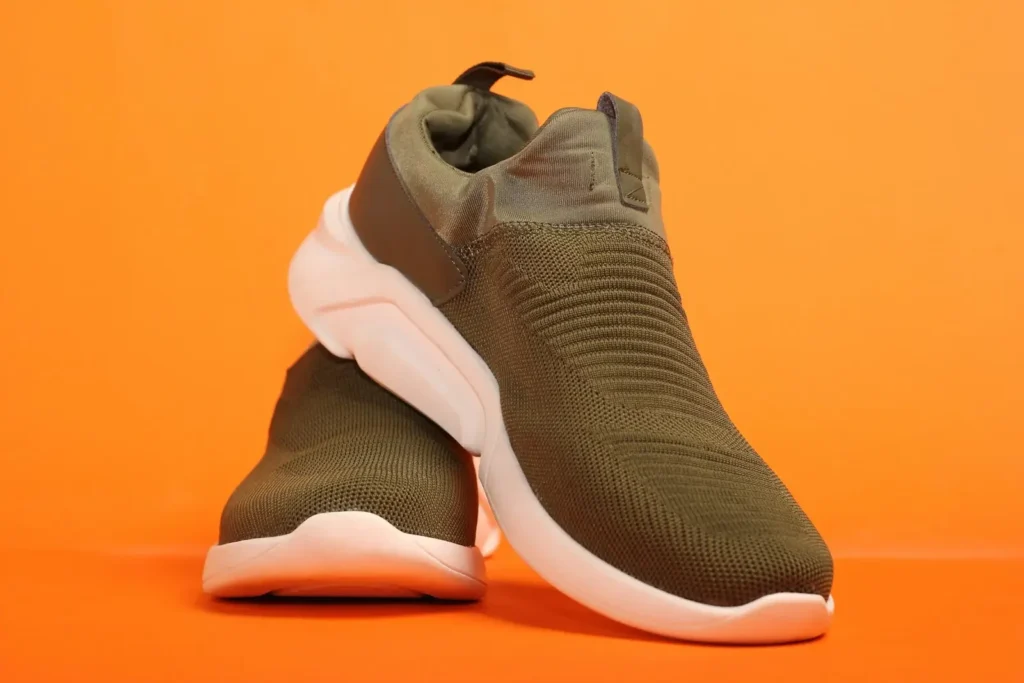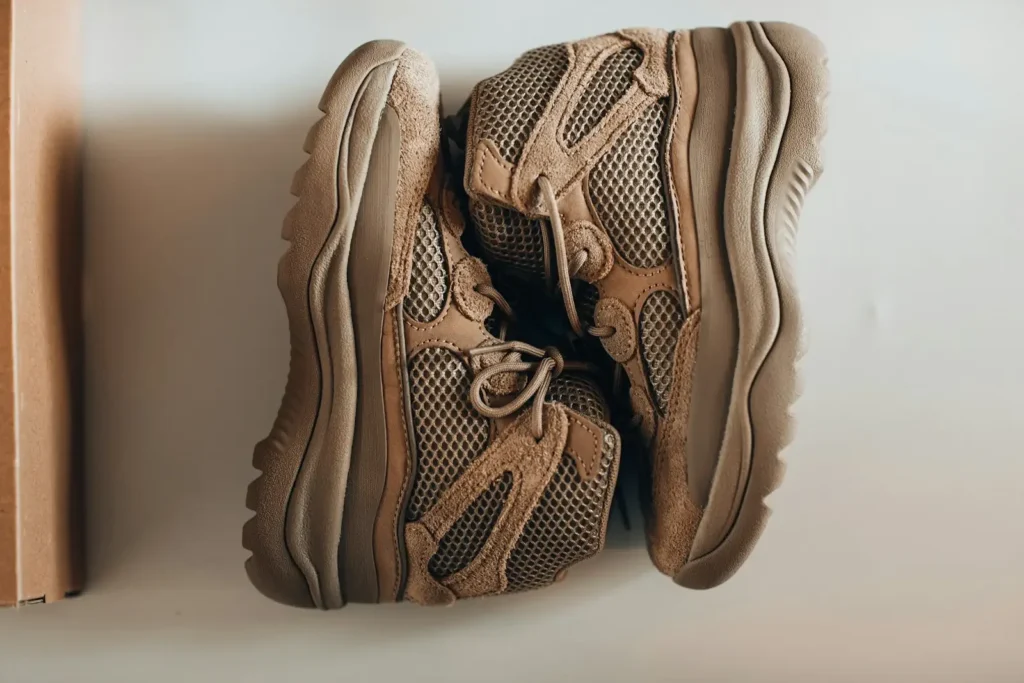
In modern functional footwear manufacturing, a single layer of fabric is rarely sufficient to meet the demanding requirements of consumers. Whether developing a lightweight waterproof running shoe or a heavy-duty tactical boot, designers require materials that are simultaneously durable, breathable, waterproof, and comfortable.
Achieving all these properties in one textile is impossible with raw, single-layer fabrics. The solution lies in advanced composite shoe materials created through highly precise lamination processes. In this comprehensive guide, we will explore how these high-tech multi-layer fabrics are constructed and why the lamination technique is critical to shoe performance.
The Anatomy of a Laminated Shoe Fabric
A composite fabric is essentially a “sandwich” of different textiles and functional films permanently bonded together. While combinations vary based on the shoe’s purpose, a standard 3-layer waterproof composite typically consists of:
1. The Outer Layer (The Shell)
This is the visible face of the shoe upper. It is usually made of abrasion-resistant nylon, durable polyester mesh, or woven textiles. Its primary job is to protect the inner layers from physical damage, dirt, and tears while allowing air to flow.
2. The Membrane (The Functional Barrier)
Hidden in the middle is the core technology: the waterproof and breathable film. Depending on the performance requirements, factories will use a premium PTFE membrane for extreme weather conditions or a flexible PU membrane for commercial everyday waterproof shoes. This layer stops liquid water from entering while letting sweat vapor escape.
3. The Inner Lining (The Comfort Layer)
This is the layer that touches the wearer’s foot or sock. It is usually a soft, moisture-wicking knitted fabric or tricot. Its purpose is to pull sweat away from the skin and provide structural comfort.
The Science of Lamination: PUR Hot-Melt Technology
Bonding these three distinct layers together is the most challenging part of manufacturing composite shoe materials. If you simply glue them together using traditional liquid adhesives, the glue will form a solid wall, completely blocking the micropores of the membrane. The shoe will become waterproof, but it will trap all the sweat inside, feeling like a plastic bag.
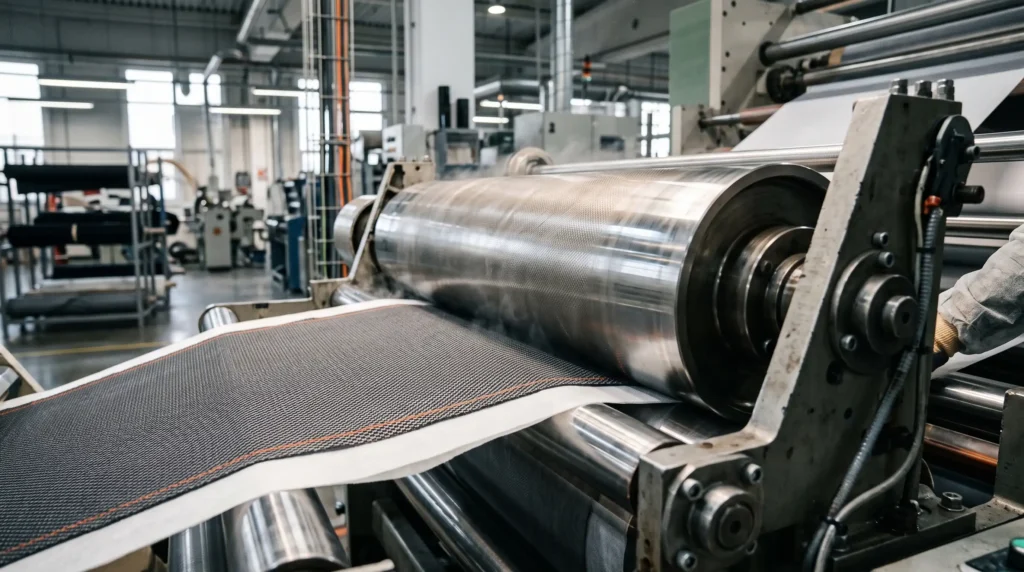
To solve this, industry-leading suppliers use PUR (Polyurethane Reactive) Hot-Melt Dot Lamination.
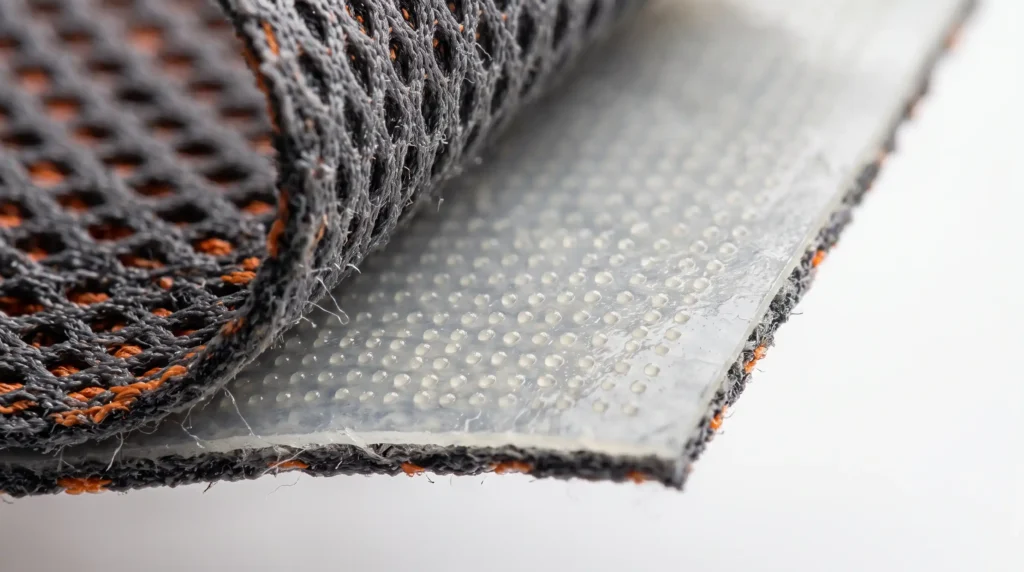
Instead of applying a flat coat of glue, computer-controlled machinery applies microscopic “dots” of heated PUR adhesive in a precise grid pattern.
- The dots provide an incredibly strong permanent bond (high peel strength).
- The microscopic empty spaces between the glue dots allow water vapor to pass through freely, preserving the breathability of the membrane.
- PUR adhesive is eco-friendly, solvent-free, and retains its flexibility even in freezing temperatures.
Why Quality Control Matters in Lamination
A poorly laminated fabric can destroy a footwear brand’s reputation. If the lamination process is not strictly controlled, shoe factories will face several critical failures during assembly or wearing:
- Delamination: If the adhesive bond is weak, the layers will separate (bubble or peel) when the shoe flexes.
- Stiffening: Incorrect glue application can make the fabric too rigid, making the shoe uncomfortable and difficult for the factory to last and shape.
- Blocked Pores: Applying too much heat or adhesive can melt the delicate waterproof membrane or block its breathable pores, completely ruining its functional value.
To prevent these issues, premium material suppliers continuously test their composite rolls for peel strength, hydrostatic pressure, and Moisture Vapor Transmission Rate (MVTR), ensuring all production batches comply with ISO 9001 quality management systems and international footwear standards.
Partner with Galetex for Advanced Composite Solutions
At Galetex, we are not just textile traders; we are experts in advanced lamination engineering. We utilize state-of-the-art PUR hot-melt technology to bond high-performance membranes with durable outer meshes, creating flawless, ready-to-sew composite materials for global footwear manufacturers.
Whether you need a custom 2-layer lamination for lightweight sneakers or a rugged 3-layer package for safety boots, our engineering team can design and produce the exact material your footwear requires. Focus on building exceptional shoes, and rely on Galetex to provide the perfect composite foundation.