For decades, the standard method to make shoes resist water was heavily reliant on fluorinated compounds (PFCs or PFAS). These “forever chemicals” provided excellent oil and water repellency but created severe environmental and health hazards. Today, the global footwear industry is undergoing a massive shift. For brands, factories, and material sourcing managers, finding a high-performance fluorine-free waterproof fabric is now a critical priority to remain compliant and competitive[cite: 1, 3].
However, transitioning to fluorine-free materials cannot come at the expense of performance. A shoe must still withstand rugged outdoor conditions and keep feet dry. In this guide, we will explore the technology behind modern fluorine-free waterproof fabric and explain how brands can successfully transition to eco-friendly, high-performance shoe materials[cite: 1, 3].
The Impact of Environmental Regulations in 2026
The footwear manufacturing landscape in 2026 is heavily shaped by strict environmental laws. Environmental agencies globally are progressively banning PFAS, forcing factories to eliminate fluorinated compounds from their production lines[cite: 3].
Brands must now adhere to an increasingly strict restricted substance list (RSL) to access major consumer markets. The focus has moved to third-party certifications like OEKO-TEX® and bluesign® to prove that a product is completely free of harmful fluorine chemistry. Consequently, standard DWR (Durable Water Repellent) finishes are being replaced by advanced fluorine-free alternatives[cite: 1].
Traditional PFCs vs. Modern Fluorine-Free Fabric
To understand the change, we must look at how the fabric repels water.
Historically, fabrics were treated with long-chain (C8) and later short-chain (C6) fluorocarbons. These chemicals lowered the surface tension of the fibers, causing water to bead and roll off. However, these compounds do not degrade and accumulate in the environment.
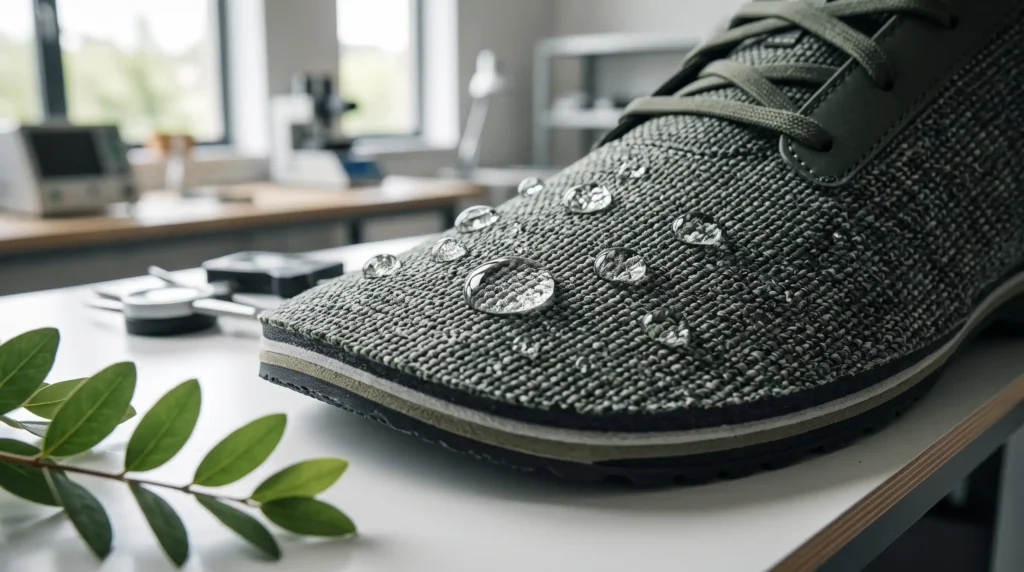
Modern fluorine-free waterproof fabric uses non-fluorinated technology—typically based on silicone, modified polymers, or plant-based raw materials (such as natural waxes and renewable finishes)[cite: 1]. This creates a high-performance waterproof breathable fabric that mimics nature (the lotus effect) to shed water effectively while being fully biodegradable or non-hazardous[cite: 1].
Key Eco-Friendly Technologies: ePE and TPU
Eliminating fluorine from the DWR coating is only half the battle; the internal membrane must also be eco-friendly.
Historically, PTFE membranes (which are fluoropolymers) were standard. While highly effective, their manufacture and disposal are under intense scrutiny. The industry is moving to sustainable alternatives:
- ePE (expanded Polyethylene) Membrane: Developed as a direct, fluorine-free replacement for ePTFE[cite: 3]. It offers a lightweight, high-performance, and non-fluorinated microporous barrier with a much lower carbon footprint[cite: 3].
- TPU and PU Membranes: Completely fluorine-free by nature. Polyurethane-based membranes are highly flexible, elastic, and recyclable, making them perfect for sports, casual, and outdoor footwear.
Why Lamination is Key to Eco-Friendly Performance
Because fluorine-free coatings have slightly different physical properties compared to traditional PFCs, the lamination process must be incredibly precise to ensure the fabric does not fail during dynamic wear.
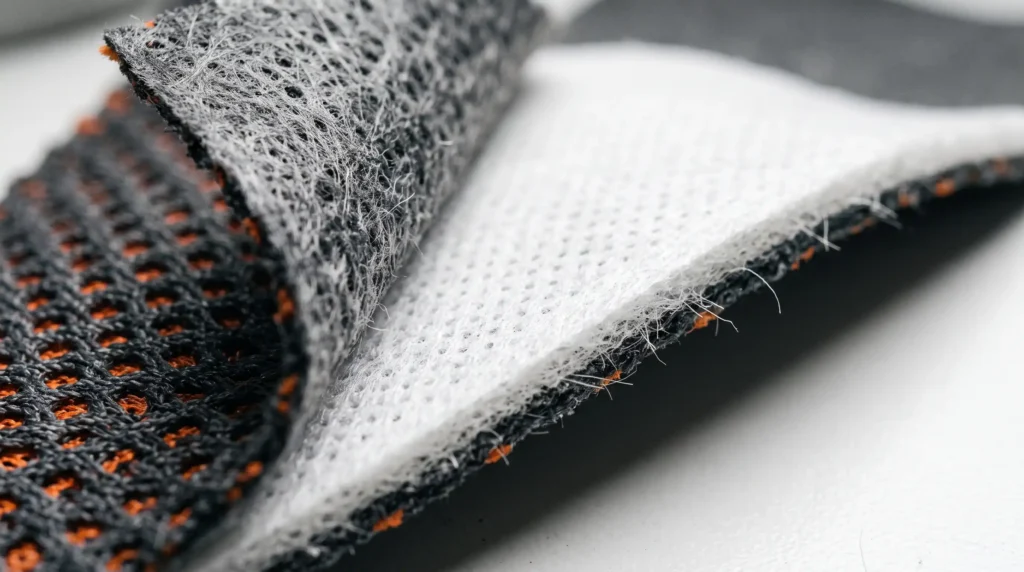
To produce sustainable composite shoe materials, manufacturers utilize PUR (Polyurethane Reactive) hot-melt dot lamination.
- Solvent-Free: PUR lamination requires no hazardous solvents, keeping the entire material eco-friendly.
- Breathability Preservation: The precise adhesive dot pattern ensures that the porous, fluorine-free membranes remain entirely open and breathable[cite: 4].
- Dynamic Durability: Advanced non-toxic bonding guarantees the high peel strength required to survive international waterproof flex tests without peeling or bubbling.
Elevate Your Footwear with Galetex Non-PFC Materials
Transitioning to environmentally conscious materials can feel challenging, but you don’t have to sacrifice waterproof performance. At Galetex, we specialize in the development and PUR lamination of advanced fluorine-free waterproof fabric[cite: 1].
By combining recycled outer textiles with sustainable ePE and TPU membranes, we provide footwear manufacturers with highly durable, compliant, and ready-to-cut composite rolls. Reach out to our technical team today to discover how we can help your brand move toward a greener, safer, and high-performance future.