Waterproof footwear has evolved from a niche outdoor category into a mainstream expectation across hiking, work, winter, and even everyday casual lines. For footwear brands and manufacturers, the waterproof membrane is the component that makes or breaks that promise. Choose the right one, and the shoe performs season after season in real weather. Choose the wrong one, and the result is delaminated linings, soggy customer complaints, warranty claims, and lasting damage to brand reputation. Yet with several membrane chemistries on the market, dozens of competing performance claims, and wide quality variation between suppliers, making the right selection is rarely straightforward.
The right waterproof membrane for shoes is the one that matches your footwear category, target climate, and price tier, not the one with the highest headline numbers. For premium hiking and high-exertion outdoor footwear, an ePTFE microporous membrane offers the best balance of waterproofing and breathability. For most mid-market outdoor, work, and winter styles, a TPU membrane delivers reliable waterproofing, strong flex durability, and easier recyclability at a moderate cost. For value-oriented casual and occupational footwear, a PU membrane remains a proven and economical choice. Whatever the type, your final decision should be validated against hydrostatic head, moisture vapor transmission, flex durability, laminate construction, and documented supplier test reports rather than marketing claims.
The five-step framework below walks through that decision process, from defining the application to qualifying the supplier.
What to Know Before Choosing a Waterproof Membrane
A waterproof membrane for shoes is a thin functional film, typically 10 to 25 microns thick, laminated between the shoe upper and the lining. It blocks liquid water from entering while allowing sweat vapor to escape, and that combination is what separates a genuinely waterproof construction from a merely water-resistant one.
Understanding how a waterproof material for shoes is engineered starts with the two working mechanisms behind every membrane on the market. Microporous membranes, most commonly made from expanded PTFE, contain billions of microscopic pores per square inch. Each pore is far smaller than a water droplet but thousands of times larger than a molecule of water vapor, so rain stays out while sweat escapes. Hydrophilic membranes, made from TPU or PU, have no pores at all. Instead, their polymer chains attract water molecules on the warm, humid side of the film and pass them through to the cooler, drier side in a process known as solid-state diffusion.
It is equally important not to confuse membranes with coatings, because the two are frequently conflated in supplier catalogs. A durable water repellent (DWR) finish or a PU coating sits on the surface of a fabric and wears down with abrasion, flexing, and washing. A membrane, by contrast, is laminated inside the construction of the shoe, so its waterproofing performance is protected by the outer layers and remains stable over the life of the footwear. Coatings can be a useful supplement, but they cannot replace a membrane where sustained waterproof performance is required.
How to Choose a Waterproof Membrane: A 5-Step Selection Framework
A sound selection process moves through five steps: define the application, match the membrane chemistry to the performance requirements, verify the numbers on the technical data sheet, choose the laminate construction, and qualify the supplier. Most sourcing mistakes happen when one of these steps is skipped.
Step 1: Define Your Footwear Application and End Use
Every downstream decision depends on a precise definition of what the shoe will face in real use. Before requesting samples or comparing specifications, answer four questions in writing.
- What is the activity and intensity level? A trail-running shoe flexes far more often and traps more sweat than a casual winter boot.
- What is the climate? Sustained heavy rain, wet snow slush, and occasional showers place very different demands on the membrane.
- What is the retail price tier and warranty exposure? A premium boot with a multi-year warranty justifies a higher membrane cost than a seasonal style.
- What are the construction constraints? Insulation layers, stitching density, and high-flex zones all affect which membrane and laminate can survive the build.
A winter work boot for cold, wet job sites will prioritize waterproofing and durability over breathability. A lightweight hiking shoe for warm climates will prioritize vapor transfer and flexibility. Writing down these requirements first prevents the most common selection error: buying more waterproofing than the application needs while sacrificing comfort.
Step 2: Match the Membrane Type to Your Performance Requirements
With the application defined, compare the three dominant membrane chemistries against your requirements rather than against each other in the abstract.
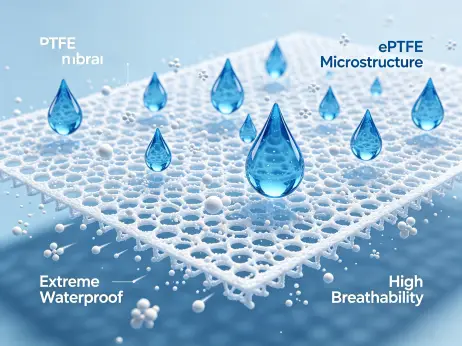
A PTFE waterproof membrane built on expanded PTFE membrane technology is the benchmark for high-exertion outdoor footwear. Its microporous structure provides exceptional breathability that does not depend on a temperature or humidity gradient, which means it keeps working in cold, wet conditions where hydrophilic films slow down. The trade-offs are higher cost and greater sensitivity to contamination from oils and surfactants if the laminate is poorly made.
TPU membranes are hydrophilic and non-porous, using polymer chemistry rather than pores to move vapor. They are highly elastic, which suits the high-flex zones of a shoe, and their thermoplastic nature makes them the most recyclable of the three options, an increasingly important factor for brands with sustainability targets. High-spec TPU films now close much of the historical breathability gap with ePTFE.
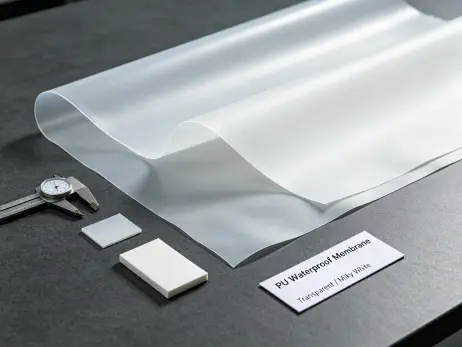
PU membranes are the workhorse of value-oriented footwear. They provide dependable waterproofing at the lowest cost and resist abrasion well, but their breathability is moderate and their vapor transmission can degrade over time as the polymer absorbs oils from perspiration.
| Membrane Type | Waterproofing (Hydrostatic Head) | Breathability (MVTR, g/m²/24h) | Flex Durability | Relative Cost | Best Fit |
| ePTFE (microporous) | 15,000 to 28,000 mm | 8,000 to 15,000 | Very high | High | Premium hiking, alpine, high-exertion outdoor |
| TPU (hydrophilic) | 8,000 to 15,000 mm | 4,000 to 8,000 | High | Medium | Mid-market outdoor, work, winter footwear |
| PU (hydrophilic) | 5,000 to 10,000 mm | 3,000 to 5,000 | Moderate | Low | Casual, budget, and occupational styles |
So which waterproofing membrane is best? There is no universal winner. The best membrane for a 200-dollar alpine trekking boot is an ePTFE film; the best membrane for a 60-dollar winter casual shoe is almost certainly a PU or standard TPU film, because the performance of the ePTFE would be wasted and its cost would price the product out of its market.
Step 3: Verify Performance Metrics on the Technical Data Sheet
Marketing numbers mean nothing until they are checked against standardized test methods and your own application thresholds. Four metrics deserve close attention on every technical data sheet.
First is hydrostatic head, the measure of water pressure a fabric withstands before leaking, tested under the ISO 811:2018 hydrostatic pressure method. Around 10,000 mm is widely treated as the floor for a defensible waterproof claim in footwear, while 20,000 mm and above is preferred for heavy-duty outdoor use. Second is moisture vapor transmission rate (MVTR), expressed in grams per square meter over 24 hours, which tells you how much sweat the shoe can move out; high-intensity footwear generally needs at least 8,000. Third is RET, the resistance to evaporative heat transfer, where lower values mean better breathability, with readings below 6 considered very breathable. Fourth is flex durability, because shoes flex far more than jackets: a membrane should withstand 50,000 to 100,000 flex cycles without cracking or delaminating.
| Metric | What It Measures | Minimum for Waterproof Footwear | Preferred for Heavy-Duty Use |
| Hydrostatic head | Resistance to water pressure | 10,000 mm | 20,000 mm or more |
| MVTR | Sweat vapor transmission | 4,000 g/m²/24h | 8,000 g/m²/24h or more |
| RET | Resistance to vapor transfer | Below 13 | Below 6 |
| Flex durability | Crack resistance in flex zones | 50,000 cycles | 100,000 cycles |
| Peel strength | Bonding between laminate layers | 5 N/cm | 8 N/cm or more |
One caution: test methods matter as much as results. Ask suppliers which standard and which test condition each number is based on, because upright-cup and inverted-cup MVTR results are not comparable, and a membrane that looks superior on paper may simply have been tested under friendlier conditions. Because comfort depends on the whole assembly rather than the film alone, membrane selection should also be planned together with your broader choice of breathable materials for shoes, including linings and face fabrics.
Step 4: Select the Right Laminate Construction and Sealing Process
The membrane is only as good as the laminate built around it. Most waterproof footwear uses a three-layer construction, in which the membrane is bonded between a face fabric and a lining, but the alternatives matter for certain categories. A two-layer laminate, membrane plus loose lining, is softer and cheaper and suits casual styles. A four-layer construction adds insulation for winter boots, with the membrane positioned to protect the insulation from external moisture.
Ask suppliers two process questions before committing. How is the adhesive applied? Full-surface adhesive coating can clog the pores of a microporous membrane and cut breathability dramatically, while dot-mapped hot-melt lamination preserves open area for vapor transfer. And is matching seam sealing tape available? A shoe with waterproof material and leaky seams is not a waterproof shoe, so the supplier should provide the correct tape and the recommended heat-press temperature settings for the production line.
Step 5: Evaluate Supplier Capability, Testing, and Compliance
The final step separates membranes that perform in the lab from membranes that perform in production. A structured supplier evaluation should cover the following points.
- Request a sample roll, ideally around five meters, and run it through your own lamination and lasting trials before any bulk order.
- Ask for third-party test reports and confirm the reports match the claimed specifications and the exact product you are buying.
- Check batch-to-batch consistency by comparing data sheets across at least two production lots.
- Verify certifications relevant to your markets, such as OEKO-TEX Standard 100 for harmful substances and GRS if recycled content claims matter to your brand.
- Confirm minimum order quantities, stocked colors, and lead times, since custom colors often carry much higher minimums than standard black or grey.
Comparing shoes membrane specifications across at least three qualified suppliers, against the same test standards, is the most reliable way to see through inflated claims. A supplier who readily provides test data, samples, and seam sealing support is signaling confidence in the product; one who offers only a brochure is signaling the opposite.
Quick Reference: Matching Membranes to Footwear Categories
For most buyers, the fastest route to the right decision is to start from the footwear category and work backward to the membrane and its minimum specifications.
| Footwear Category | Recommended Membrane | Key Specifications to Demand | Construction Notes |
| Hiking and trekking boots | ePTFE or high-spec TPU | 15,000 mm or more; MVTR 8,000 or more; 100,000 flex cycles | Three-layer laminate; matched seam tape |
| Work and safety boots | TPU or PU | 10,000 mm or more; high peel strength; abrasion resistance | Durability over breathability |
| Casual and winter shoes | PU or standard TPU | 5,000 to 8,000 mm | Four-layer with insulation for winter styles |
| Athletic and trail footwear | ePTFE or high-spec TPU | RET below 6; lightweight laminate | Flexibility and weight are critical |
Use this table as a starting point, then refine it against your price tier, climate, and warranty exposure from Step 1.
Frequently Asked Questions
How long does a waterproof membrane last in shoes?
In a well-made three-layer laminate, a quality membrane typically lasts the usable life of the shoe, often three to five years of regular wear. Failure usually comes not from the film itself but from the surrounding system: adhesive delamination, seam tape peeling, or abrasion damage at the flex points. Choosing a laminate with proven peel strength and flex durability, and verifying seam sealing quality, matters more for longevity than the membrane brand on the label.
Can waterproof shoes still be breathable in hot weather?
Yes, but with limits. Breathability depends on a vapor gradient, so even the best membranes move less sweat in hot, humid conditions than in cool, wet ones. Microporous ePTFE membranes are the least affected because they do not rely on chemical diffusion. For hot-climate footwear, prioritize a low RET value, a lightweight laminate, and moisture-managing linings rather than chasing hydrostatic head numbers that the use case will never require.
Do waterproof membranes require special care or maintenance?
The membrane itself needs no maintenance because it is protected inside the laminate, but the system around it does. Dirt and salt clog face fabrics and reduce breathability, so periodic gentle cleaning helps performance. Durable water repellent finishes on the outer fabric should be renewed with heat activation, for example a low-temperature tumble dry, when water stops beading on the surface. Footwear should be dried at room temperature, never near a direct heat source, to protect the adhesive layers in the laminate.