Introduction
Shoe upper materials play a critical role in determining footwear performance, comfort, durability, and appearance. For global footwear manufacturers, selecting the right upper materials is essential to developing shoes that meet consumer expectations while maintaining production efficiency and quality standards.
Modern footwear brands are increasingly looking for advanced materials that provide lightweight construction, breathability, waterproof protection, flexibility, and sustainable performance. Unlike traditional shoe production, today’s footwear manufacturing requires material solutions that combine multiple functions within a single structure.
As a professional supplier of composite footwear materials, Galetex provides advanced laminated fabrics and functional textile solutions designed for sports shoes, outdoor footwear, casual sneakers, safety footwear, and other applications.
Understanding different types of shoe upper materials helps footwear manufacturers choose the most suitable solution for their product requirements.

What Are Shoe Upper Materials?
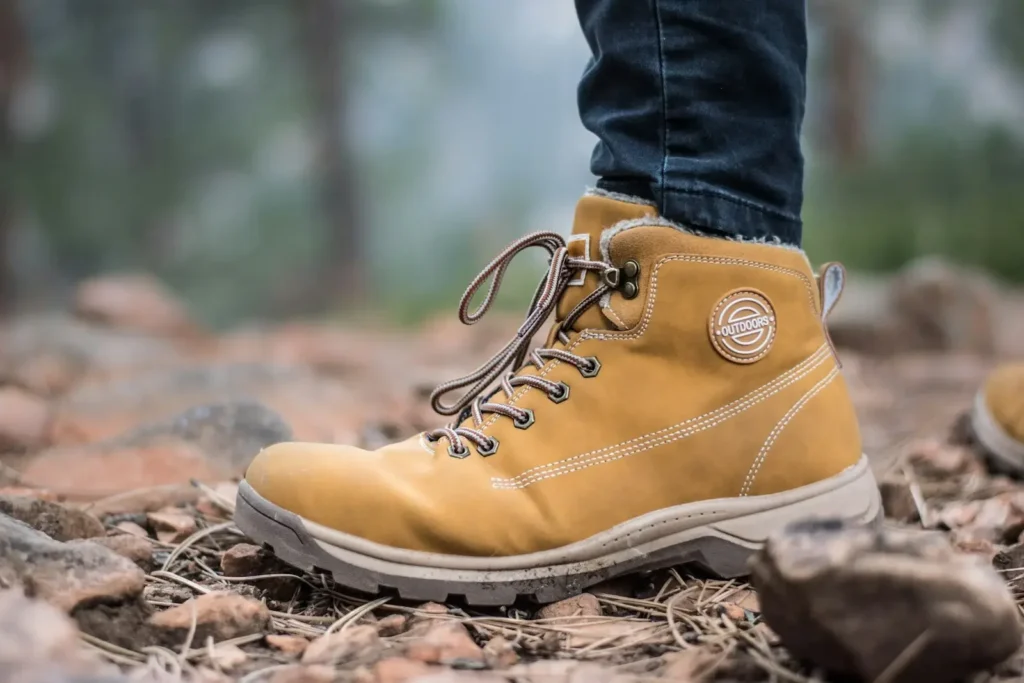
Shoe upper materials are the materials used to create the upper part of footwear that surrounds and protects the foot. The upper structure provides support, comfort, ventilation, and visual design elements.
Depending on footwear requirements, manufacturers may use different combinations of:
- Textile fabrics
- Synthetic materials
- Mesh materials
- PU coated fabrics
- Waterproof membranes
- Laminated composite textiles
- Recycled materials
Modern shoe uppers often combine multiple layers to achieve balanced performance. For example, an outdoor shoe may require a waterproof membrane, breathable textile layer, and durable outer fabric to provide protection in different environments.
Common Types of Shoe Upper Materials
1. Textile Upper Materials
Textile materials are widely used in modern footwear because they offer lightweight construction and excellent flexibility.
Common textile upper materials include:
- Polyester fabrics
- Nylon mesh
- Knitted textiles
- Woven fabrics
- Recycled textile materials
Advantages of textile upper materials include:
- Lightweight performance
- Good breathability
- Flexible wearing experience
- Easy color customization
- Suitable for sports footwear
Textile materials are especially popular in running shoes, casual sneakers, and lifestyle footwear.
2. Synthetic Shoe Upper Materials
Synthetic materials are commonly selected by footwear manufacturers because they provide consistent quality and design flexibility.
Examples include:
- PU synthetic leather
- TPU laminated materials
- Microfiber composites
- Synthetic coated fabrics
Compared with natural leather, synthetic materials can provide:
- Lower weight
- Easier maintenance
- More stable production quality
- Better customization options
For manufacturers producing large-volume footwear, synthetic upper materials offer reliable performance and production efficiency.
3. Mesh Materials for Breathable Footwear
Mesh materials are widely used in athletic footwear because airflow and moisture management are important for user comfort.
Benefits include:
- Enhanced ventilation
- Reduced shoe weight
- Improved flexibility
- Comfortable wearing experience
Running shoes and sports footwear frequently combine mesh structures with reinforced layers to improve durability while maintaining breathability.
4. Waterproof Shoe Upper Materials
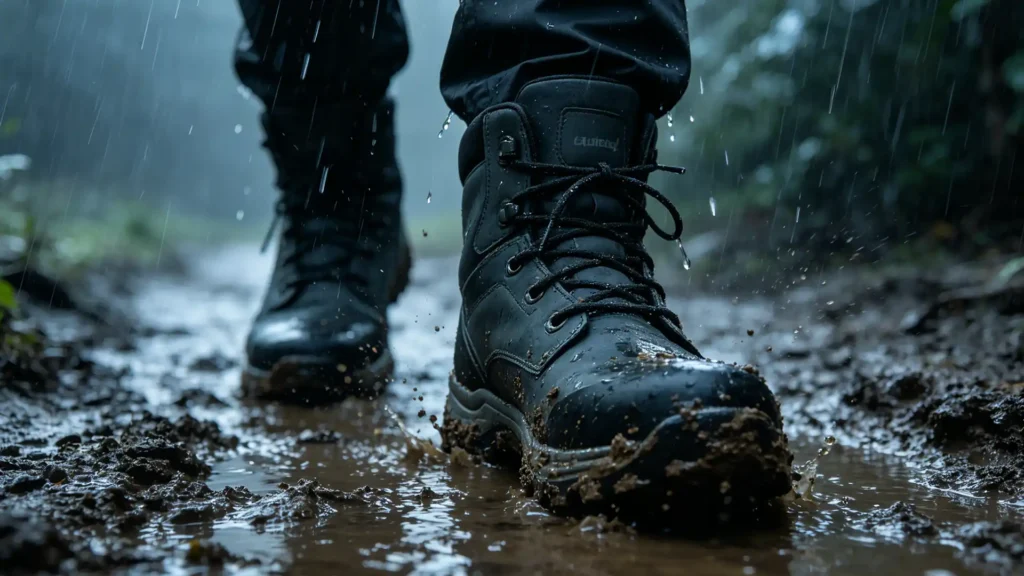
Outdoor footwear requires upper materials that can protect against water while maintaining comfort.
Waterproof shoe upper materials often include:
- Waterproof membranes
- TPU films
- PU layers
- Laminated composite fabrics
Advanced waterproof composite materials allow footwear manufacturers to create products suitable for:
- Hiking shoes
- Outdoor boots
- Work footwear
- Rain-resistant casual shoes
A high-performance waterproof upper material should provide:
- Water resistance
- Breathability
- Strong bonding performance
- Long-term durability
How to Choose the Right Shoe Upper Materials
Selecting the correct upper material depends on several factors.
1. Footwear Application
Different footwear categories require different material characteristics.
| Footwear Type | Recommended Material Features |
|---|---|
| Running Shoes | Lightweight, breathable, flexible |
| Hiking Shoes | Waterproof, durable, abrasion resistant |
| Safety Shoes | Strong protection and stability |
| Casual Sneakers | Comfortable appearance and flexibility |
| Outdoor Footwear | Weather resistance and durability |
2. Performance Requirements
Footwear manufacturers should evaluate:
Breathability
Breathable materials help manage moisture and improve wearing comfort.
Waterproof Performance
Waterproof materials protect against rain and outdoor conditions.
Abrasion Resistance
Durable materials improve product lifespan.
Flexibility
Flexible structures improve comfort during movement.
3. Sustainability Requirements
Sustainability has become an important consideration for international footwear brands.
Many manufacturers are now adopting:
- Recycled polyester fabrics
- Eco-friendly laminated materials
- Bio-based components
- Solvent-free bonding technologies
Choosing sustainable shoe upper materials helps brands reduce environmental impact while meeting consumer expectations.
Composite Shoe Upper Materials: A Modern Solution
Composite materials have become increasingly important in advanced footwear manufacturing.
By combining different functional layers, composite shoe upper materials can achieve multiple performance advantages:
- Lightweight structure
- Waterproof protection
- Breathability
- Improved durability
- Enhanced design flexibility
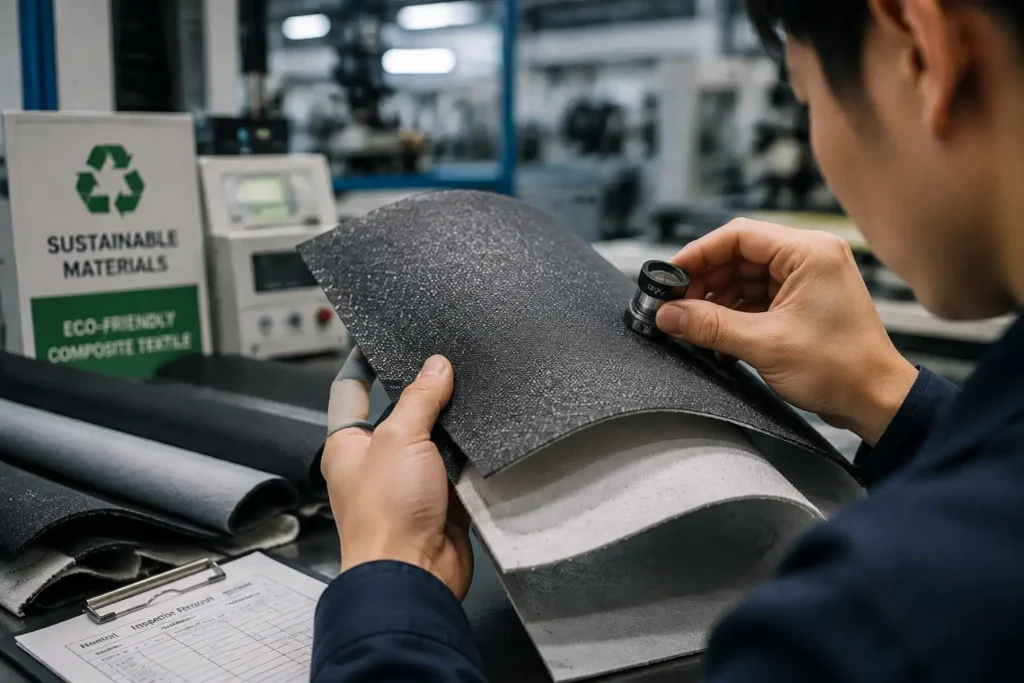
Laminated composite textiles allow manufacturers to integrate different material functions into a single solution, improving production efficiency and reducing assembly complexity.
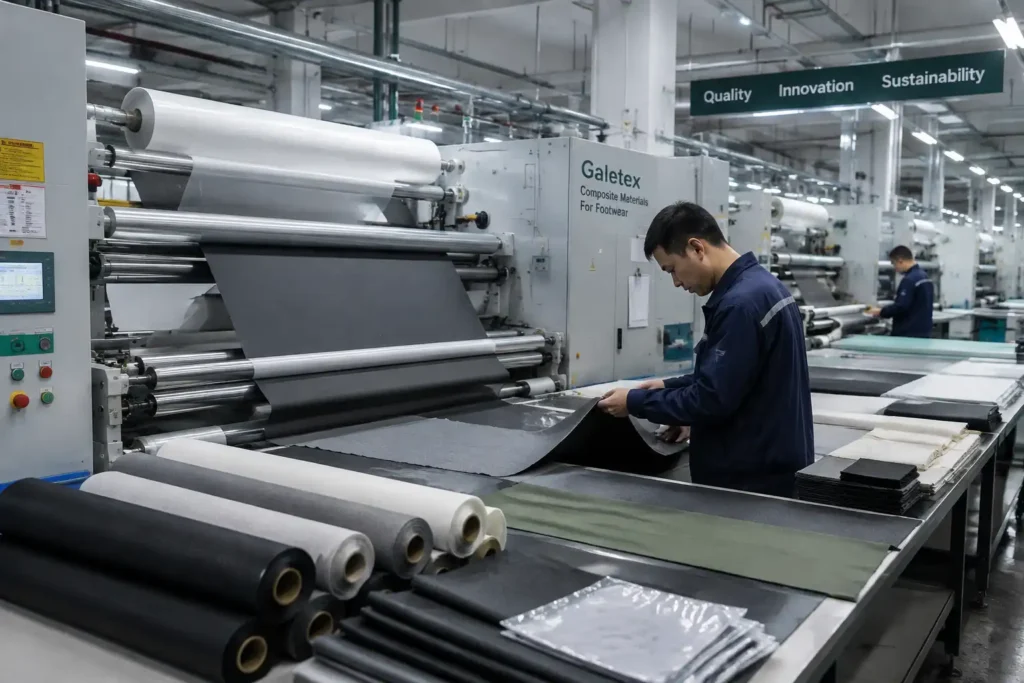
Galetex specializes in developing composite footwear materials for international shoe manufacturers, providing customized solutions according to performance requirements, thickness, weight, color, and application needs.
Why Choose a Professional Shoe Upper Material Supplier?
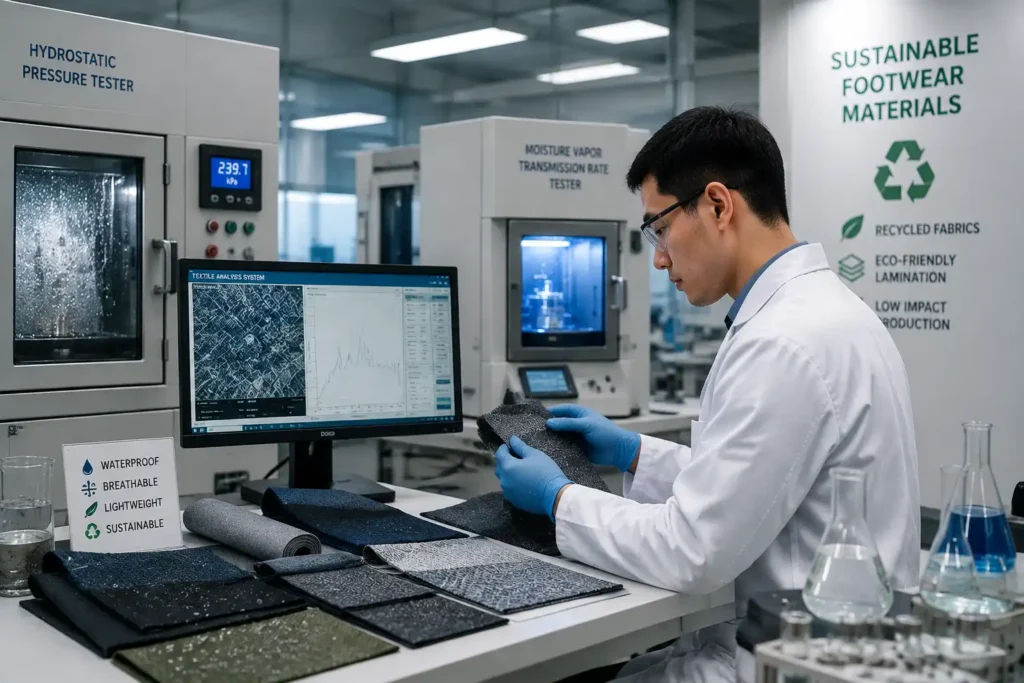
Working with an experienced shoe upper material supplier helps footwear brands achieve stable quality and efficient production.
A reliable supplier should provide:
- Consistent material quality
- Technical support
- Customized development
- Flexible production capability
- Quality inspection systems
- International supply experience
Material selection directly influences footwear performance and customer satisfaction. Therefore, cooperation with a professional material manufacturer is an important part of successful footwear development.
Future Trends of Shoe Upper Materials
The footwear industry is moving toward higher performance and sustainability.
Future shoe upper materials will focus on:
- Recycled composite textiles
- Lightweight multifunctional materials
- Waterproof breathable structures
- Smart manufacturing technologies
- Environmentally friendly production processes
As footwear brands continue to improve product performance and sustainability, advanced material suppliers will play a more important role in global footwear supply chains.
Conclusion
Choosing the right shoe upper materials is essential for footwear manufacturers seeking better performance, comfort, durability, and sustainability.
From breathable textiles and synthetic materials to waterproof composite structures, modern upper materials provide footwear brands with more opportunities to develop innovative products.
With advanced lamination technology and customized composite material solutions, Galetex supports global footwear manufacturers in creating high-quality footwear products for different markets and applications.
Frequently Asked Questions (FAQ)
1. What are the most common shoe upper materials?
Common shoe upper materials include textile fabrics, mesh, synthetic leather, PU materials, microfiber, waterproof membranes, and composite textiles.
2. Which shoe upper material is best for running shoes?
Breathable mesh and lightweight composite textiles are commonly used for running shoes because they provide ventilation, flexibility, and comfort.
3. Are synthetic shoe upper materials durable?
Yes. High-quality synthetic materials can provide excellent durability, consistent performance, and easier maintenance compared with some traditional materials.
4. What materials are used for waterproof shoe uppers?
Waterproof shoe uppers commonly use waterproof membranes, TPU films, PU layers, and laminated composite fabrics.
5. Can shoe upper materials be customized?
Yes. Professional suppliers can customize material thickness, weight, color, structure, waterproof performance, and other specifications according to customer requirements.