Every footwear quotation is built on a bill of materials, and the line that moves the price fastest is the upper. Two samples can look almost identical on a shelf while differing by a third in cost, because one is built on a laminated waterproof fabric upper and the other on a thin coated cloth. For sourcing teams, understanding shoe upper materials is less about vocabulary and more about knowing which properties each family can and cannot deliver at a given price point.
Shoe upper materials are the leathers, coated fabrics, meshes, knits and woven textiles that form the part of the shoe covering the foot above the sole. They hold the foot onto the platform, carry the lacing and reinforcement components, and determine most of what a wearer perceives as fit, breathability, support and appearance.
This guide works through each material family, then shows how to match a material to a footwear programme and how to verify it before bulk production.
What Is the Upper Material in Shoes?
The upper is the assembled shell that covers the top and sides of the foot, running from the toe box to the heel counter. It is distinct from the lining bonded inside it and from the sole unit below, and in most footwear it represents the largest share of material cost and nearly all of the visible design.
An upper is rarely one piece. It is a set of cut panels joined by stitching, heat bonding or high-frequency welding, then stiffened at specific points so the shoe holds shape while the forefoot still flexes.
| Component | Function | Common materials |
| Toe puff or toe cap | Holds toe box shape, resists scuffing | Coated fabric, TPU film, hot-melt sheet |
| Vamp and quarter panels | Main coverage, flexes with the forefoot | Leather, mesh, knit |
| Eyestay | Anchors lacing, takes repeated pull loads | Reinforced knit, leather, TPU overlay |
| Heel counter | Locks the heel, prevents slip | Hot-melt board, TPU |
| Collar and tongue | Padding, pressure distribution | Foam-backed textile, leather |
Where the Upper Sits in the Shoe Assembly
The upper is lasted over a form, bonded to an insole board or strobel sock, and then attached to the sole unit by cementing, injection or stitching. The lining is a separate specification decision, and a highly breathable upper over a non-absorbent lining delivers very little comfort in wear, which is why the two are usually developed together. Buyers comparing constructions often review Shoes Lining Material in the same session as the upper, since the bonded pair behaves as one system. Upper materials typically account for a quarter to a third of manufacturing cost, and a higher share in premium leather lines.
What Are the Main Types of Shoe Upper Materials?
Shoe upper materials fall into six families: leather, coated fabric, microfiber, mesh, knit and woven textile. Each is defined by how it is built rather than by any proprietary name, and each trades one property away to gain another.
| Family | Strength | Limitation | Typical footwear |
| Leather | Conforms and ages, high tear strength | Cost, weight, water sensitivity | Dress, casual, work |
| Coated fabric | Uniform colour, easy clean, low cost | Limited breathability, flex cracking | Fashion, entry athletic |
| Microfiber | Suede-like hand, good abrasion | Moderate breathability | Mid-tier casual, lining |
| Mesh | Airflow, low weight | Little structural support alone | Running, training |
| Knit | Seamless fit, controlled stretch | Shape loss, snag risk | Lifestyle, running |
| Woven textile | Abrasion resistance, printability | Minimal stretch, absorbs water | Canvas, workwear, kids |
Most production today uses laminates and zoned panels, so a running shoe may combine an engineered mesh forefoot, a coated reinforcement at the eyestay and a knit collar in one shell. The Shoes Upper Material range is therefore organised by construction and weight rather than by generic category.
Leather Uppers: Grades and Performance
Leather is animal hide whose protein fibre structure has been stabilised by tanning. Its grade depends on which layer of the hide the material is taken from and how much of the natural grain surface survives the finishing process.
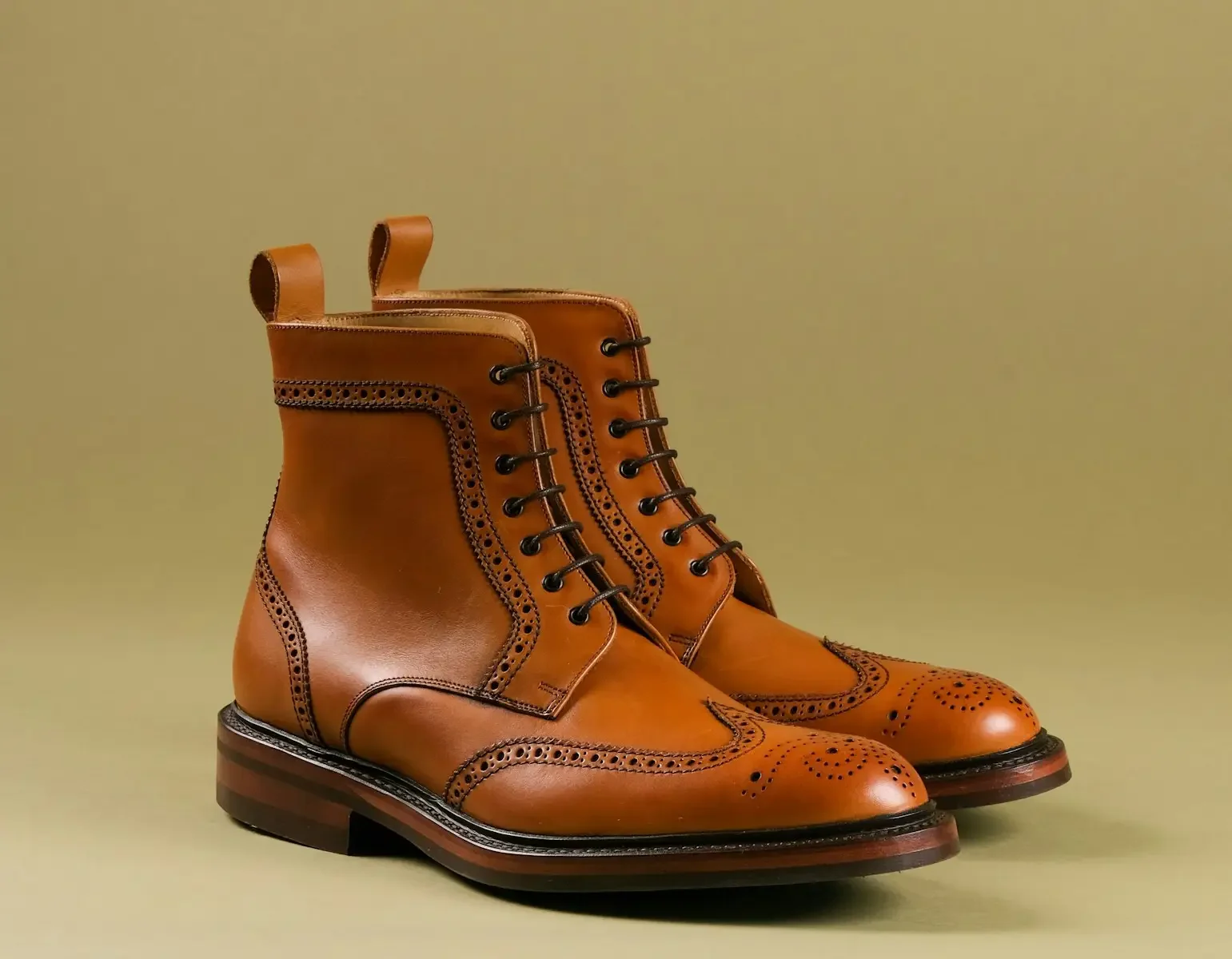
Thickness is specified to the shoe type: roughly 1.2 to 1.4 mm for casual footwear and heavier for work boots. Chrome tanning gives softness and colour consistency, while vegetable tanning produces firmer material that develops depth over time.
| Grade | Source layer | Character | Typical use |
| Full-grain | Outer layer, grain intact | Strongest, develops patina | Premium casual, boots |
| Top-grain | Outer layer, sanded | Uniform surface, softer | Dress, fashion |
| Nubuck | Grain side, buffed | Velvety, matte finish | Casual, outdoor |
| Suede | Flesh side, buffed | Soft, breathable, fragile | Lifestyle, lining |
| Split | Inner layer | Economical, often coated | Work, budget lines |
Full-Grain and Top-Grain Leather
Full-grain keeps the complete grain surface, so the fibre density at the face is highest and tear strength is at its peak. It shows natural markings and is the grade most often specified for footwear worn hard for several seasons. Top-grain is sanded to remove surface irregularities, which produces a more uniform face, better dye uptake and a softer hand, at the cost of some of that surface strength.
Suede, Nubuck and Split Leather
Nubuck is buffed on the grain side, creating a fine nap with reasonable abrasion resistance, while suede is buffed on the flesh side and is softer and more vulnerable to staining. Both require a repellent treatment and careful cleaning, and neither should be specified for footwear that will see regular wet conditions without a membrane behind it. Split leather comes from the lower layers of the hide and relies on a coating or laminated film for its surface, so its performance is largely that of the finish.
Synthetic and Coated Uppers: PU, PVC and Microfiber
Synthetic uppers are polymer coatings or non-woven structures applied to a textile backing. They offer batch-to-batch colour consistency, predictable cutting yields and design freedom that natural materials cannot match, but their durability depends almost entirely on coating chemistry and backing quality.
| Type | Build | Strength | Watch for |
| PU | Polyurethane coating on knit or woven backing | Soft hand, good flex life | Hydrolysis in hot, humid storage |
| PVC | Vinyl coating, usually on mesh | Water resistance, low cost | Stiffness, poor breathability |
| Microfiber | Non-woven microfibre with PU impregnation | Suede-like surface, strong abrasion | Variable breathability by density |
Three tests separate good from poor material in this family. Flex resistance shows whether the coating will crack along the vamp crease after repeated walking. Peel bond strength shows whether the coating and backing will stay together through lasting and heat setting. Hydrolysis resistance matters for humid climates and long sea freight, because a PU that performs well in a dry warehouse can fail in a container.
Mesh, Knit and Woven Textile Uppers
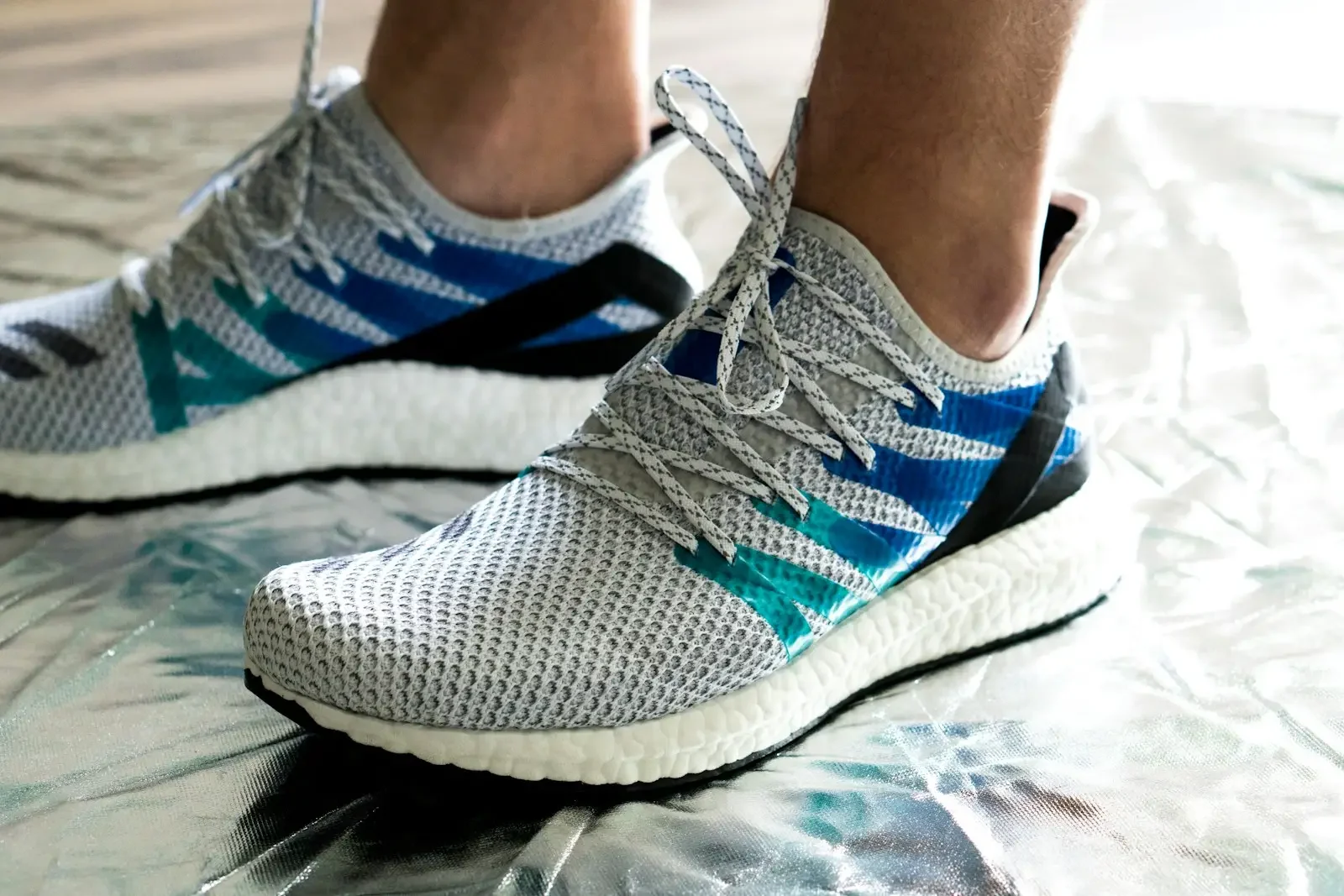
Textile uppers are built from yarn, so their performance comes from structure rather than from the fibre alone: yarn type, loop or weave geometry, density zoning and the laminates bonded behind the face. They dominate athletic footwear because they deliver airflow and low weight at a fraction of leather’s cost.
Engineered Mesh and Spacer Mesh
Engineered mesh uses monofilament or multifilament yarns knitted in a warp pattern, with density varied zone by zone. Open structure sits over the toe box and tongue where heat builds, tighter structure sits at the eyestay and heel where load is concentrated. Spacer mesh takes a different route: two faces are joined by pile yarns that hold them apart, creating a three-dimensional cushion layer that resists compression.
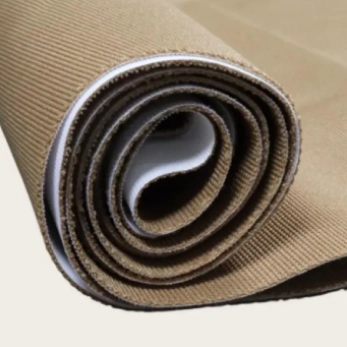
Both are frequently supplied as a bonded stack. A typical three-layer construction pairs a face fabric with a membrane and a lining, bonded in a single pass so that the roll already carries waterproofing, structure and a finished inner surface. Specifications of this kind are usually quoted as a Three-layer Mesh Fabric with a defined hydrostatic head and moisture vapour transmission rate. The comfort difference is measurable: in a controlled trial with 40 older wearers, uppers built from highly permeable large-hole mesh limited foot skin temperature change to 1.3 to 3.3 C and relative humidity change to between minus 13.3 and 5.7 percent, and scored higher for thermal comfort than synthetic leather and composite-layer uppers.
Knit and Woven Constructions
Flat knitting forms a near-finished upper shape directly on the machine, using stitch structure to place stretch and density where the foot needs them and cutting material waste to a minimum. The weakness is abrasion at high-wear points, so knit uppers are usually reinforced with hot-melt overlays at the toe and eyestay. Woven constructions behave differently: an Oxford Fabric Upper uses a basket weave of coarse yarns that gives dimensional stability, a printable face and good abrasion resistance, while heavier canvas offers similar properties at greater weight. Both absorb water unless finished, so they suit dry-climate casual and workwear programmes rather than wet outdoor use.
How Do You Choose the Best Upper Material?
There is no universally best upper material, only the material that matches a defined use case, expected service life, target price and production process. The correct starting point is the environment the shoe will be worn in, not the appearance of the sample.
| Footwear category | Priority property | Practical choice |
| Road running | Airflow and low weight | Engineered mesh with overlays |
| Hiking and outdoor | Water resistance with breathability | Laminated textile or treated nubuck |
| Formal and dress | Shape retention and finish | Top-grain or full-grain leather |
| Safety and work | Abrasion and tear strength | Full-grain leather, coated split |
| Casual and lifestyle | Hand feel and cost balance | Microfiber, knit, coated fabric |
Five criteria screen a candidate quickly:
- Exposure. Wet, oily or abrasive environments eliminate untreated suede, canvas and thin knits early.
- Service life. A shoe sold for one season can justify a coated fabric that a three-season boot cannot.
- Compliance. Restricted substance limits and labelling rules in the destination market apply to coatings, dyes and finishes, not only to the face material.
- Cost structure. Material price per square metre matters less than cutting yield, so a cheaper roll with heavy waste can cost more per pair.
- Process fit. Bonding, welding and lasting behaviour must suit the factory’s existing line, or sampling will stall.
What Podiatrists Advise Against
Clinical guidance on footwear tends to converge on construction rather than on fibre type. Uppers made from non-breathable plastic or rubber keep heat and moisture against the skin; hard internal seams and ridges create pressure points over the toes and instep; and uppers so soft that they collapse provide no support around the heel. The American College of Foot and Ankle Surgeons sets out similar criteria in its patient guidance, favouring soft, breathable uppers with no hard seams and a firm, snug heel. Material choice alone does not determine this outcome, since last shape, heel counter stiffness and sole unit contribute as much.
How Should Buyers Test and Specify Upper Materials?
Specification is only as good as the test data behind it. Upper materials should be approved against measurable criteria rather than by hand feel, because most bulk disputes trace back to a property that nobody quantified at sampling stage.
| Property | Test approach | Failure it predicts |
| Abrasion | Martindale cycles to surface breakdown | Premature wear at toe and heel |
| Tear strength | Tongue tear on a tensile frame | Ripping at seam lines |
| Flex resistance | Repeated flexing of the coated face | Cracking along the vamp crease |
| Colour fastness | Rubbing, water and light exposure | Crocking onto socks, fading |
| Water resistance | Hydrostatic head on the laminate | Leakage at seams and stitch holes |
A workable approval sequence runs in four steps. First, approve a physical swatch against a colour standard under defined lighting. Second, send the same swatch for laboratory testing against the specification sheet and keep the report with the purchase order. Third, build a pre-production sample in the final material and put it through a short wear trial on the intended user group. Fourth, hold a retained sample from each bulk lot and re-test on a sampling plan rather than on every roll.
FAQ
Three questions come up once the material family is settled and the conversation moves to fit, compliance and cost.
Do upper materials affect shoe fit and sizing?
They can, at the margin. Knit and thin mesh uppers stretch with wear and accommodate a slightly wider foot than the same last in leather, while full-grain leather moulds gradually without changing length. This is why a size set should always be confirmed in the production material rather than in a substitute.
Are textile uppers suitable for safety or work footwear?
Only with reinforcement. Standards for protective footwear set minimum requirements for upper tear strength and abrasion, and plain mesh or light knit does not meet them on its own. The usual solution is a hybrid: a coated or leather shell at the toe and heel with a ventilated textile panel over the instep, which passes the test while reducing heat build-up during long shifts.
How much does the upper material change unit cost?
It is usually the single largest lever in the bill of materials. Moving from coated fabric to microfiber, or from microfiber to full-grain leather, can add a meaningful share to the pair cost, and laminates with a functional membrane add more again. Because cutting yield and waste vary by material, the honest comparison is cost per finished pair, not price per roll.