Every footwear brand and manufacturer faces the same expectation from the market: shoes that survive real-world abuse. Consumers walk thousands of steps per day, expose their shoes to rain, abrasion, sweat, and repeated flexing, and increasingly judge product quality by how long a pair holds up. For B2B buyers and product developers, selecting a durable material for shoes is therefore not a minor specification decision but a core driver of return rates, brand reputation, and long-term cost efficiency.
There is no single most durable material for shoes, because durability is position-specific. Full-grain leather is the most durable upper material because it resists abrasion and can be restored rather than merely resisting damage. Vulcanized rubber is the most durable outsole material thanks to unmatched abrasion resistance and grip. Polyurethane (PU) outlasts EVA in midsoles because it keeps its cushioning far longer, while high-tenacity synthetic textiles and coated fabrics deliver the best balance of durability and weight for performance footwear.
The sections below break down what actually makes a shoe material durable, examine the strongest material for each part of the shoe, compare the most commonly debated options such as EVA and rubber, and explain how footwear manufacturers can select and combine materials to build longer-lasting products.
What Makes a Shoe Material Durable?
Durability in footwear is determined by five measurable properties: abrasion resistance, tensile and flex strength, compression set, resistance to water and chemicals, and the quality of construction that bonds materials together. A material that excels in one property can fail quickly in another, which is why professional material selection always starts with the failure mode the shoe will actually face.
Abrasion resistance measures how well a material withstands repeated rubbing against rough surfaces, and it is the single most important property for outsoles. Standardized tests such as the DIN abrasion test and the ASTM rubber abrasion method quantify material loss in cubic millimeters, giving buyers comparable data across suppliers. Tensile and flex strength determine how a material handles the thousands of bending cycles a shoe endures at the forefoot, while compression set reveals whether a cushioning foam will spring back after months of footfalls or flatten permanently.
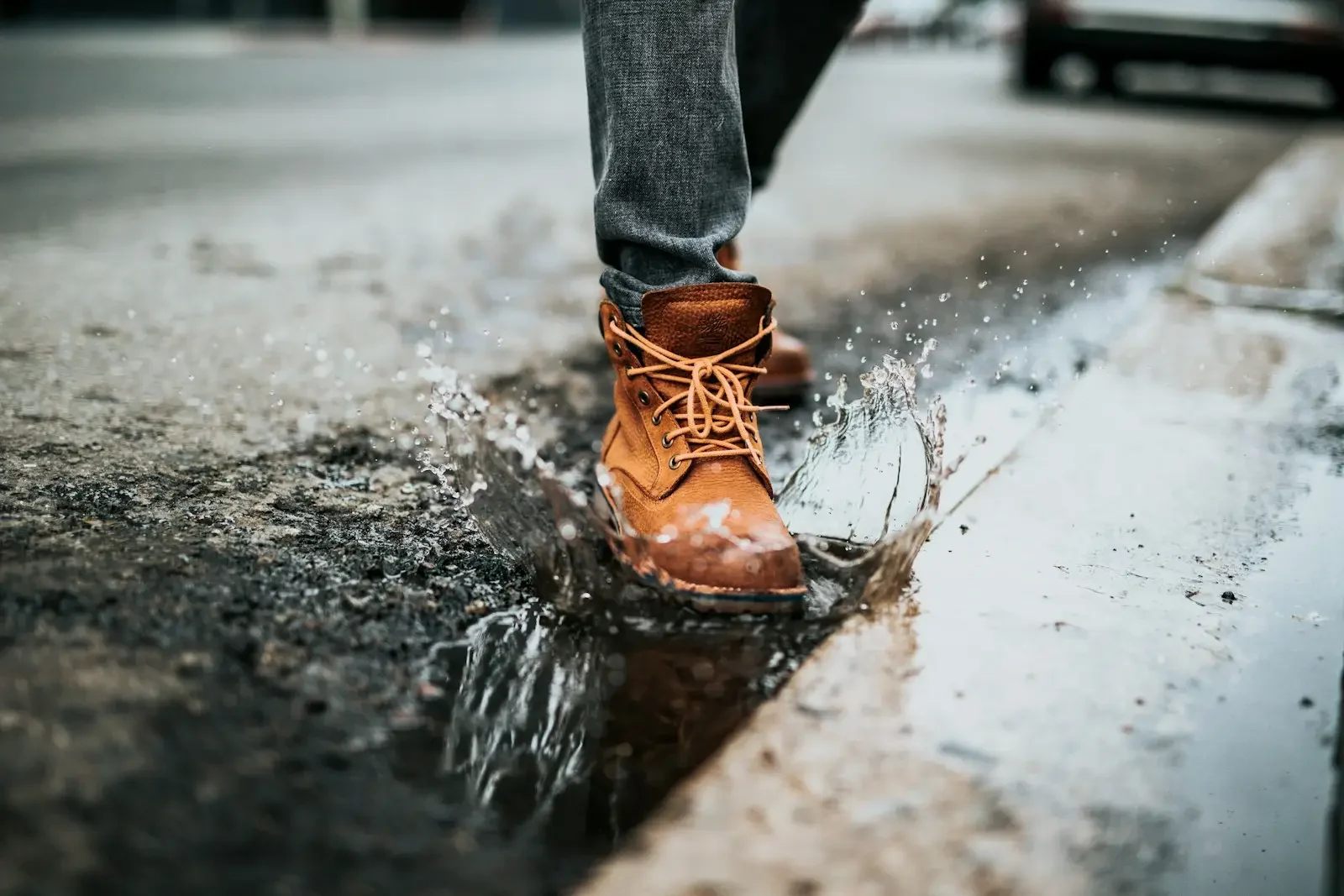
Water and chemical resistance matter most for work, outdoor, and safety footwear, where oils, solvents, and constant moisture rapidly degrade inferior compounds. Finally, even the best material fails if stitching, bonding, or lamination is poorly executed. Understanding these five dimensions helps manufacturers evaluate any durable material for shoes against the specific demands of the intended product rather than relying on generic material rankings.
What Is the Most Durable Material for Shoes?
The most durable material for shoes depends on the position: full-grain leather wins the upper over the long term, vulcanized rubber wins the outsole, polyurethane wins the midsole, and leather or high-density textile wins the lining. A truly durable shoe uses the right material in each position instead of relying on one material throughout.
Because a shoe is an assembly of components with very different jobs, each part deserves its own material analysis.
Full-Grain Leather for Uppers
Full-grain leather, taken from the top layer of the hide with the grain surface intact, remains the benchmark for upper durability. Its dense fiber structure resists abrasion, punctures, and tearing, and unlike coated synthetics it can be cleaned, conditioned, and restored after scuffing. This recovery capability is the key difference: a synthetic PU coating may look flawless for its first year, but once the coating cracks or delaminates, the upper is finished. Leather degrades slowly and gracefully, and a well-maintained full-grain upper can outlast several sole replacements.
Top-grain leather offers a slightly more uniform surface at a marginally lower durability level, while corrected-grain and split leathers trade away fiber density for cost. For manufacturers, hide selection and tanning quality are therefore as important as the leather category itself.
Vulcanized Rubber for Outsoles
For the outsole, vulcanized rubber is the most durable material in common use. Vulcanization, the process discovered by Charles Goodyear in which natural rubber is heated with curing agents to form cross-linked polymer chains, produces a sole that combines high tensile strength, excellent tear resistance, and outstanding grip on wet and oily surfaces. Nothing standard beats rubber for abrasion resistance at the ground interface, which is exactly what the outsole is tested against every step.
Natural rubber compounds offer superior flexibility and sustainability credentials, while synthetic rubbers such as SBR add strength and weather resistance at lower cost. Harder compounds last longer but grip less; softer compounds grip better but wear faster. Most performance outsoles use blended compounds to balance the two.
Polyurethane (PU) for Midsoles
In the midsole, polyurethane outlasts ethylene-vinyl acetate by a wide margin. PU is denser and heavier, but its cellular structure resists compression set, meaning it retains its cushioning and structural support far longer under repeated impact. This is why PU dominates work boots, safety footwear, and any application where the shoe is worn eight hours a day for a year or more.
The practical consequence for product developers is that midsole failure, not visible outsole wear, is what actually ends most shoes’ useful lives. A PU midsole keeps the shoe comfortable long after an EVA midsole would have flattened.
High-Tech Synthetic Textiles
Modern synthetic textiles have closed much of the durability gap with leather while remaining lighter and more breathable. High-tenacity polyester and nylon weaves, Oxford fabrics, and multilayer composites pair a wear-resistant face fabric with functional membranes and backing layers. The shoes upper material category illustrates how engineered fabrics now serve demanding segments such as hiking, outdoor, and industrial footwear that were once leather-only territory.
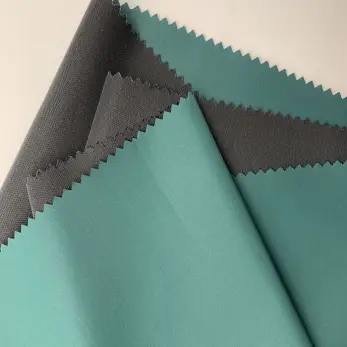
Coated and laminated fabrics add water resistance and structural stability, though their long-term durability depends heavily on coating quality and lamination process control. When specifying textile uppers, abrasion resistance values and coating adhesion test results should always be requested from suppliers.
What Is the Best Quality Material for Shoes?
The best quality material for shoes is the one matched to the shoe’s end use: full-grain leather with rubber soles for dress and work footwear, engineered textile uppers with rubber or carbon-rubber outsoles for athletic shoes, and PU midsoles for applications where cushioning must survive heavy daily use. Quality is a system property, not a single material choice.
A material that is excellent in one category can be a poor choice in another. The table below summarizes proven material combinations by footwear type:
| Shoe Type | Recommended Upper | Recommended Sole System | Key Durability Driver |
| Running and athletic shoes | Engineered mesh or woven textile | Carbon-rubber outsole, EVA or PU-blend midsole | Abrasion-resistant rubber at strike zones |
| Work and safety boots | Full-grain leather | Rubber or PU outsole, PU midsole | Compression set and chemical resistance |
| Hiking and outdoor shoes | Coated textile or leather, waterproof membrane | High-abrasion rubber outsole | Cut resistance and wet traction |
| Dress shoes | Full-grain or top-grain leather | Leather sole with rubber toplift, or full rubber | Resoleability and upper recoverability |
| Casual and everyday shoes | Textile or leather depending on price point | Vulcanized rubber cupsole | Balance of wear life and comfort |
For B2B buyers, the useful takeaway is that quality perceptions are driven by the weakest component. A premium leather upper bonded to a weak sole system will still generate returns, so quality specification should be written component by component.
Which Is Better, EVA or Rubber?
Rubber is better than EVA for durability, traction, and load-bearing wear, while EVA is better than EVA alternatives for lightweight cushioning and energy return. Neither is universally superior; they solve different problems, which is why most performance shoes pair a rubber outsole with an EVA or PU midsole.
EVA, or ethylene-vinyl acetate, is a closed-cell foam prized for its extremely low density and excellent initial shock absorption. Rubber is a denser elastomer whose cross-linked structure delivers superior abrasion resistance and grip. The comparison below reflects typical values:
| Property | EVA Foam | Vulcanized Rubber |
| Density | Very low, roughly 0.15 to 0.25 g/cm3 | High, roughly 1.10 to 1.30 g/cm3 |
| Abrasion resistance | Low; unsuitable alone for outsoles | Excellent; the outsole benchmark |
| Cushioning | Excellent initially, degrades with use | Poor; too heavy to use as cushioning |
| Weight | 60 to 70 percent lighter than rubber | Adds noticeable weight to the shoe |
| Compression set | High; foam flattens under repeated load | Low; recovers its shape consistently |
| Typical lifespan in heavy use | Cushioning declines noticeably within a year of high mileage | Outsoles last two to three times longer than EVA before significant wear |
| Best position | Midsole, footbed, lightweight casual soles | Outsole, high-wear sole zones |
Choose EVA when weight and initial comfort are the priority, such as running shoes and casual footwear with a defined lifespan. Choose rubber when the sole faces abrasive surfaces, wet floors, or heavy daily wear. For products that need both, the standard engineering solution is a thin rubber outsole laminated over an EVA midsole, capturing the strengths of each material.
What Is the Healthiest Shoe Material?
The healthiest shoe materials are full-grain leather for uppers and linings, and breathable natural or engineered textiles for lining and footbed layers, because they manage moisture, reduce bacterial growth, and allow continuous air exchange around the foot.
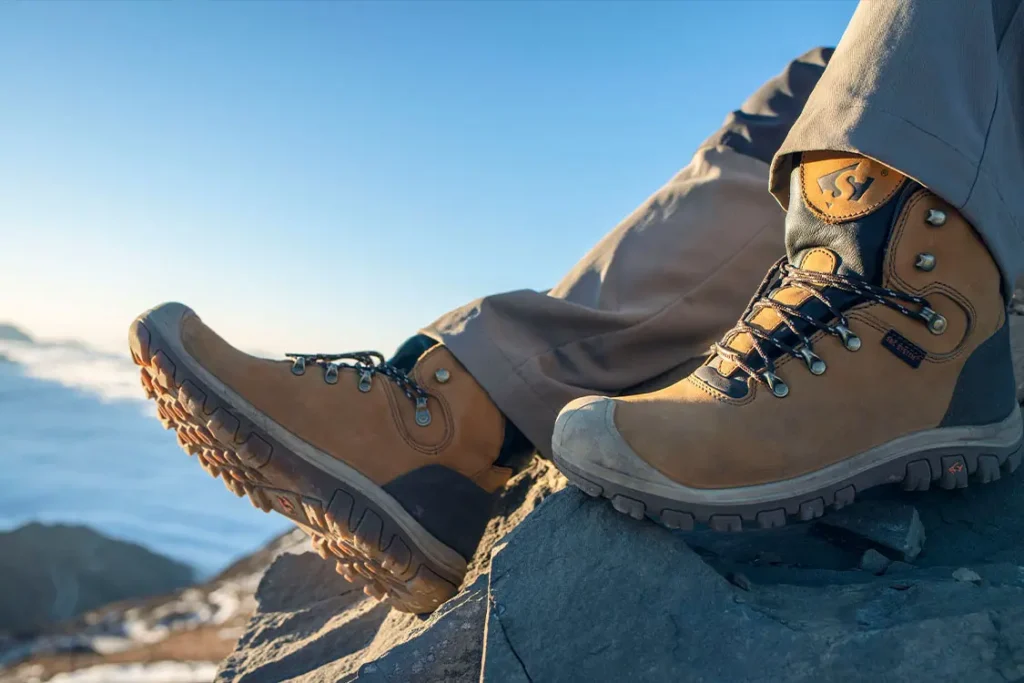
Foot health in footwear is largely a moisture-management problem. A foot can produce significant sweat during a day of wear, and trapped moisture softens skin, encourages odor-causing bacteria, and accelerates material breakdown inside the shoe. Breathable material for shoes addresses this through fiber structure and membrane technology that lets water vapor escape while keeping weather out.
Leather lining manages moisture naturally and lasts longest, particularly at the heel where friction is highest, while synthetic linings dry faster but abrade sooner and can harbor bacteria in worn areas. Antimicrobial footbed treatments and moisture-wicking textile layers further improve the in-shoe environment. Buyers weighing health against environmental impact can also find overlap between natural materials and sustainable options, since vegetable-tanned leathers and natural fibers often score well on both dimensions.
How to Select Durable Materials as a Footwear Manufacturer
For footwear manufacturers, selecting durable materials is a sourcing and engineering discipline: define the failure modes first, specify testable material properties second, and vet supplier consistency third. Durability is manufactured, not just purchased.
A structured selection process typically includes the following steps:
- Map the wear profile of the target product, identifying high-abrasion zones, flex points, and moisture exposure.
- Specify minimum performance values for each component, such as DIN abrasion loss for outsoles, flex-cycle counts for uppers, and compression set limits for midsole foams.
- Request third-party or in-house test reports from material suppliers, and retest incoming batches rather than trusting certificates alone.
- Evaluate lamination and bonding quality, since delamination is one of the most common premature failure modes in composite footwear materials.
- Balance cost against total wear life, because a more expensive material that doubles service life often lowers warranty cost and returns.
Composite material engineering has become a central lever here. Multilayer laminates that combine a durable face fabric, a functional membrane, and a stable backing deliver properties no single material can achieve, and the quality of the lamination process itself determines whether those properties survive the shoe’s lifetime. The same logic applies to hidden components such as the shoes lining material, where heel-counter abrasion resistance separates shoes that age well from shoes that feel worn out within months.
Finally, manufacturers should treat material suppliers as engineering partners rather than commodity vendors. Consistent compound formulations, stable coating adhesion, and reliable batch-to-batch performance are what translate laboratory durability into field durability, and they separate suppliers who merely sell materials from those who help build better shoes.
FAQ
How long do EVA midsoles last before losing cushioning?
In high-mileage athletic use, EVA midsoles typically show measurable cushioning loss within 500 to 750 kilometers of running, and most casual shoes lose significant rebound within one to two years of daily wear. The foam does not wear away visually; it takes a permanent compression set, so a shoe that looks fine can still be functionally dead. Rotation between two pairs and avoiding heat exposure during drying both extend EVA life.
Is genuine leather always more durable than synthetic alternatives?
No. Synthetic coated fabrics and engineered textiles often outperform low-grade or corrected-grain leathers in the first years of wear, especially against water and scuffing. Leather’s advantage appears over the long term and at the top of the quality range: full-grain leather can be restored after damage, while a cracked synthetic coating cannot. Comparing leather against synthetics requires comparing grades, not just material families.
How do manufacturers test shoe material durability?
Manufacturers rely on standardized methods including DIN or ASTM abrasion tests for sole compounds, flex-cycle testing for uppers and sole bonds, tensile and tear strength tests for fabrics, and compression set measurements for cushioning foams. Hydrolysis aging tests simulate long-term moisture exposure for PU components. Reliable suppliers provide documented results for these tests and maintain batch-to-batch consistency data.