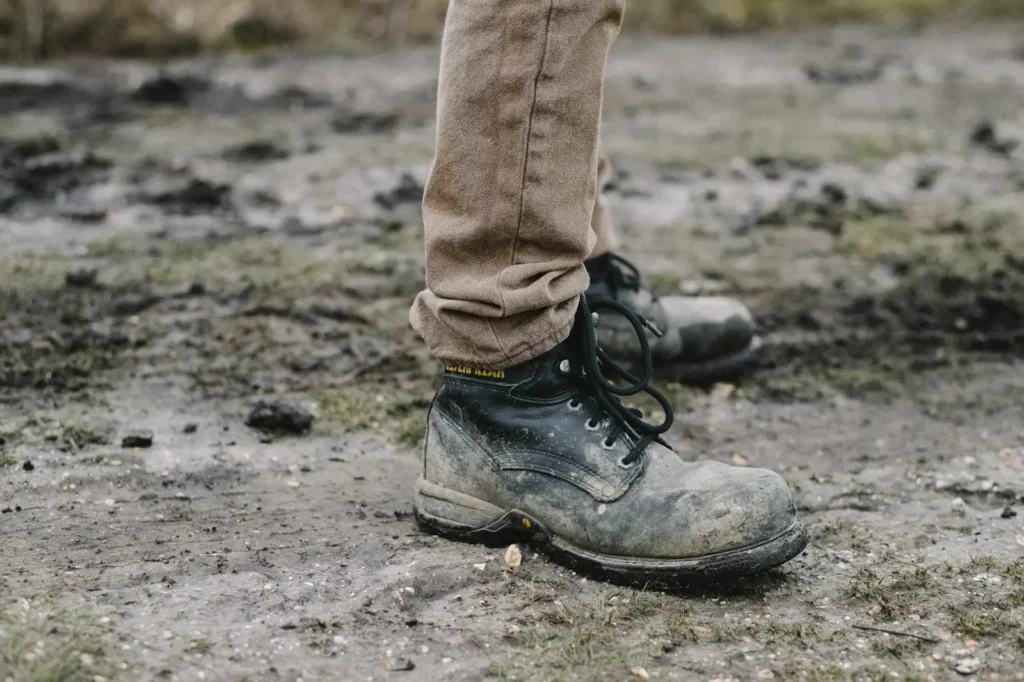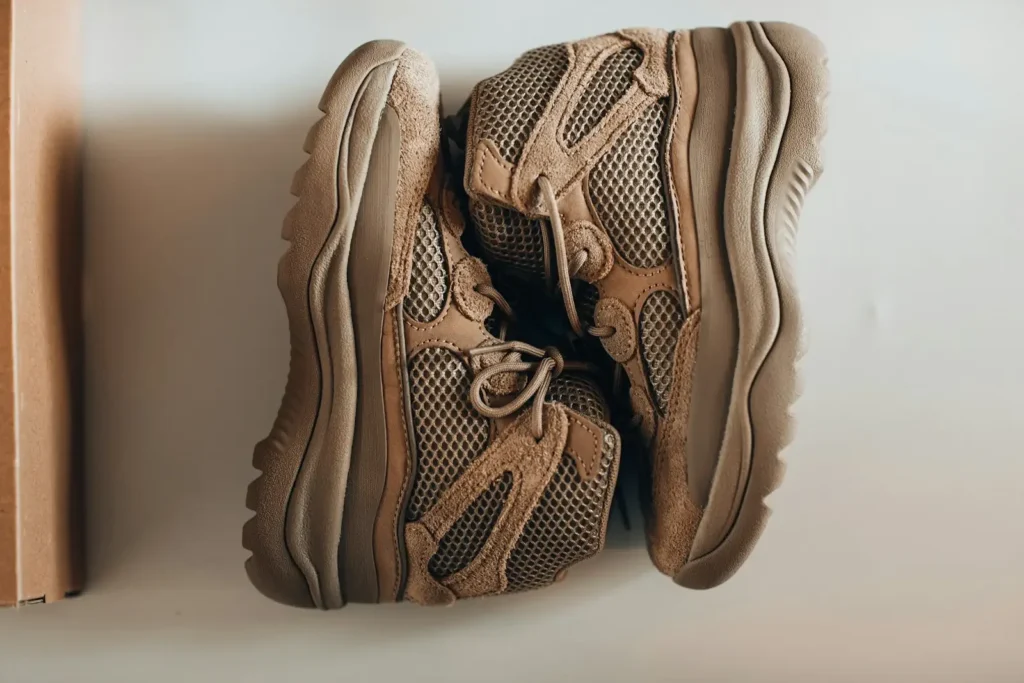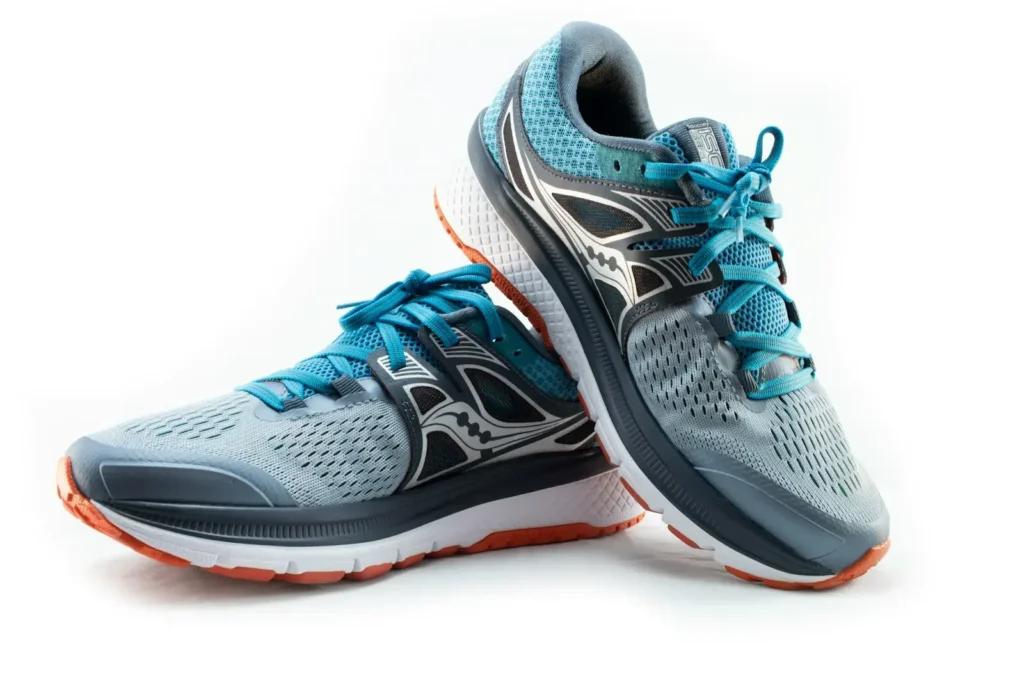
Procurement teams rarely buy a bad boot on purpose. What goes wrong is narrower: a specification names a material family, the supplier delivers something technically inside that family, and the boot fails six months later at the toe scuff, the heel lining or the sole flex line. Abrasion and puncture are the two failure modes that decide most of that outcome, and they are governed by different components. Getting the material map right before the order costs far less than replacing a workforce’s footwear mid-season.
Safety and work boots are built from six material groups: leather (full-grain or split), microfiber synthetic leather, coated woven fabric such as PU- or PVC-coated Oxford, high-tenacity woven reinforcement, molded rubber or PVC for all-polymeric boots, and a penetration-resistant insert of steel, para-aramid nonwoven, woven composite or TPU. Abrasion resistance comes from the upper, the lining and the outsole compound; puncture resistance comes mainly from the insert under the foot, with a smaller and uncertified contribution from the upper across the instep and toe.
The order below follows the specification sheet, from the upper down to the insert and the outsole.
What Materials Are Used in Safety and Work Boots?
A safety boot is an assembly of six components, each drawn from a different material family: upper, lining, penetration-resistant insert, outsole, toe cap and hardware. The protection rating belongs to the finished assembly, not to any one material inside it.
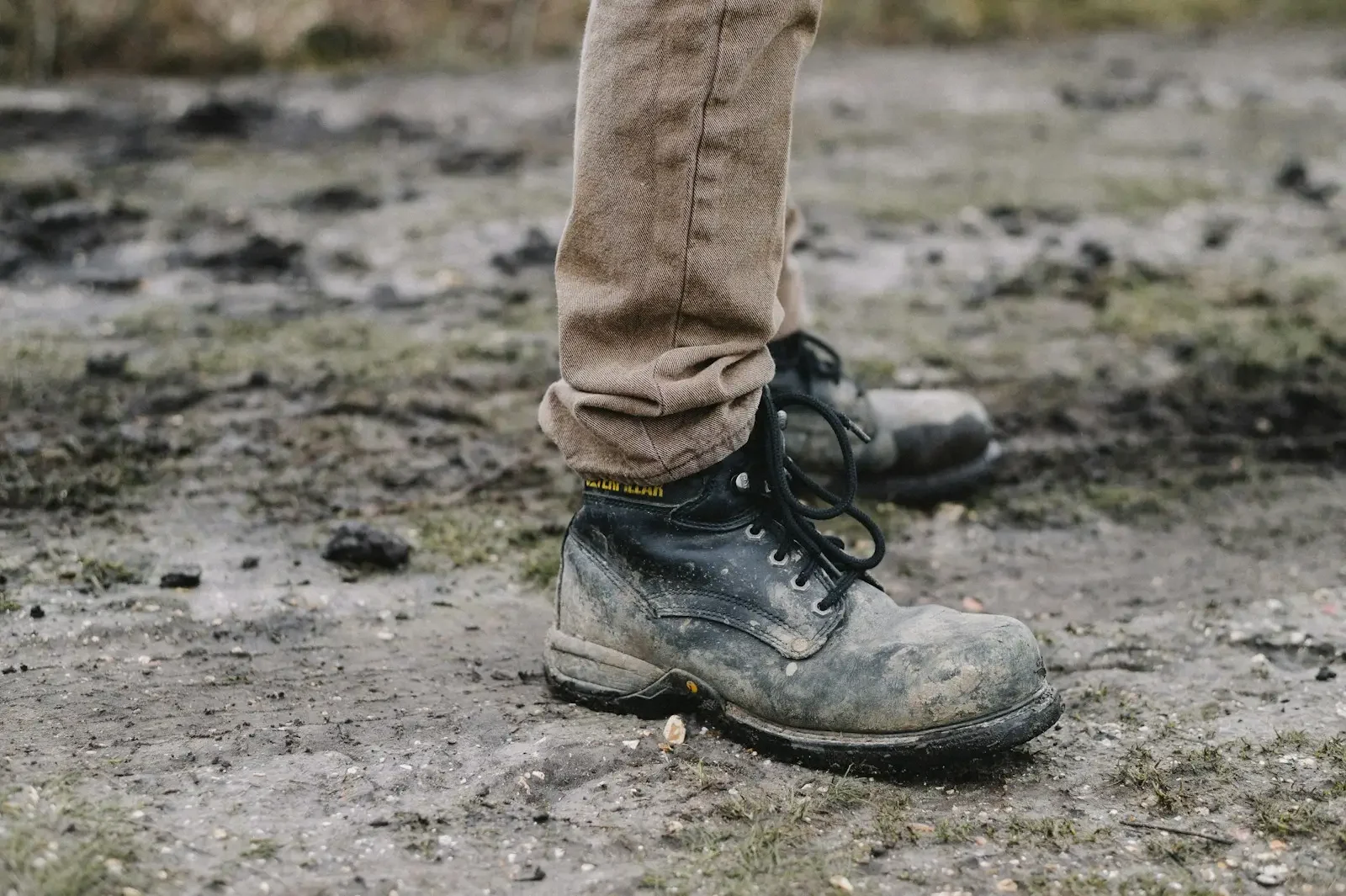
That distinction matters commercially. Two boots can carry the same marking and behave like different products, because the marking records test results rather than construction. A 1.4 mm full-grain upper and a 900D coated Oxford can both sit on an S3 boot; one scuffs and recovers, the other scuffs through the coating and frays. Buyers who specify shoes upper material as a line item separate from the sole assembly end up with a document they can audit.
| Component | Materials typically used |
| Upper | full-grain and split leather, microfiber, coated Oxford, high-tenacity woven panels |
| Lining | polyester or nylon mesh, knit, microfiber, laminated membrane |
| Insert | steel, para-aramid nonwoven, woven composite, TPU |
| Outsole | nitrile rubber, PU, TPU |
| Toe cap | steel, aluminum, composite |
| Hardware | coated steel, polymer |
The components also constrain each other. A stiff insert without cushioning turns a compliant boot into one workers remove at lunchtime, and a heavy upper without a breathable lining pushes sweat into the membrane.
Which Upper Materials Resist Abrasion Best?
Full-grain leather remains the most abrasion- and tear-resistant upper in general use, followed by microfiber synthetic leather and heavy coated woven fabric. Knit and open mesh are the least abrasion resistant and need reinforcement at the toe, heel and instep. If the question means resistance to sharp objects underfoot, the answer is the insert, not the upper.
Two properties get confused. Abrasion resistance describes how a surface survives rubbing against concrete and grit; tear strength describes how it behaves once a cut starts. A material can be good at one and ordinary at the other, so the standards test both.
Full-Grain and Split Leather
Full-grain leather keeps the intact grain layer, where the fiber structure is densest and most interlocked, and that is where scuff resistance comes from rather than thickness: a well-tanned 1.4 mm full-grain hide outlasts a loosely structured 2.0 mm split. ISO 20345 sets the floor for leather uppers at 120 N tear, which good full-grain clears and heavily finished splits only approach.
Split leather, the corrected lower layer, is cheaper and fine for light duty, but its finish is a film that cracks at the flex line and lets water into the hide.
Microfiber and Coated Woven Fabric
Microfiber synthetic leather is a nonwoven of superfine fibers impregnated with polyurethane. It has no scars and a much higher cut yield than leather, which is why it dominates high-volume programs, and it matches or beats mid-grade leather on abrasion. Its weakness is hydrolysis: stored hot and damp, the PU matrix can degrade before the boot is worn, so the storage clause matters as much as the abrasion figure.
Coated woven fabric, usually PU- or PVC-coated Oxford, spreads the load differently: the yarn provides tear strength and the coating provides abrasion resistance, which is why ISO 20345 asks only 60 N tear on coated fabric. Abrasion lives entirely in the coating, and once it wears through at the toe the fabric underneath fuzzes and fails fast. Buyers specifying durable material for shoes for a site with constant kneeling should question coating adhesion and coating weight, not only the denier of the base cloth.
High-Tenacity Reinforcement
Where the upper is knit, mesh or light coated fabric, abrasion becomes a question of placement. Para-aramid or high-tenacity nylon panels at the toe bumper, heel counter and instep absorb contact that would otherwise destroy the base material, at less cost than upgrading the whole upper. The trade-off is stiffness exactly where the boot flexes.
| Upper material | Abrasion and tear behavior | Where it suits |
| Full-grain leather | highest scuff and tear resistance | heavy construction, welding, demolition |
| Split leather | moderate; finish cracks before the hide tears | light industry, warehouse |
| Microfiber | matches mid-grade leather; hydrolysis risk in storage | high-volume programs, clean rooms |
| Coated Oxford | coating carries abrasion, fabric carries 60 N tear | textile-panel site boots, warm climates |
| Knit or mesh with panels | lowest abrasion; placement decides life | light duty, supervision, hot plants |
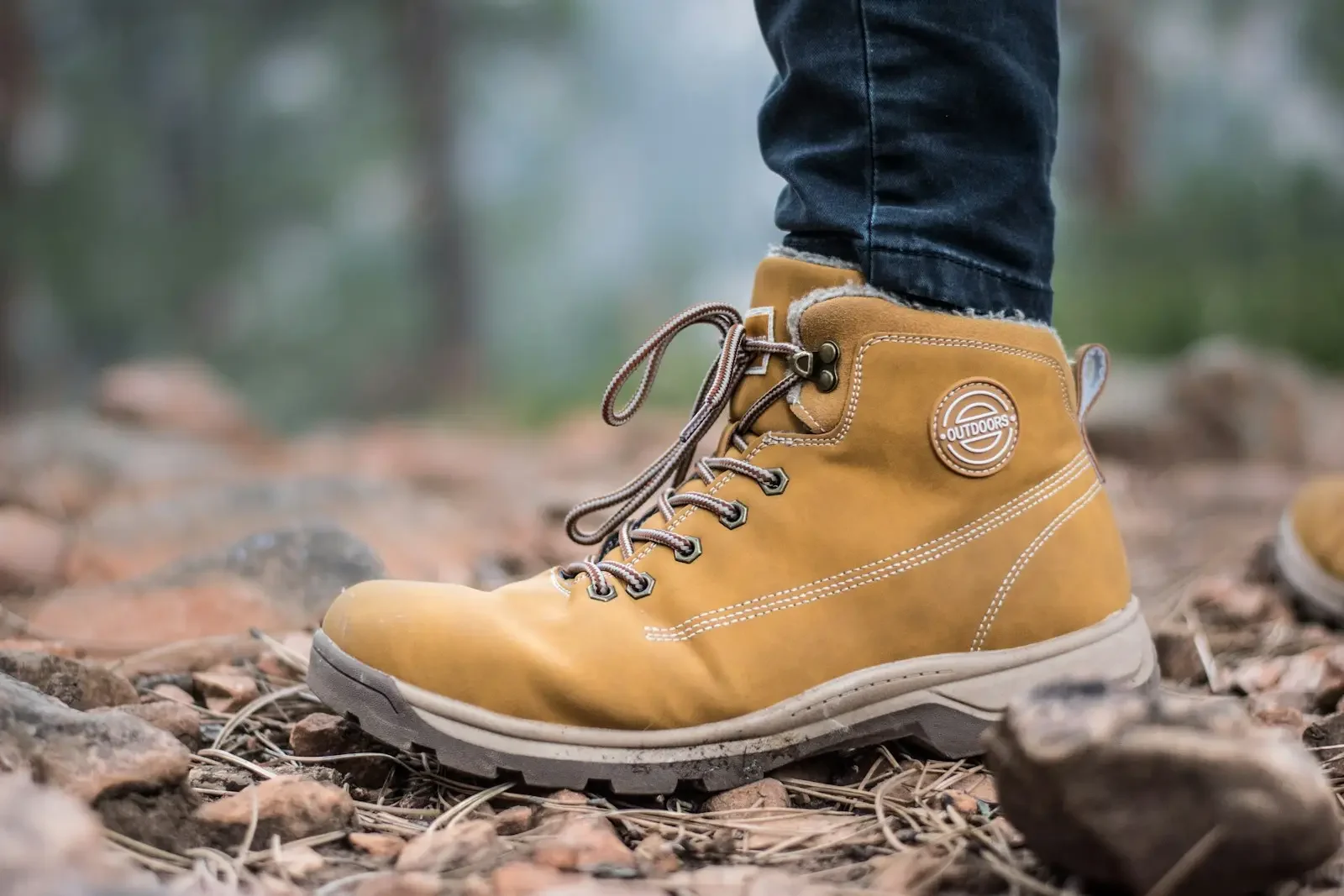
How Is Puncture Resistance Actually Achieved?
Puncture resistance is delivered by a flexible insert between the outsole and the insole, tested at 1,100 N under ISO 20345 or 1,200 N under ASTM F2413. The upper sits outside that test, so protection against sharps across the instep and toe has to be written into the specification separately.
Insert Materials
Steel inserts are the reference point: thin, stiff, predictable and long proven. They add weight, conduct cold and set off metal detectors, which rules them out of secure facilities.
Para-aramid nonwoven inserts are built from multiple bonded layers of high-tenacity fiber. They are lighter, flexible, metal-free and cover the footbed edge to edge, which steel plates often do not. They meet the same force requirement, though a very fine point under extreme load has less material to arrest it than steel does.
Woven composite and TPU inserts sit between the two on cost and stiffness. All three non-metal options remove cold transfer and the detector problem at once, which is why they dominate airport, logistics and cold-climate programs.
The Upper Side of Puncture
Nothing in either standard tests the upper against a nail. On demolition, scrap handling and rebar work, the instep and toe receive the same sharp contact as the sole, and the only defense is material choice plus a reinforced bumper. A para-aramid panel or a full-grain upper with a molded toe bumper is a specification decision, not a certification.
| Insert type | Weight and flexibility | Site fit |
| Steel | heaviest, stiffest, conducts cold | heavy construction, predictable debris |
| Para-aramid nonwoven | light, flexible, edge-to-edge coverage | cold climates, metal-free sites |
| Woven composite | light, moderate stiffness | general industry, mixed terrain |
| TPU | light, flexible, lower cost | light duty, volume programs |
What Do the Markings on a Certified Boot Actually Tell You?
The markings name the tests the finished boot passed, not the materials inside it. ASTM F2413 and ISO 20345 are independent systems with different test forces, so a European S3 rating does not by itself satisfy a US contract that calls for F2413.
Each letter answers a different question, and the order the letters are printed in carries no hierarchy.
| Marking | System | What it confirms |
| SB | ISO 20345 | 200 J toe cap, 15 kN compression, basic slip resistance |
| S1 and S2 | ISO 20345 | S1 adds closed heel, antistatic sole, heel energy absorption; S2 adds a water-resistant upper |
| S1P, S3 and S3S | ISO 20345 | the above plus an insert; suffix names insert type and nail size |
| P, PL and PS | ISO 20345 | metal with 4.5 mm nail, non-metal with 4.5 mm, non-metal with 3 mm |
| PR | ASTM F2413 | puncture resistance at 270 lbf, about 1,200 N |
| SC | ISO 20345:2021 | scuff cap abrasion, 8,000 rubs without perforation |
| EH | ASTM F2413 | electrical hazard resistance |
The most common misreading treats S3 as a synonym for puncture resistance. S3 does include an insert, but the letters after P say which insert and which nail, so a spec that stops at S3 leaves the insert type open.
Are Rubber or PVC Boots Better?
Neither is better in the abstract. Molded rubber wins on cold flexibility, cut and abrasion resistance and wet grip; PVC wins on cost, weight and chemical breadth, but it stiffens in cold, loses plasticizer over time and cracks at flex points.
The differences that matter on site are narrow and easy to state.
| Property | Molded rubber | PVC |
| Water resistance | complete | complete |
| Cold behavior | stays flexible at low temperature | stiffens, flex cracking risk |
| Abrasion | higher | lower |
| Chemicals and oils | good, nitrile blends better on oils | broad, but not all solvents |
| Weight | heavier | lighter |
| Life in abrasive work | longer | shorter |
The decision follows the floor and the temperature more than the chemical list. In food processing, agriculture, waste handling and cold stores, molded rubber pays for itself; in dry chemical handling and washdown at room temperature, PVC is adequate and lighter. Both count as ISO 20345 class II when the whole boot is polymeric, and neither breathes, so the lining and sock system decide whether a shift is bearable.
How Do Lining and Membrane Choices Affect Service Life?
The lining decides whether the boot survives its own interior. Lining abrasion limits sit below upper limits because the foot rubs against it with every step, and a membrane that delaminates ends the waterproof life of an upper that is still structurally sound.
Lining Abrasion and Moisture Transport
ISO 20345 sets the lining floor well below the upper floor, which reflects how the material is loaded rather than how good it is: 30 N tear for leather lining and 15 N for coated fabric and textile, dry abrasion of 25,600 rubs and wet abrasion of 12,800, with the heel tested at double. Linings fail first at the heel, where the foot moves most inside a locked-up boot.
Water vapor permeability is the other half of the requirement, at 2.0 mg per square centimeter per hour minimum. A lining that passes abrasion but cannot move moisture turns the boot into a humid chamber and pushes sweat into the membrane.
Membrane Lamination and Delamination
Most waterproof work boots use a three-layer laminate: face fabric, membrane, and a light tricot backing that shields the membrane from the foot. The membrane is the thin part and the bond is the vulnerable part. PU and TPU membranes are flexible and cheap to laminate but sensitive to hydrolysis in hot storage; expanded PTFE resists hydrolysis but demands care at the seam.
Delamination is rarely a membrane failure. It is an adhesive and cure failure, appearing first at the flex line and the collar; a boot that leaks after a year with no visible upper damage is usually leaking at the laminate. Buyers sourcing shoes lining material should ask for peel strength of the laminate, not only the hydrostatic head of the film.
How Should Buyers Specify and Verify These Materials?
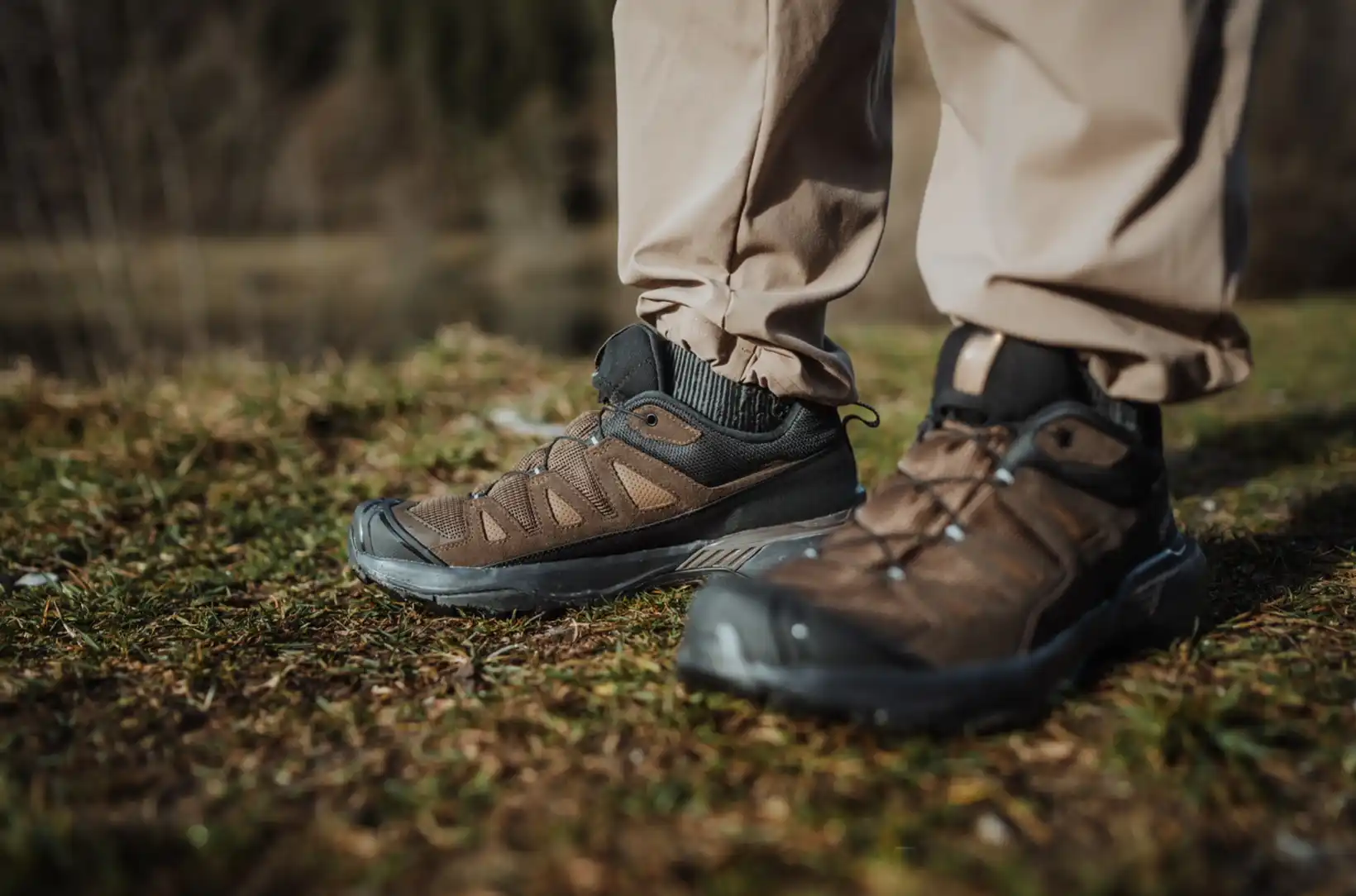
A specification that says genuine leather and mesh cannot be verified or rejected. A usable one names the material family, the areal weight or thickness with tolerance, the test method, the pass value and the marking the finished boot must carry.
- Material family and substrate, for example PU-coated Oxford on a 900D polyester base.
- Areal weight in grams per square meter and thickness, each with a tolerance.
- Abrasion method and pass value, referenced to the class the boot will carry.
- Tear strength method and minimum, stated per component.
- Flex and hydrolysis requirement, with storage conditions and shelf life.
- The marking string the finished boot must carry, including the insert suffix and SC.
- Traceability: mill, batch, and a test report per shipment.
Employers already carry the duty to supply protective footwear where soles could be pierced, under OSHA 1910.136; a written specification is how that duty becomes auditable. Verification takes three actions, not one document: a test report tied to the production batch, a retained sample per shipment, and a pilot pair on the hardest job for four weeks. The pilot pair exposes the toe scuff and the heel lining, which paperwork never predicts. A shoe material supplier who quotes peel strength, coating weight and hydrolysis data, rather than only color and width, removes most of that risk before the first container.
FAQ
Three questions come up after the specification is signed, and none of them is answered by the label alone.
Can I add a puncture-resistant insole to a boot that was not certified with one?
No. The rating applies to the complete footwear as tested, and the insert is part of that assembly. A loose insole is not tested with the boot, can shift under load and gives no defined protection at the edges. Where the hazard requires puncture resistance, buy footwear certified with an insert built in.
Can a fabric-upper safety boot meet ISO 20345?
Yes. The minimum tear strength for coated fabric is 60 N, and coated woven and microfiber uppers clear it. Passing the standard and surviving the site remain different questions: a compliant coated upper on a site with constant kneeling still wears through at the toe unless coating weight and a bumper are specified.
Does resoling a certified boot void its certification?
For the sole and insert assembly, usually yes, because the tested configuration has changed. Whether a repair preserves the marking depends on the manufacturer’s quality system and on whether the original insert and outsole are used. Confirm in writing before assuming a repaired boot carries its rating.