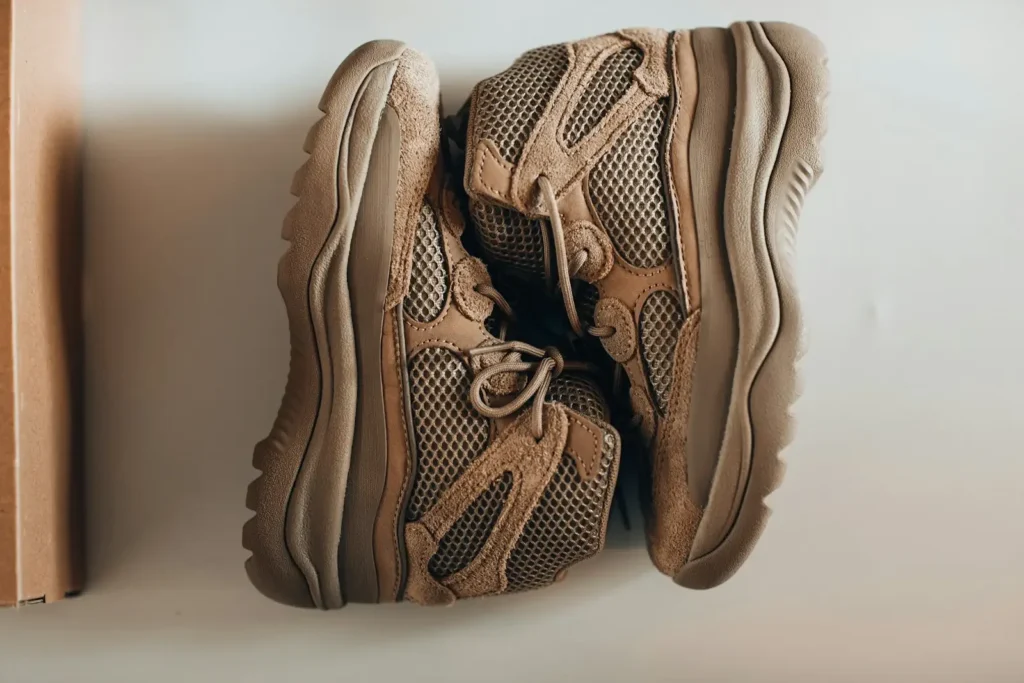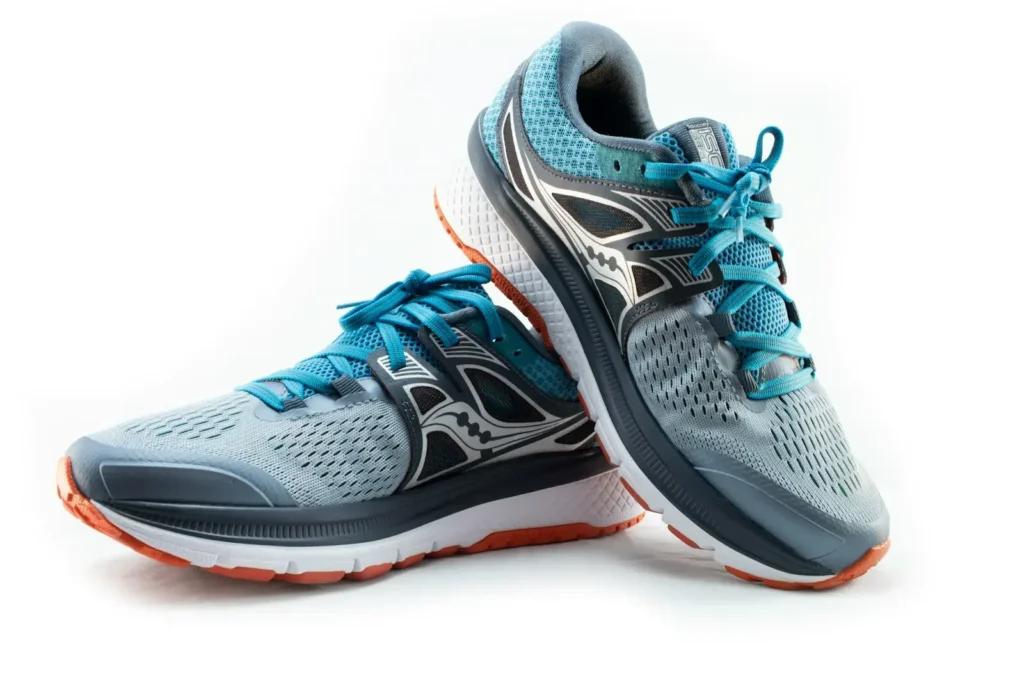
A running shoe can contain a dozen different polymers, and almost all of them begin as fossil feedstock. That is why footwear teams working against recycled-content targets keep arriving at the same entry on the sustainable material for shoes list: polyester recovered from drinks bottles. It is the one recycled textile that mills can supply at scale, in consistent widths, with paperwork that auditors accept. The difficulty is not finding it. The difficulty is knowing which part of the shoe it sits in, what it does to performance, and what the label actually proves.
rPET fabric for shoes is polyester made from recycled polyethylene terephthalate, the same plastic used in drinks bottles, converted back into yarn and then knitted or woven into uppers, linings, laces and collar mesh. The polymer is chemically identical to virgin polyester, so a finished textile cannot be identified by touch, by appearance or by a standard fiber test. What differs is the feedstock, the consistency of supply and the documentation behind the claim.
The rest of this guide follows the material from bale to finished pair, then separates what the recycled label can prove from what it cannot.
What Is rPET Fabric for Shoes?
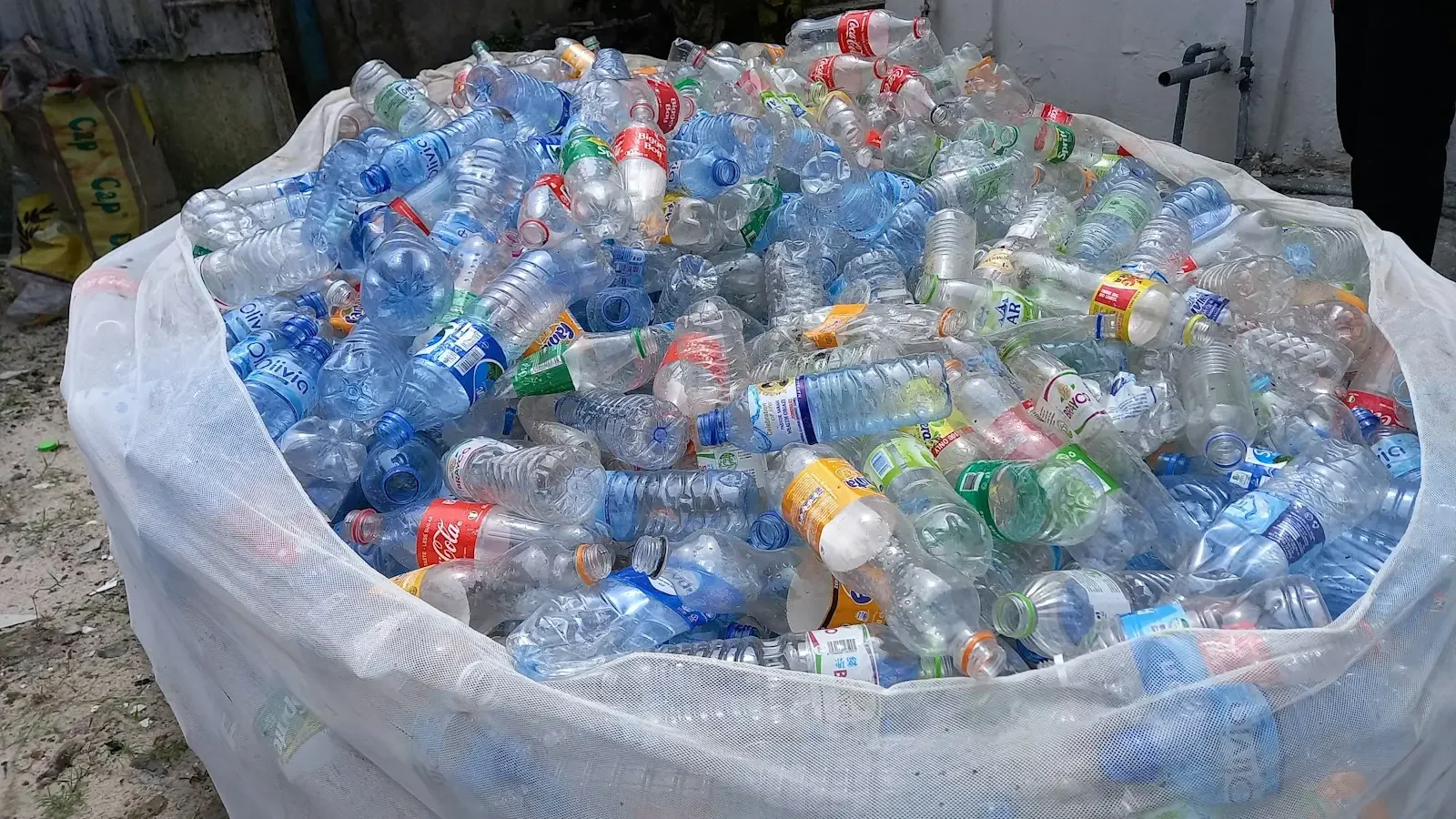
rPET is recycled polyethylene terephthalate, and once it is spun into fiber it is simply recycled polyester. In footwear documents the three phrases in circulation, rPET fabric, recycled polyester and bottle-based polyester, describe one material. It is not a different polymer or a coated polyester, which is why a recycled upper and a virgin upper behave the same on the last.
The scale of the category explains why buyers keep meeting it. Global fiber production reached 132 million tonnes in 2024, polyester took 59 percent of that, and recycled polyester accounted for 9.3 million tonnes, roughly 12 percent of all polyester. About 98 percent of it came from plastic bottles rather than from old textiles, according to the Materials Market Report 2025. For a shoe program that ratio defines the supply chain: bottle recycling, not garment recycling.
Why Bottles Rather Than Old Shoes?
Bottle-grade PET has an intrinsic viscosity of roughly 0.70 to 0.78 dL/g against 0.40 to 0.70 for fiber-grade PET. That headroom lets bottle flake lose some chain length in melting and still spin into strong yarn. Bottles are also a single polymer, mostly clear or light blue, collected in volumes that justify dedicated sorting lines. A worn shoe is the opposite: textile, foam, rubber, adhesive and trims bonded together, with a separation cost that exceeds the value of what comes out.
How Do Recycled Plastic Bottles Become Sneaker Fabric?
Mechanical recycling turns bottles into fabric in six steps: collection and baling, sorting by polymer and color, grinding into flakes with caps and labels removed, hot washing, drying, and melting with filtration before spinning. Weaving or knitting and dyeing follow, and the whole route keeps the polymer chain intact instead of breaking it back to monomers.
The sequence sounds simple, and most of the cost sits in the middle of it:
- Bottles are collected, baled and shipped to a recovery facility.
- Bales are sorted by polymer type and color; clear and light blue material gives the widest dyeing range.
- Bottles are ground into flakes and the caps, labels and neck rings separated.
- Flakes are hot washed with detergent to strip residue, then rinsed.
- Flakes are dried to a moisture level low enough for melt processing.
- Flakes are melted, filtered and spun into filament; some plants re-pelletize first to rebuild and homogenize chain length.
Three failures account for most quality complaints. PVC contamination degrades at PET melt temperature and shows up as discoloration and black specks. Incomplete washing leaves odor and yellowing that no dye lot can hide. Residual moisture hydrolyzes the polymer during melting and produces weak, hairy yarn that sheds later in wear.
Where Does rPET Go in a Shoe?
In most recycled-content sneakers, rPET lands in the textile package: the upper, the lining, the laces, the collar and tongue mesh, and sometimes the toe puff and heel counter substrate. Midsoles, outsoles and adhesives usually follow separate recycled routes or stay conventional. A recycled claim therefore describes one component, not the whole shoe.
| Component | Typical rPET content | What it changes |
| Upper | Knit or woven polyester, often 30 to 100 percent recycled | Main visual and structural surface |
| Lining | Recycled mesh or taffeta | Skin contact and moisture handling |
| Laces and trims | Recycled filament | Low volume, high visibility |
| Toe puff and counter | Recycled nonwoven substrate | Shape retention and stiffness |
The upper is the easiest place to begin: it carries the largest textile area and the fewest bonding constraints, and many shoes upper material ranges now include at least one recycled knit. Linings come second, since they touch skin and are usually the first component a buyer asks to certify.
How Does rPET Fabric Perform in Footwear?
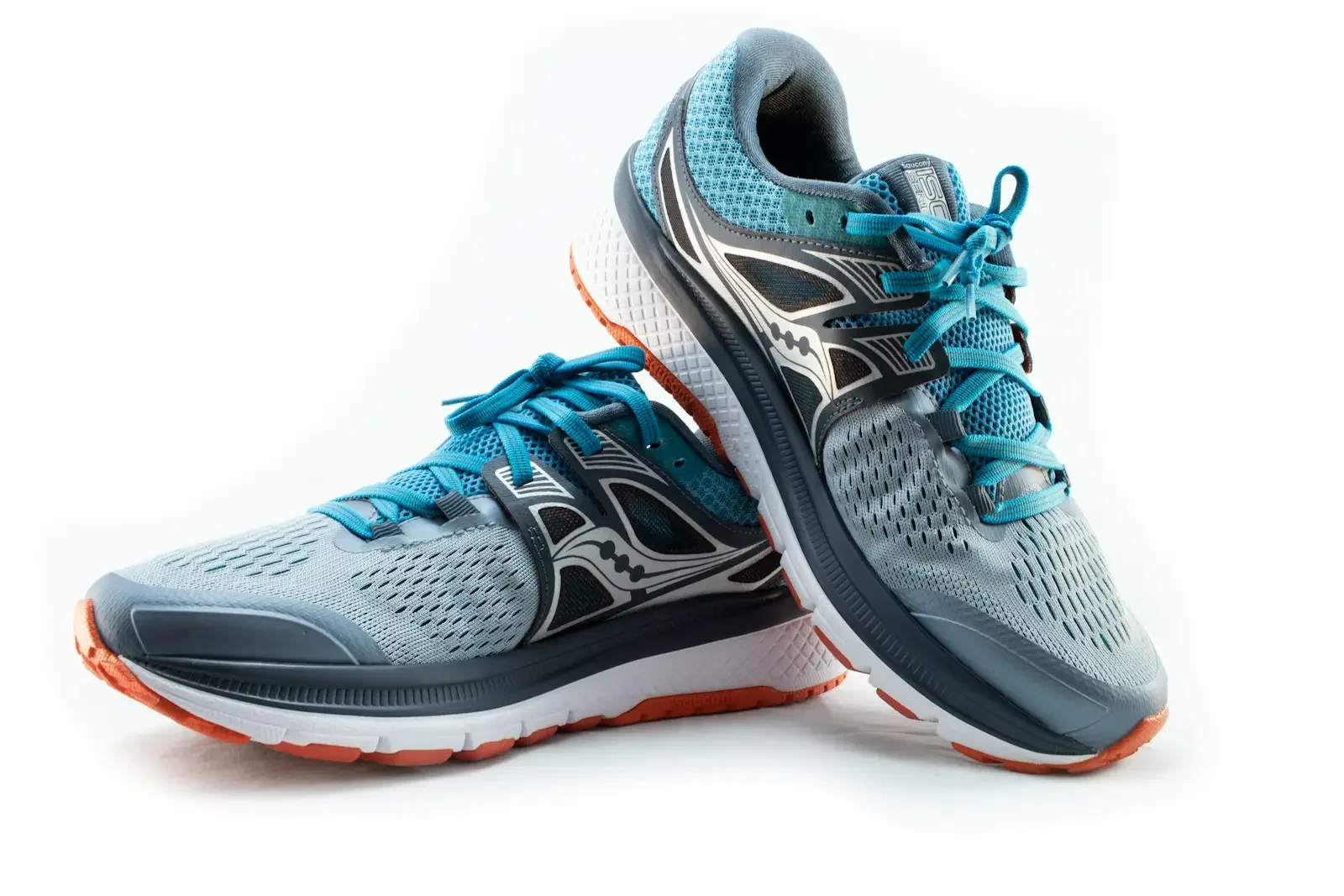
Well-sorted mechanically recycled rPET matches virgin polyester on strength, abrasion and dimensional stability in most upper and lining uses. The real differences are consistency, color and bonding behaviour, not raw performance. A specification that names recycled content without naming yarn type, fabric weight and finish tells a factory very little.
| Property | rPET, well sorted | Virgin polyester |
| Tensile and tear strength | Comparable | Comparable |
| Abrasion resistance | Comparable, structure dependent | Comparable |
| Color consistency | Slight batch variation | Tighter, especially whites |
| Bonding to film or membrane | Needs controlled surface and dust | More forgiving |
| Moisture regain | About 0.4 percent | About 0.4 percent |
| Cost | Usually higher | Lower and more stable |
Bonding deserves separate attention in footwear. An upper is rarely a single fabric; it is usually laminated to a membrane, a foam or a reinforcement, and the recycled substrate has to be dust free, consistent in surface energy and compatible with the adhesive. Most field failures in recycled uppers trace back to lamination defects rather than to the fiber.
Color is the second pressure point. Solution-dyed darks are safest, since pigment enters the polymer and skips a dye bath recycled flake does not accept evenly; optical whites are hardest and every lot should be lab-dipped.
Is rPET Fabric Safe to Wear?
There is no evidence that polyester becomes hazardous because its feedstock was a bottle. Safety depends on what remains in the polymer and what is added during finishing: catalyst residues, dye carriers, and water-repellent or antibacterial finishes. Those risks are controlled by chemical limits and testing, not by the word recycled.
Antimony is the usual catalyst in PET polymerization and remains at trace levels in the fiber, and certified supply chains test against regulated limits. The larger variables are dyestuffs and finishes, particularly fluorinated repellents, which is why fluorine-free finishing has become a standard request in footwear specifications. The Global Recycled Standard includes chemical requirements for processing sites, and OEKO-TEX limits are widely used as the test reference for skin-contact materials.
Ask for results on the component that touches skin. A lining tested for extractable heavy metals and formaldehyde says more than a certificate covering the whole shipment, and migration under sweat is higher than in the dry state, so a dry-fabric result answers little for a shoe worn eight hours a day.
Does rPET Fabric Shed Microplastics?
Every polyester textile sheds fibers during wear and washing, recycled or not. The largest available dataset found mechanically recycled polyester fragmented to the same extent as virgin polyester across 251 fabrics. What does change the picture is repeated recycling: fiber recycled twice or three times sheds far more, because the chain has been shortened each round.
The Microfibre Consortium tested 251 fabrics from 36 brands with one aligned method and found mechanically recycled polyester no worse than virgin material, though it could not assess chemically recycled polyester for lack of data. A separate study put mechanically recycled polyester through one, two and three cycles and found release close to virgin after the first, then roughly 4.3 times and 6.2 times the virgin level after the second and third, with shorter fibers and hairier yarn each time (published study).
Not every result points the same way. A 2025 test of 51 garments reported about 55 percent more fibers from recycled polyester and shorter fibers overall, although the gap was not statistically significant across material groups. For a footwear program the practical reading is that construction matters more than the badge: continuous filament sheds less than staple, tight structures less than open ones, and solution dyeing removes a wet process that loosens surface fibers.
Are Shoes Made From Recycled Bottles Actually Better?
They are better on the measure that matters most, because they displace virgin fossil feedstock. They are not automatically more durable, more recyclable or more circular. A recycled upper paired with a virgin sole, conventional adhesive and no take-back route is a smaller step than the marketing implies.
Shoes made from recycled bottles are now ordinary rather than novel, and the recycled share usually sits in the textile package while the sole unit follows a separate stream.
Circularity is the harder question. Bottle-to-fiber is an open loop, since the bottle becomes a shoe and the shoe rarely becomes another shoe. European policy has made that tension explicit: drinks bottles must contain 25 percent recycled plastic from 2025 and 30 percent from 2030, which puts packaging and textiles in competition for the same clean flake. Textile-to-textile recycling remains under 2 percent of recycled polyester feedstock, so describing a bottle-based upper as circular without qualification overstates what the chain can do today.
Durability does not follow recycled content either. Abrasion life comes from yarn tenacity and structure, bond strength from surface preparation, fit from the last. A well-built recycled upper outlasts a poorly built conventional one, and the reverse holds too.
How Do You Verify and Specify rPET Fabric?
Verifying rPET fabric for shoes works in three layers: certification of the processing sites, transaction documents that tie a shipment to those sites, and a product-level test of the material actually received. None is sufficient alone, and every recycled-content statement should carry a percentage and say whether the material was pre-consumer or post-consumer.

The Global Recycled Standard certifies products from 20 percent recycled content and allows the logo from 50 percent, so a certified fabric can legally be majority virgin polyester; the Recycled Claim Standard covers content and chain of custody only. Ask for the transaction certificate for the order rather than a company-level certificate, then test the delivered fabric, because the polymer is identical and only a measurement confirms the share.
Claims are regulated. United States guidance requires a recycled-content claim to carry the percentage unless everything except minor components is recycled, under 16 CFR Part 260. In Europe, Directive (EU) 2024/825 applies from 27 September 2026 and removes room for unsubstantiated generic statements.
A workable specification covers seven items:
- End use and the tests that matter: abrasion cycles, tear strength, flex resistance, colorfastness, shrinkage
- Recycled percentage, stated per component and per total product weight
- Pre-consumer or post-consumer feedstock, and the country of recovery
- Filament or staple, yarn count, fabric weight in gsm, width and roll length
- Color route: solution dyed, piece dyed, or greige for in-house dyeing
- Finishes, with an explicit fluorine-free requirement where repellency is specified
- Bonding method and the substrate the fabric will be laminated to
Most sourcing problems begin before the order, when a brief asks for recycled polyester without saying which items are negotiable. A shoe material supplier who answers them in writing is worth more than one quoting a lower price per meter.
FAQ
Three questions surface once the specification is agreed, and each one changes a line in the tech pack.
Is rPET Fabric More Expensive Than Virgin Polyester?
Usually yes, and the gap follows the bottle market rather than the oil price. Recycled flake competes with drinks companies that must meet mandatory recycled-content targets, so it can spike independently of virgin polyester. The premium is widest on short runs of optical white.
Can an rPET Upper Be Made Waterproof?
Yes, but the fabric is not what makes it waterproof. Water resistance comes from a membrane or coating laminated to the textile, and the recycled substrate only has to bond reliably and stay dimensionally stable through the process. Specify the membrane separately, confirm the adhesive suits the recycled surface, and test the finished laminate rather than the fabric alone.
How Many Recycled Bottles Does One Pair of Shoes Use?
There is no industry figure, only arithmetic. At 12 g of usable PET per bottle after sorting and washing, a 300 g per square meter fabric yields about 25 bottles per running meter at 1.5 m width. A pair of textile uppers typically consumes 0.6 to 0.9 square meters, which lands near 15 to 22 bottles. Change the fabric weight or the bottle size and the number moves, so quote the assumption alongside the result.