The global footwear industry produces more than 20 billion pairs of shoes every year, and the environmental cost of that volume is substantial. Most shoes combine dozens of synthetic components that are difficult to separate and recycle, which is why footwear ranks among the most polluting consumer product categories. For brands, manufacturers, and sourcing teams, material selection has become the single most effective lever for reducing that footprint, especially as regulations tighten and retail partners increasingly demand verifiable sustainability credentials. Choosing the right sustainable material for shoes now shapes both a product’s environmental performance and its access to major markets.
The most sustainable materials for shoes are recycled PET and recycled nylon for uppers and linings, organic cotton, hemp and linen for breathable natural uppers, plant-based leather alternatives like pineapple leaf, cactus, apple and mycelium materials for leather-free designs, natural rubber and cork for outsoles and footbeds, and bio-based EVA or algae foam for midsole cushioning. Vegetable-tanned leather from audited tanneries is a durable and repairable option for brands that use animal-derived inputs. No material is best in every criterion, so the best choice depends on the shoe category, performance requirements and end-of-life strategy.
Below we break down what makes a shoe material sustainable, compare the leading options for uppers and soles, and outline how sourcing teams can verify claims before committing to production.
What Makes a Shoe Material Sustainable?
Sustainable shoe material is material that reduces environmental impact in four ways: use of recycled or renewable inputs, lower carbon and water footprint in production, durability to extend the usable life of the shoe, and recyclability or biodegradability at end of life.
Some 70 percent of a typical shoe’s environmental impact is set at the material production stage, well before components reach the factory floor. And that is why replacing virgin synthetics with recycled or bio-based alternatives is so much more effective in reducing our impact than just improving packaging or logistics. A single pair of shoes can have between 30 and 40 separate parts, so every material choice, from the fabric of the upper to the adhesive used, impacts the final footprint of the finished product.

Sustainability claims also need to be verifiable, not aspirational. Third-party certifications such as the Global Recycled Standard (GRS), the Global Organic Textile Standard (GOTS), OEKO-TEX Standard 100 and Leather Working Group (LWG) audits serve as evidence that recycled content, organic fiber, chemical safety or tannery practices meet defined benchmarks. Buyers can check the validity of the certificates through the issuing bodies, such as Textile Exchange, which maintains public databases of recycled content claims.
Best Sustainable Materials for Shoe Uppers
Best sustainable upper materials Recycled PET and recycled nylon for performance and mesh designs Organic cotton, hemp and linen for casual and canvas styles Plant-based leather alternatives for leather-free footwear and responsibly tanned leather for durable, repairable designs The choice of shoe upper material is a trade-off between the sustainability credentials of each option and the breathability, abrasion resistance and end-of-life goals.
Recycled PET and Recycled Nylon
Recycled PET, most commonly produced from post-consumer plastic bottles, is the most production-proven sustainable synthetic for shoe uppers, linings, and laces. It is lightweight, quick-drying, and breathable when knitted into mesh constructions, and its recycled content can be certified under GRS. Recycled nylon retains high tensile strength after reprocessing, making it suitable for structural reinforcements, heel counters, and woven overlays. Both materials divert plastic waste from landfills and waterways while matching the performance of virgin synthetics in most footwear applications.
Organic Cotton, Hemp, and Linen
Natural fibers offer breathability and biodegradability that synthetics cannot match, and each serves a distinct role in footwear:
| Fiber | Tensile Strength | Water Input | Breathability | Typical Use |
| Hemp | Very high | Very low | High | Uppers, casual footwear |
| Organic cotton | Medium | Medium | Very high | Canvas uppers, linings |
| Linen | Medium-high | Low | High | Summer uppers, linings |
Hemp requires no pesticides or much irrigation, produces about three to four times the tensile strength of cotton and has natural antimicrobial properties that make it resistant to odor buildup. GOTS certified organic cotton for plush softness and steady airflow on canvas styles. Linen is a good absorber of moisture and becomes softer with use, so it is well suited to warm weather footwear.
Plant-Based Leather Alternatives
Pineapple leaf fiber, cactus, apple pomace and mycelium materials turn agricultural waste streams into leather-like sheets for uppers and decorative panels. These materials are animal-free and give waste a second life, but sourcing teams should look closely at the specifications. Most plant-based leathers use a polymer binder for strength and flexibility, usually polyurethane, and it’s the binder that determines biodegradability. Request the exact percentage of bio-based content and the backing material before approving production.
Responsibly Sourced Leather
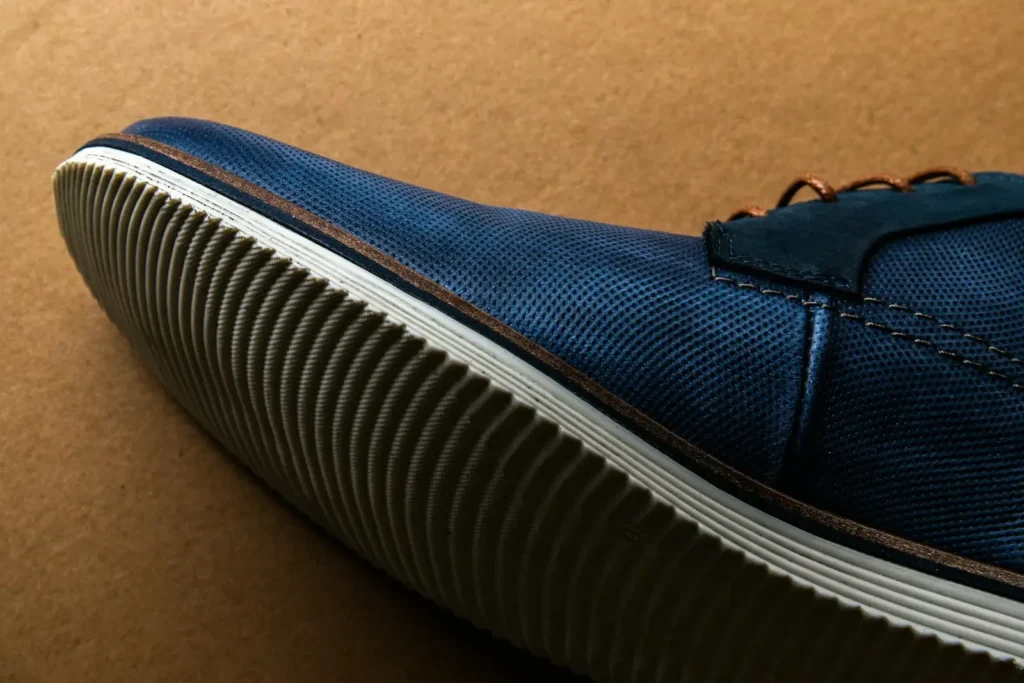
For brands that include animal-derived materials, vegetable-tanned leather and hides from LWG-audited tanneries offer a different sustainability profile. Leather is extremely durable, can be resoled repeatedly, and develops a patina rather than disintegrating, which amortizes its environmental cost over many years of wear. The key is verifying that tanning avoids chrome-heavy processes and that the tannery holds a recognized environmental rating.
Sustainable uppers should be paired with equally considered secondary components. Recycled polyester linings, organic cotton laces, and water-based adhesives preserve the integrity of the material story, because a shoe is only as sustainable as its least sustainable component. Composite constructions that laminate a recycled or natural outer fabric to a functional membrane layer can deliver breathability, moisture control, and weather protection in one material system, reducing the number of separate parts that must be sourced, shipped, and eventually separated at end of life.
Best Sustainable Materials for Soles & Midsoles
Natural rubber is the best material for outsoles, cork for footbeds and insoles, and bio-based EVA or algae foam for midsole cushioning. They are often used together in well-balanced designs, coupling a cushioning midsole with a durable, grippy rubber outsole.
Rubber (Natural)
Natural rubber is a renewable resource taken from rubber trees. It is flexible, biodegrades under the right conditions and provides excellent wet traction and abrasion resistance for outsoles. Recycled tire and industrial waste rubber has 90 to 95 percent of the wear-resistance of virgin rubber and keeps the waste out of the landfill. Buyers should seek out natural rubber from responsibly managed plantations to avoid deforestation-linked supply chains.
Cork
Cork is harvested from the bark of cork oak trees without cutting them down and the bark grows back, making it one of the most renewable materials in footwear. It is light weight, naturally anti-microbial and provides a good cushioning effect, whilst molding to the shape of the foot and that is why it is so widely specified for footbeds and insoles. FSC certification means that the cork is sourced from forests that are responsibly managed.
Bio-Based EVA and Algae Foam
Conventional EVA foam is fossil-based, but newer grades derived from sugarcane reduce reliance on petroleum inputs, and algae-based foams harvest excess algae from waterways, turning an environmental problem into cushioning material. The critical procurement note is that bio-based does not mean biodegradable. The benefit of these foams is lower embodied carbon, not compostability, so end-of-life planning still matters.
EVA vs. Rubber: Which Is Better?
Neither material is universally better; each excels in a different role:
| Property | EVA | Rubber |
| Weight | Lightest | Heavier |
| Cushioning | Excellent | Firmer |
| Durability | Moderate | Highest |
| Traction | Moderate | Best |
| Recyclability | Yes, thermoplastic | Limited, vulcanized |
| Relative cost | Lower | Higher |
EVA is better for lightweight cushioning in athletic and casual midsoles, while rubber is better for durability, grip, and high-wear outsoles. The most common approach in premium footwear combines both, using an EVA midsole for shock absorption and a rubber outsole for traction and longevity.
What Is the Healthiest Material for Shoes?
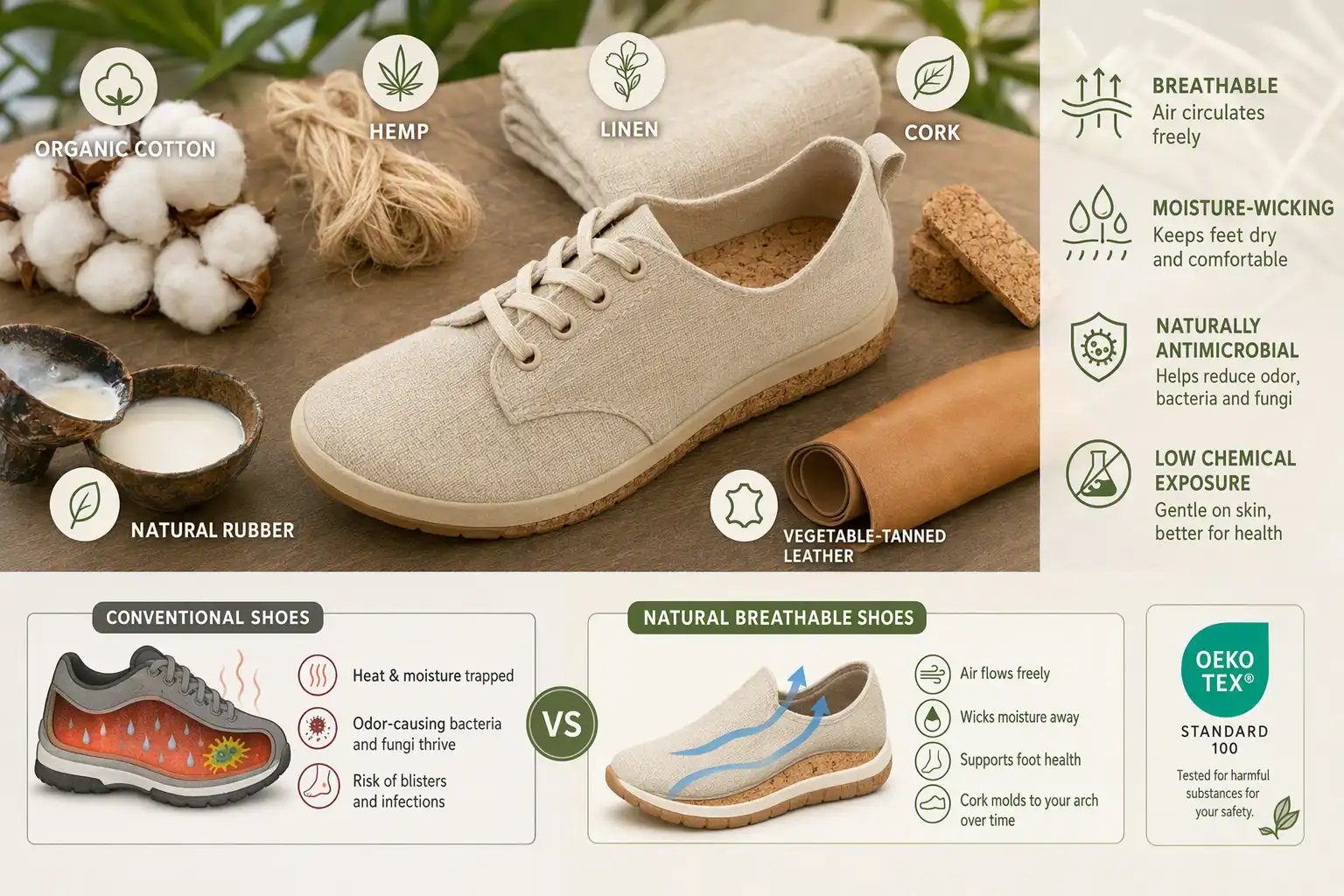
The best shoe materials are breathable natural materials such as organic cotton, hemp, linen, cork, natural rubber, and vegetable-tanned leather. These materials allow for air circulation, moisture management, and minimize chemical exposure against the skin.
Ventilation is important for foot health. The heat and moisture are trapped, creating a perfect environment for odor-causing bacteria and fungi to thrive and lead to blisters and infections like athlete’s foot. Natural fibers wick moisture away and provide consistent airflow, while cork offers antimicrobial cushioning that molds to your arch over time. Selecting a https://galetex.com/breathable-material-for-shoes/ also minimizes chemical exposure, because certified natural materials are tested for harmful substances based on standards like OEKO-TEX Standard 100.
What Are the Most Environmentally Friendly Shoes?
The most environmentally friendly shoes combine recycled or renewable materials with durable construction and repairable design, because longevity spreads a shoe’s environmental cost over more wears and repairability keeps it out of landfill for longer.
A shoe built with a recycled PET upper, natural rubber outsole, and cork footbed already has a low material footprint, but its overall impact depends on how long it stays in use. Constructions that can be resoled, such as stitched or welted designs, outlast fully bonded builds by years. Designing for disassembly, using mono-material families where possible and avoiding permanent bonds between incompatible polymers, makes future recycling far more realistic. Timeless design also plays a role, because a style that stays fashionable for several seasons avoids the rapid replacement cycle that drives most footwear waste. Following the circular economy principles described by the Ellen MacArthur Foundation, the best footwear keeps materials in use through durability, repair, and eventual material recovery. Reviewing the wider landscape of sustainable footwear materials helps sourcing teams choose combinations that balance performance with a credible end-of-life strategy.
How to Evaluate Sustainable Shoe Materials for Sourcing
To evaluate sustainable shoe materials effectively, you need to check for certifications, measure recycled content, review durability test data, and verify end-of-life options before approving a supplier.
Here is a practical checklist for sourcing teams:
1. Ask for certificate numbers and verify them against the database of the issuing body instead of accepting documents at face value.
2. Mandate minimum recycled or bio-based content percentages because vague claims like “contains recycled material” mean nothing.
3. Ensure that sustainable materials meet durability requirements by confirming abrasion and flex-cycle test results (e.g., Martindale and Bally flex data).
4. Audit secondary components such as adhesives, dyes, linings and laces, often overlooked sources of environmental and chemical risk.
5. Check the end-of-life strategy of the supplier (take-back, recyclable constructions, mono-material designs).
Regulatory pressure is also rising. The European Union’s Ecodesign for Sustainable Products Regulation is introducing requirements such as Digital Product Passports for footwear through the end of the decade, as detailed by the European Commission. Verifiable material data will therefore become a condition of market access rather than a marketing choice, and buyers who build certification review into sourcing now will avoid compliance disruption later.
FAQs
Are sustainable shoe materials more expensive than conventional ones?
Some sustainable inputs carry a premium of roughly 10 to 30 percent at the material level, but costs continue to fall as supply scales. Durability gains, fewer compliance risks, and stronger retail positioning frequently offset the difference across a product’s full lifecycle.
Can sustainable shoe materials be made waterproof?
Yes. Recycled PET and natural fiber uppers can be laminated with waterproof, breathable membranes to deliver weather protection without abandoning sustainable inputs, and modern water-based coatings are replacing solvent-based finishes across performance categories.
Which shoe materials should buyers avoid for environmental reasons?
PVC-based synthetic leathers, chrome-tanned leather from unaudited tanneries, and unmarked vegan leather without material disclosure are best avoided, because they combine poor durability with problematic chemistry and weak end-of-life outcomes.