Sourcing fabric in volume is one of the most consequential decisions a footwear business makes. The material determines comfort, durability, and appearance, while the supplier behind it determines whether your production calendar holds and whether every roll matches the approved standard. Yet many buying teams still compare candidates on unit price alone, only to discover the real cost later in rejects, delays, and re-approval cycles once bulk production is underway.
To compare shoe fabric suppliers for bulk orders effectively, score each candidate across five dimensions: material quality and technical specifications, certifications and compliance, production capacity and scalability, commercial terms including MOQ and total landed cost, and the reliability of the sampling and quality control process. A supplier that clears all five checks at moderate pricing almost always outperforms the cheapest quote that clears none of them.
The sections below break each dimension into concrete checks you can complete before committing production volumes.
What To Look For In A Shoe Fabric Supplier
Begin every comparison with a written requirement sheet, send the identical brief to each candidate, and judge suppliers by how precisely they respond to it. A comparison without a fixed reference point drifts toward price and salesmanship. A comparison anchored to a clear technical brief reveals which suppliers actually understand footwear materials.
Before contacting anyone, document the end use (athletic, casual, safety, or children’s footwear), target fiber composition, construction type, weight in GSM, width, color direction, finish, and order quantity. A supplier that answers with specific, matching specifications and usable technical data is already ahead of one that replies with a generic catalog and a low quote.
Material Quality And Technical Specifications
Quality claims mean little without measurable data. Ask every shortlisted supplier for a technical data sheet covering the metrics that matter for your product category, and cross-check the numbers against physical samples. Key specifications for footwear fabrics include:
- Weight (GSM) and thickness consistency across rolls
- Abrasion resistance measured in cycles
- Color fastness to rubbing, washing, and light
- Shrinkage rate after standard washing
- Tear strength and seam slippage behavior
- Air permeability for applications where breathability matters
A single number without the test method behind it creates false confidence. A supplier quoting 50,000 abrasion cycles should state which test standard and conditioning were used. For a deeper grounding in how different upper textiles behave, this shoe upper materials guide explains the characteristics of common constructions. Also match priorities to the footwear category: a sneaker upper emphasizes flexibility and breathability, while a school shoe prioritizes repeated flexing and surface durability.
Certifications And Compliance
Certifications are the fastest way to filter out suppliers whose materials cannot enter your target markets. For footwear fabrics sold into Europe and North America, treat OEKO-TEX Standard 100 as a baseline indicator that the material has passed testing for harmful substances, and confirm REACH compliance for chemical inputs.
Two verification habits separate professional buyers from the rest. First, request the certificate number and check it in the official database rather than accepting a logo on a website or catalog. Forged and expired documents exist, and a legitimate supplier will provide current documentation without hesitation. Second, prefer lot-specific test reports tied to your actual order over a generic mill certificate, because they prove the fabric you are buying, not a showroom sample, meets the standard.
Production Capacity And Scalability
A supplier that excels at samples can still fail your bulk order. Confirm monthly capacity in meters, machine types and counts, and which stages are in-house versus subcontracted. A mill that owns its knitting, weaving, lamination, and dyeing operations controls shade, hand feel, and shrinkage more tightly than one that outsources each stage, and problems are resolved faster where the machinery lives.
Ask two scaling questions directly: can the supplier move from a trial order to full container volumes without a quality shift, and what is the realistic lead time at your target quantity? When reviewing a shoes upper material range, check whether the constructions offered align with the machinery list the supplier provides. Also clarify whether you are dealing with a direct manufacturer or a trading company; both can be workable partners, but the answer changes pricing structure, problem-solving speed, and who is accountable when something goes wrong.
Where To Find Bulk Wholesale Fabric Suppliers
The three main sourcing channels are online B2B marketplaces, material trade fairs, and direct contact with factories in footwear material clusters, and the strongest shortlists usually combine all three. Each channel carries different strengths and risks:
| Channel | Strengths | Watch-Outs |
| Online B2B marketplaces | Fast, wide selection, easy side-by-side quotes | Verify manufacturer status and audit claims |
| Material and footwear trade fairs | Touch materials, meet technical reps, see innovations | Travel cost and lead times to production |
| Factory clusters | Competitive pricing, deep supplier ecosystems | Due diligence and on-site quality checks needed |
A common point of confusion deserves clarification. Searching for a shoe supplier usually returns finished-shoe factories, but what bulk fabric buyers need is a textile or composite material manufacturer that serves the footwear industry. Filter searches with material-specific terms such as shoe fabric, upper fabric, or footwear lining rather than generic footwear sourcing phrases.
There is no single best website for buying fabric. Experienced buyers use marketplaces to build an initial shortlist, then verify each candidate through company registrations, certificates, and reference customers before requesting samples. Whatever the channel, always treat the online listing as a lead, not a qualification. Before releasing a bulk order, visit the facility, commission a third-party audit, or at minimum run an inspection on the first production lot.
How To Compare Pricing, MOQ, And Payment Terms
Compare total landed cost rather than unit price, get every MOQ and fee in writing before shortlisting, and treat payment terms as a risk signal. Two quotes that look 20 percent apart on paper can converge or reverse once the full cost picture is assembled. Build every comparison from these components:
- Fabric price per meter or kilogram
- Freight and destination charges
- Import duties and taxes
- Sample and lab testing fees
- Defect and rejection risk at the quoted quality level
Minimum order quantities for footwear fabrics typically range from a few hundred to a thousand kilograms per colorway depending on construction, and custom finishes or prints push minimums higher. If an MOQ exceeds your program, suppliers will often negotiate: consolidate multiple colors into one order, accept a higher unit price for a smaller volume, or switch to a standard composition the mill already runs. Confirm the MOQ per colorway in writing, because a number that changes mid-conversation signals trouble ahead.
On payment, a deposit of roughly 30 percent with the balance against shipping documents is standard practice in the industry. A quote dramatically below market or a demand for 100 percent payment upfront is not a bargain; it is a warning that the low price is being recovered somewhere you cannot see, usually in rejects and delays.
Sample Testing And Quality Control
Never approve a bulk run on the strength of one swatch; require a staged approval sequence from lab dip to sealed golden sample, with bulk inspection as the final gate. How a supplier handles the sample stage is the most reliable preview of how they will handle your production. The standard control sequence works like this:
- Lab dip: dye matched to your target color, checked under daylight and artificial light
- Strike-off: a print or construction sample run on production equipment
- Pre-production sample: a small run of the actual construction to confirm hand feel, GSM, width, and shrinkage
- Golden sample: a sealed reference signed by both parties and written into the contract as the quality benchmark
- Bulk inspection: a four-point or equivalent inspection before shipment, checking defect rate, shade continuity, and roll lengths
Every stage should be documented, and the sealed golden sample should remain the reference point for repeat orders so future comparisons run against a physical benchmark rather than memory. When reviewing test reports, align requirements with recognized footwear standards: ISO/TS 20952:2024, published by the International Organization for Standardization, establishes performance requirements for footwear upper components and is a useful reference both manufacturer and supplier can work to. Apply the same discipline beyond uppers; a shoes lining material program, for example, deserves its own specification sheet and approval chain, since linings carry moisture management and skin-contact requirements that uppers do not.
How To Use A Supplier Scorecard
Convert your evaluation into a weighted scorecard so that every candidate is measured on the same criteria and the decision survives scrutiny from management and finance. A simple spreadsheet prevents the polished sales presentation from outranking the workable sourcing process. A practical weighting for bulk footwear fabric sourcing looks like this:
| Criterion | Weight | What To Score |
| Spec match and sample quality | 30% | Accuracy to brief, sample turnaround, usability |
| Certifications and testing | 20% | Verified documents, lot-specific reports |
| Capacity and lead time | 20% | Scalability, realistic delivery commitments |
| Total landed cost | 20% | All-in cost including freight, duties, and defects |
| Communication | 10% | Response speed, directness, documentation habits |
Weight the rows according to your own priorities; a brand with hard launch dates may shift weight toward capacity and lead time, while a premium label may load more onto testing. Whatever the weights, finish the evaluation with a trial order at a meaningful volume before releasing the full program. A trial order tests scheduling, packaging, documentation, and how the supplier behaves when a problem surfaces, none of which a scorecard can fully capture.
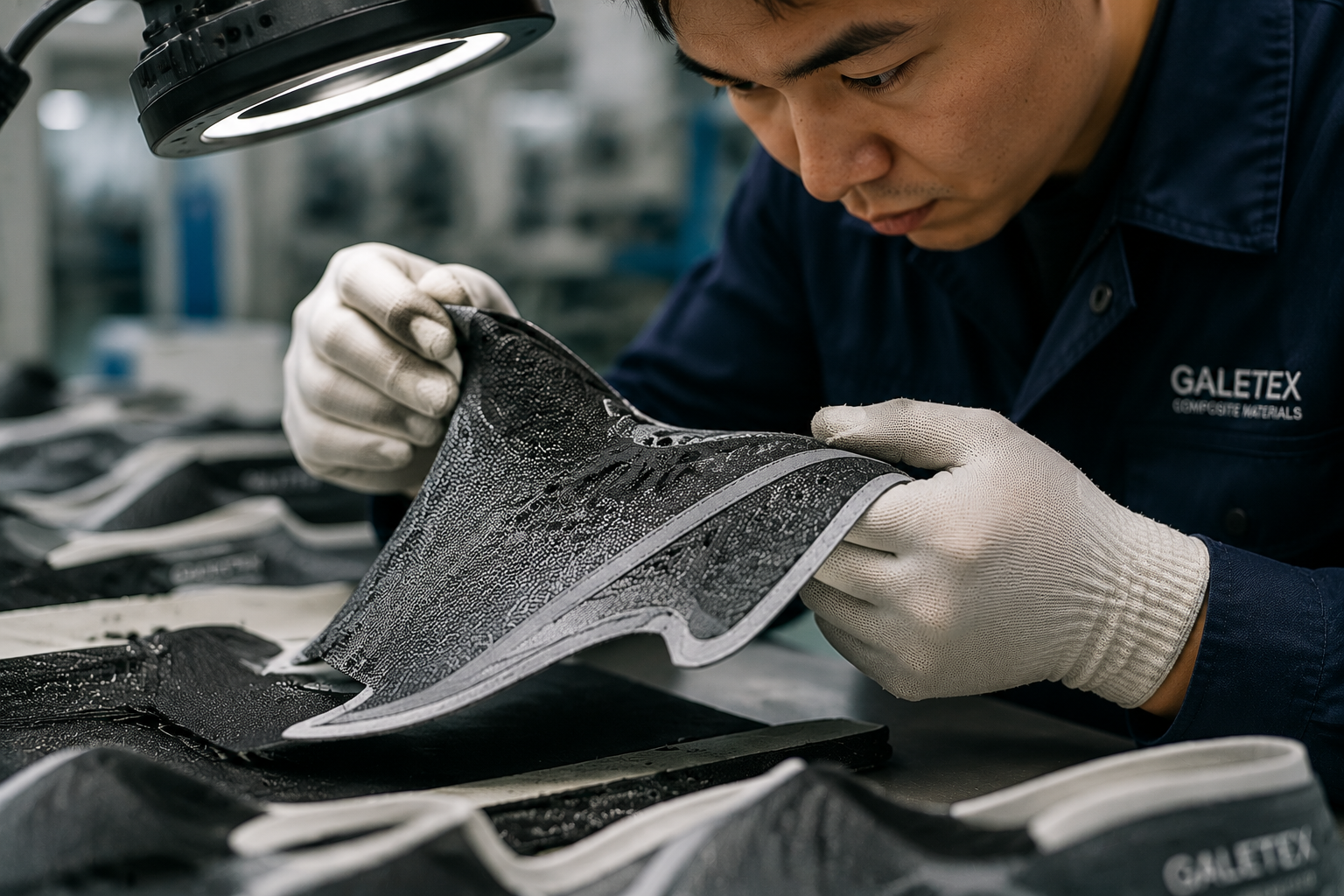
Red Flags To Avoid When Comparing Suppliers
Certain behaviors during the evaluation stage reliably predict failure during production, so treat them as disqualifying rather than negotiable. Walk away from suppliers who:
- Refuse to send samples or charge unreasonably for them without crediting the fee to orders
- Cannot produce current test reports or certificates when asked
- Quote far below every other candidate for the same specification
- Hide MOQs or change commercial terms between conversations
- Demand full payment upfront instead of a deposit structure
- Cannot describe their internal quality control process in concrete terms
- Are unwilling to provide references from buyers with similar order volumes
Any one of these signals is reason enough to remove a candidate from a bulk order shortlist. Slow or vague communication at the inquiry stage, in particular, almost always worsens under production pressure rather than improving.
Building A Long-Term Supplier Relationship
The lowest-risk, lowest-cost sourcing position over time is a small portfolio of proven suppliers treated as partners rather than vendors. A fabric mill with steady orders from your business will prioritize your production, share early access to new materials and finishes, and be more accommodating when a problem needs a fast fix. The evaluation work described above is the entry ticket; the value compounds over subsequent seasons.
Keep the relationship accountable with a simple rhythm: scheduled performance reviews covering on-time delivery, defect rates, and consistency against golden samples, plus an annual commercial review of pricing and terms. Buyers comparing shoes fabric manufacturers for the first time often plan for dual sourcing during the evaluation year and then consolidate volume with the top performer, which strengthens pricing leverage and priority treatment at the same time.
FAQ
Is it cheaper to buy fabric in bulk?
Yes, bulk purchasing almost always lowers the per-meter price because fixed setup, dyeing, and finishing costs spread across larger volumes, and mills reward predictable demand with better terms. However, the savings only materialize if quality holds; a cheap bulk lot with a high defect rate costs more than a moderately priced one that cuts cleanly. Compare bulk prices against total landed cost and expected yield, not the headline quote, and negotiate tiered pricing if your volumes will grow across the season.
How long do bulk shoe fabric orders usually take?
For custom constructions, plan on roughly 6 to 12 weeks end to end: one to three weeks for sampling and approvals, two to five weeks for production, and two to six weeks for shipping depending on destination and terms. Stock programs and standard compositions ship considerably faster. Build the approval sequence into your calendar, because every revision to a lab dip or pre-production sample adds days that no expedite can recover later.
What documents should I request before placing a bulk order?
At minimum, request the technical data sheet with test methods, lot-specific test reports, current certification documents with verifiable numbers, the written specification matching your requirement sheet, the signed golden sample record, and commercial terms covering MOQ, price basis, validity, and delivery. Keep the approved sample and final specification together on file so repeat orders are benchmarked against the same reference, and make the golden sample the contractual quality standard.