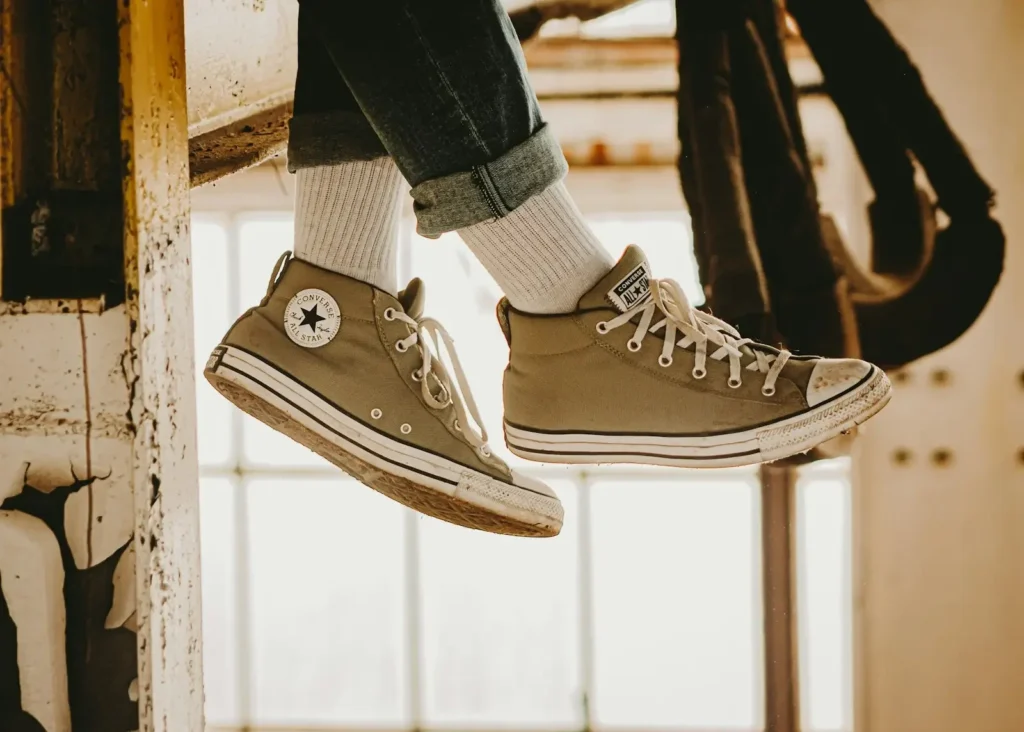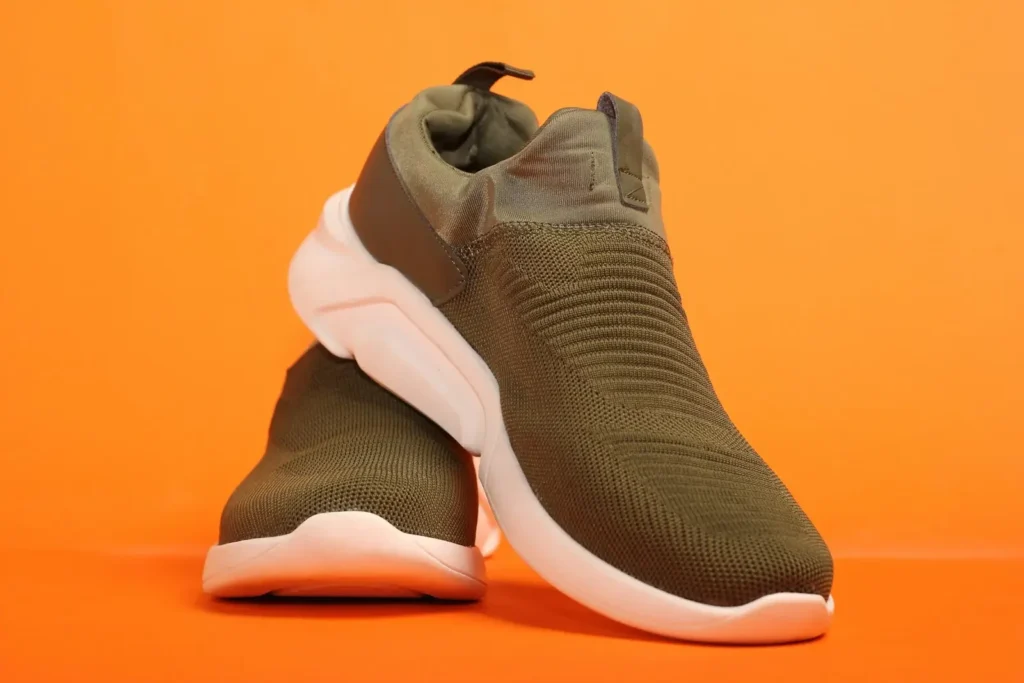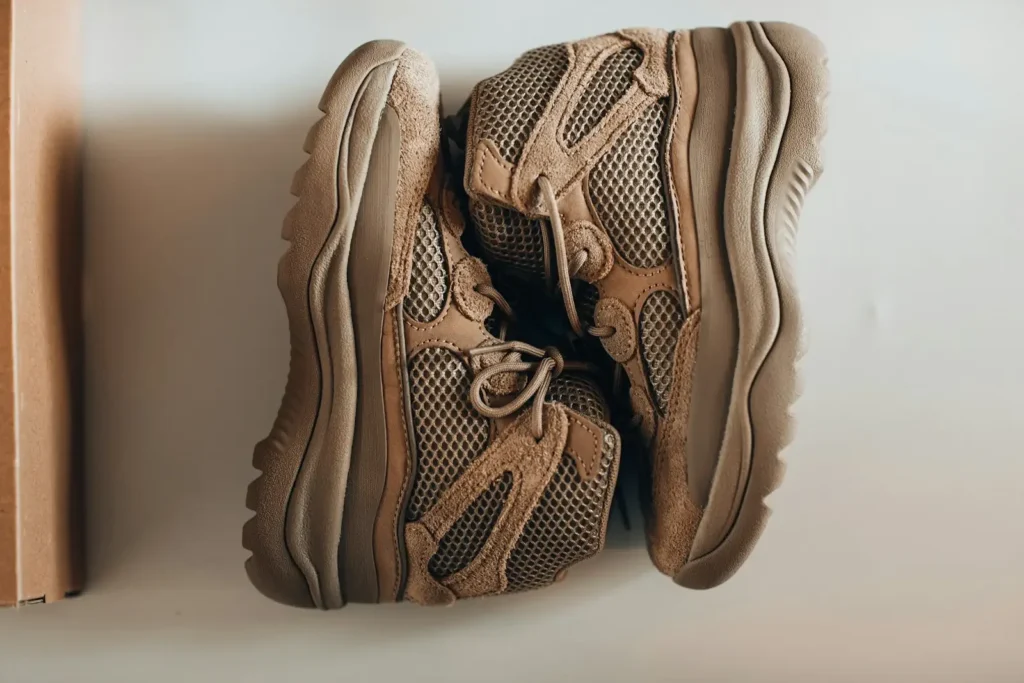
Footwear brands and manufacturers face a constant balancing act between cushioning, durability, breathability, and weight. Heavier shoes increase energy expenditure, accelerate muscle fatigue, and reduce all-day comfort, which is why lightweight design has become a primary selling point across running, casual, and outdoor categories. For B2B buyers, choosing the right lightweight materials for shoes is no longer optional; it directly affects product positioning, retail pricing, and end-customer satisfaction.
The best lightweight materials for shoes are mesh and engineered knit fabrics for uppers, EVA and Phylon foams for midsoles, and advanced polymers such as TPU and PEBA for performance-driven designs. These materials combine low density with reliable cushioning, flexibility, and breathability, allowing manufacturers to cut significant weight from a shoe without sacrificing comfort or structural integrity.
The sections below break down the lightest materials by shoe component, compare their density and performance characteristics, and explain how to match them to different footwear categories.
Why Lightweight Materials Matter in Footwear Design
Shoe weight is one of the most measurable performance factors in footwear. Every extra gram on the foot demands additional muscular effort with each stride, and over thousands of steps this added load translates into faster fatigue, higher perceived exertion, and greater stress on the lower limbs.
Research on running biomechanics has consistently shown that reducing shoe mass lowers the energy cost of movement, which is why competitive racing shoes are engineered around ultra-light foams and minimal uppers. The same principle applies to everyday wear: lighter shoes reduce strain during prolonged standing and walking, making them the preferred choice for travel, retail work, and casual comfort.
For manufacturers and sourcing teams, weight reduction is also a commercial argument. A lighter product supports premium positioning in athletic lines, meets growing consumer demand for “barely-there” comfort in lifestyle footwear, and can justify higher price points when backed by recognizable material technology. Balancing that weight reduction against durability and cost is the central engineering challenge of modern footwear design.
What Makes a Shoe Material Lightweight
A material is considered lightweight in footwear when it delivers adequate performance at a low density, typically below 0.30 g/cm³ for foams and far below that for engineered textiles, while still maintaining the cushioning, strength, and flexibility the shoe requires.
Density is the fundamental metric. Closed-cell foams such as EVA trap air inside their polymer structure, which is why a midsole can weigh a fraction of an equivalent solid rubber sole. Textiles achieve low weight through fine yarns, open constructions, and the removal of unnecessary layers and overlays rather than through chemistry alone.
Weight savings, however, must be evaluated against three performance criteria:
- Cushioning: the material must still absorb impact and retain its shape under repeated compression.
- Structural integrity: uppers must hold the foot securely without heavy reinforcement.
- Durability: the material must resist abrasion, tearing, and compression set long enough to deliver a reasonable service life.
The most effective lightweight material for shoes is therefore not simply the lightest option available, but the one that achieves the best weight-to-performance ratio for the intended use case. That is why material selection usually differs between the upper, midsole, and outsole of the same shoe.
Best Lightweight Materials for Shoe Uppers
The lightest and most functional upper materials are open-mesh fabrics, engineered knits, and technical synthetic textiles, all of which replace traditional leather and heavy multi-layer constructions with thin, breathable, structure-engineered alternatives.
Because the upper wraps the entire foot, material choice here has an outsized effect on total shoe weight. Modern shoes upper material selections emphasize minimal weight while preserving fit, support, and ventilation, and the three families below dominate lightweight design.
Mesh Fabrics
Mesh is the most widely used lightweight upper material in athletic and casual footwear. Its open-knit structure allows continuous airflow, which keeps feet cool and manages moisture during extended wear. Mesh is also extremely light: a well-engineered monofilament or three-layer mesh upper can weigh a fraction of a leather equivalent while offering superior flexibility.
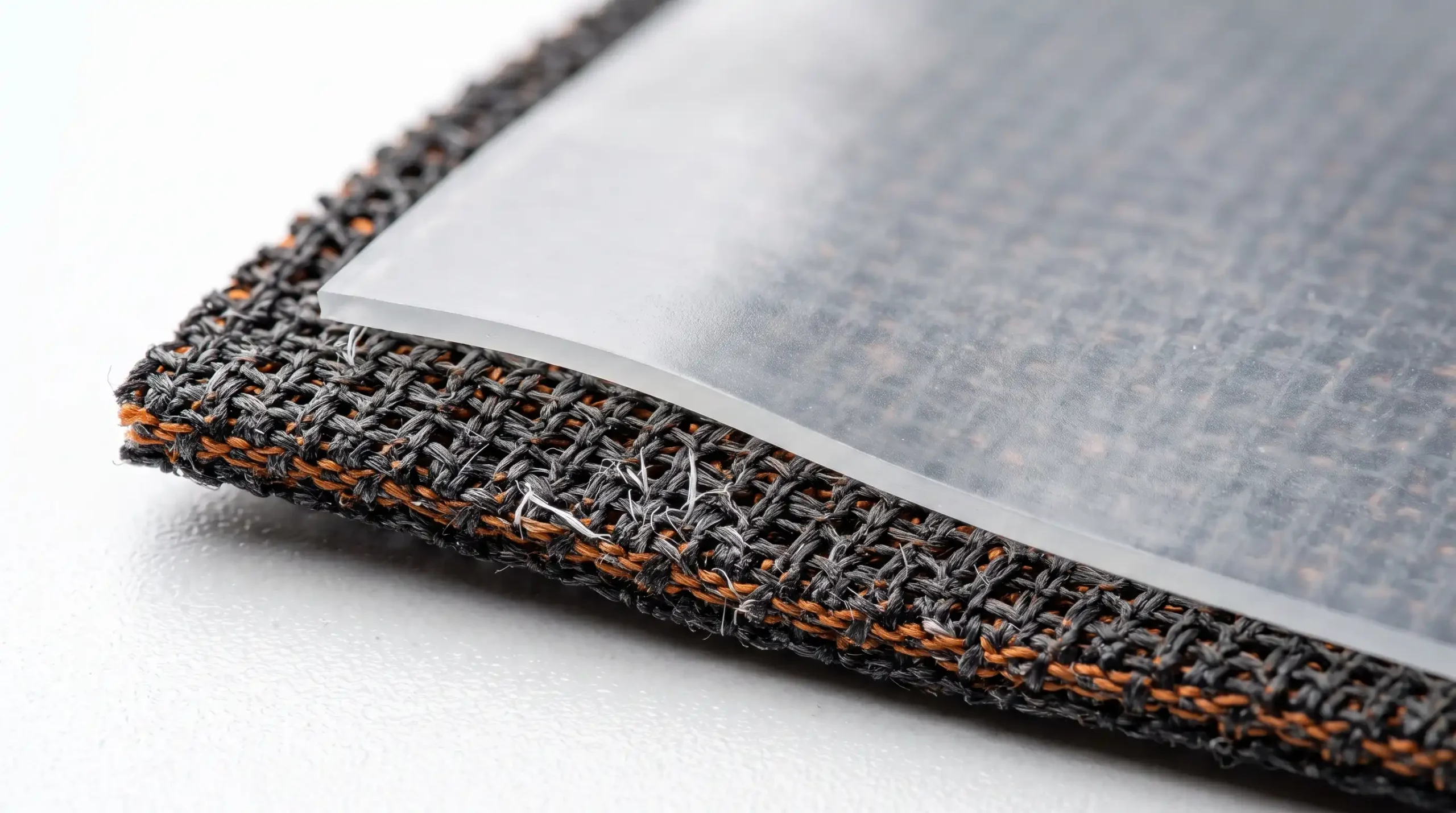
The natural answer to the question of what is the most breathable material for shoes is also mesh, since no other upper construction moves as much air through the shoe. Multi-layer laminated meshes add a waterproof membrane or foam backing without a significant weight penalty, which is why they appear in hiking, trail, and performance categories. For a deeper comparison of ventilation-focused options, this guide to breathable materials for shoes covers the leading fabric families in detail.
Engineered Knit Fabrics
Engineered knits take the breathability and low weight of mesh a step further by knitting the upper as a single seamless piece. Density, stretch, and support can be varied zone by zone within one construction: tighter knitting in the midfoot delivers structure, while more open knitting at the forefoot maximizes airflow and flexibility.
Because the upper is produced in one step, engineered knits also reduce cutting waste, stitching, and the need for glued overlays, all of which trim both weight and manufacturing complexity. The trade-off is limited structural rigidity, so knit uppers are usually reinforced with thin synthetic cages or fused support panels where lateral stability is required.
Technical Synthetic Fabrics
Thin woven synthetics, ripstop nylons, and microfiber-based synthetic leathers round out the lightweight upper category. Ripstop fabrics use a reinforced grid weave that resists tearing at very low fabric weights, making them popular in trail and outdoor footwear. Synthetic leathers provide the structured look of leather at roughly half the weight, along with easier care and consistent quality.
These materials are best used in combination: a typical lightweight performance shoe pairs a mesh or knit main body with ripstop or synthetic overlays only in high-wear zones, keeping average weight low while protecting the areas that scuff first.
Best Lightweight Midsole Materials
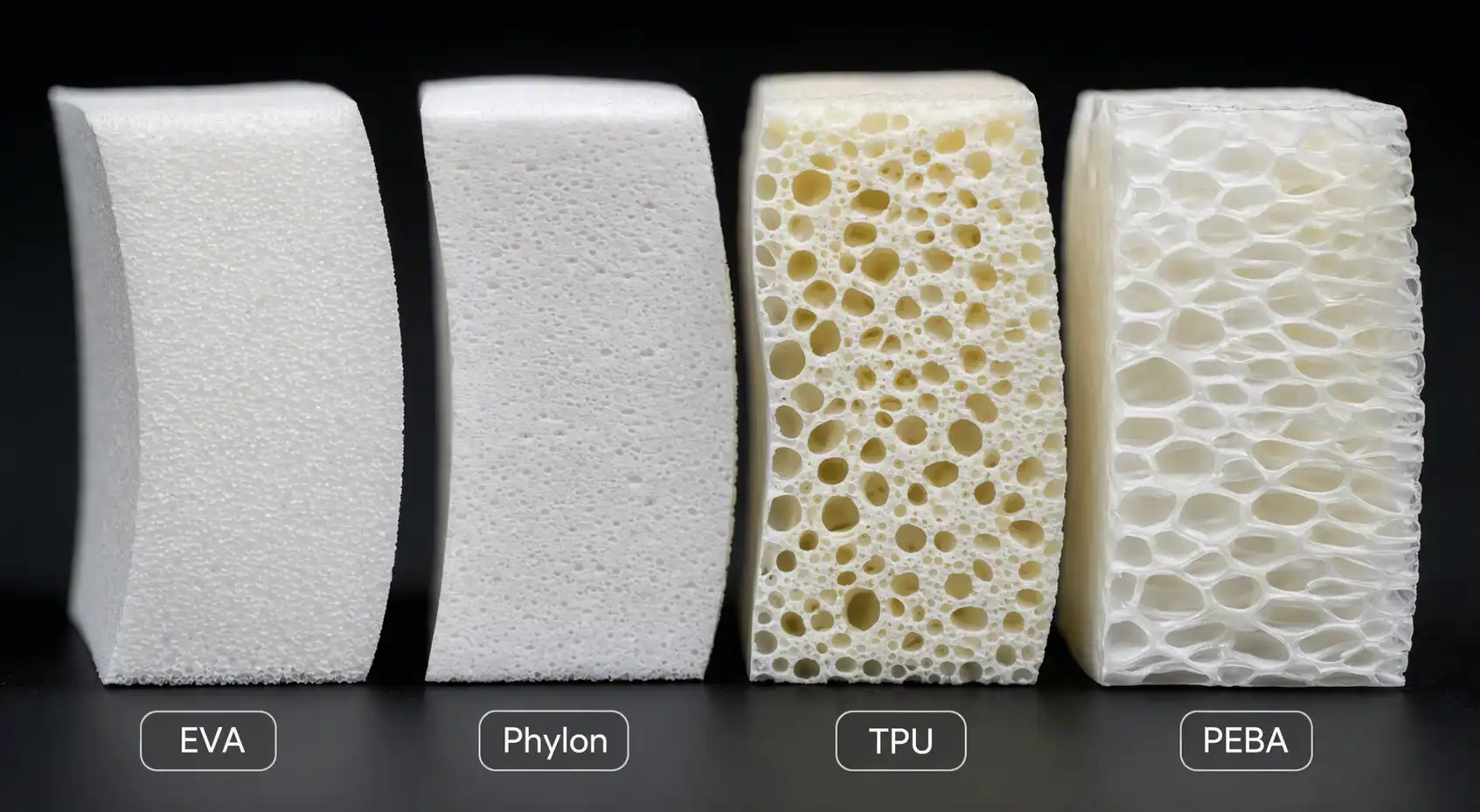
The lightest high-performing midsole materials are EVA and Phylon foams for the mainstream market, foamed TPU for durability-focused designs, and PEBA-based supercritical foams for premium performance footwear, with densities ranging from roughly 0.07 g/cm³ to 0.30 g/cm³.
The midsole is where the largest share of shoe weight sits, and also where cushioning lives, so foam selection defines both the feel and the weight of the finished product.
| Material | Typical Density (g/cm³) | Key Strengths | Main Limitation |
| EVA foam | 0.15 to 0.30 | Very light, low cost, good cushioning | Compresses over time |
| Phylon | 0.15 to 0.25 | Better rebound than EVA, consistent density | Higher cost than EVA |
| Foamed TPU | 0.24 to 0.26 | Durable, stable energy return | Denser than EVA |
| PEBA foam | 0.07 to 0.10 | Extremely light, highest rebound | Premium cost, niche supply |
EVA and Phylon Foam
Ethylene-vinyl acetate, or EVA, is the workhorse of lightweight midsoles. Its closed-cell foam structure traps gas bubbles inside a flexible polymer matrix, delivering shock absorption at a weight that solid rubber cannot approach. Standard EVA is the most cost-effective lightweight cushioning available, which is why it dominates everyday athletic and casual footwear.
EVA’s main weakness is compression set: under months of repeated loading, the bubbles slowly collapse and the foam loses both thickness and rebound. Phylon, a compression-molded evolution of EVA, addresses this through a secondary foaming process that produces a denser, more elastic, and more durable midsole while remaining firmly in the lightweight category. Supercritical foaming techniques push EVA chemistry even further, cutting density roughly in half and raising energy return above 80 percent in the best formulations.
TPU Foam
Thermoplastic polyurethane processed into expanded beads produces midsoles that are somewhat denser than EVA but far more resistant to compression, heat, and hydrolysis. Foamed TPU is a copolymer that combines rubber-like elasticity with thermoplastic processability, and its stable cushioning over long product life makes it a preferred choice for high-mileage running shoes and durable outdoor footwear where weight matters but longevity matters more.
PEBA
Polyether block amide, generally known as PEBA, currently defines the ceiling of lightweight midsole performance. With densities as low as 0.07 g/cm³ and rebound values in the 80 to 85 percent range, PEBA foams allow racing shoes to combine maximal cushioning stacks with weights that were unachievable a decade ago. Cost and supply constraints keep PEBA reserved for premium models, but its influence is pushing the entire midsole market toward lighter supercritical foams.
Which Is Better, EVA or Rubber
EVA is better when the priority is lightweight cushioning, while rubber is better when the priority is traction and abrasion resistance; neither material is objectively superior, and most modern shoes combine an EVA midsole with a rubber outsole to capture the strengths of both.
The two materials serve different mechanical roles, and their properties differ sharply:
| Property | EVA | Rubber |
| Density | 0.15 to 0.30 g/cm³ | 0.90 to 1.30 g/cm³ |
| Weight per sole | Roughly 100 to 150 g | Roughly 200 to 350 g |
| Cushioning | Excellent shock absorption | Firm, minimal shock absorption |
| Abrasion resistance | Low to moderate | Two to three times higher than EVA |
| Wet grip | Weak when slick | Excellent slip resistance |
| Service life | Moderate, prone to compression set | Long, resists wear and weathering |
In practical terms, EVA cuts weight by 60 to 70 percent compared with rubber and absorbs impact far better, but it wears quickly when used as a contact surface. Rubber is heavy yet nearly unmatched for grip and durability. This is why the hybrid construction, an EVA or supercritical foam midsole for cushioning paired with a thin rubber outsole for grip, has become the industry default: it delivers most of the weight savings while keeping the wear surface durable.
Lightweight Outsole Materials
The lightest practical outsoles use minimal rubber coverage, EVA-based sole constructions for casual footwear, and high-abrasion rubber compounds placed only in high-wear zones, keeping ground-contact weight as low as traction requirements allow.
Because rubber is the densest material in most shoes, outsole design is essentially an exercise in using as little of it as safety and durability permit. Zoned outsoles concentrate rubber at the heel strike and forefoot push-off areas while leaving the midfoot exposed, which can remove a meaningful share of sole weight with no loss of traction where it counts. For casual and indoor shoes, EVA is sometimes used as a full outsole for maximum lightness, accepting a shorter service life in exchange. Trail and hiking models take the opposite approach, accepting more rubber weight because grip on wet rock and loose terrain is non-negotiable.
What Is the Most Comfortable Material for Shoes

The most comfortable shoe material is not a single substance but a combination: a responsive foam midsole such as EVA or Phylon for cushioning, a breathable mesh or knit upper that flexes with the foot, and a soft lining that manages moisture, all working together at a low overall weight.
Comfort is perceived through three channels, and each is driven by a different material decision. Cushioning comfort comes from the midsole, where light foams absorb impact and return energy step after step. Thermal and moisture comfort comes from the upper and lining, where airflow and moisture-wicking fabrics prevent the hot, damp conditions that cause discomfort during long wear. Fit comfort comes from flexible uppers that adapt to foot shape rather than forcing it.
This is why the most comfortable lightweight designs read like a recipe: EVA or Phylon midsole, mesh or engineered knit upper, and a soft textile or foam-backed lining. Remove any one element and comfort degrades, regardless of how light the shoe is.
What Is the Healthiest Shoe Material
The healthiest shoe materials are breathable, low-allergen, and moisture-managing, with mesh and natural-fiber uppers, EVA or latex-based cushioning foams, and linings that wick perspiration away from the skin being the strongest overall choices.
Foot health depends heavily on the microclimate inside the shoe. A closed, non-breathing upper traps heat and moisture, creating conditions that encourage blistering, fungal growth, and skin irritation. Breathable mesh uppers and moisture-wicking linings keep the foot dry, which is the single most effective material-level intervention for foot hygiene.
Beyond breathability, healthy material choices minimize risk factors: foams and textiles with low chemical residual levels reduce skin contact with irritants, while smooth, non-abrasive linings prevent chafing. Buyers increasingly weigh these factors alongside environmental impact, and options in sustainable footwear materials, including recycled polyester meshes and bio-based foams, now deliver both healthier foot environments and stronger sustainability credentials at competitive weights.
How to Choose Lightweight Materials for Different Shoe Types
Material selection should follow the demands of the shoe category: racing and running shoes favor supercritical EVA or PEBA midsoles with knit uppers, casual everyday shoes rely on standard EVA and mesh combinations, and outdoor shoes balance lighter foams with durable rubber and reinforced textiles.
Each category optimizes a different point on the weight-performance curve:
| Shoe Type | Midsole Priority | Upper Priority | Weight Strategy |
| Racing and performance running | PEBA or supercritical EVA | Engineered knit | Maximum weight reduction |
| Everyday running and walking | Phylon or EVA | Mesh | Balanced cushioning and weight |
| Casual lifestyle | EVA | Mesh, canvas, or synthetic leather | Comfort-led lightness |
| Trail and hiking | EVA or TPU foam | Ripstop with laminated mesh | Grip and durability first |
For sourcing teams, two practical guidelines apply. First, specify material combinations rather than single materials, because the lightest successful products always pair a light midsole with a compatible upper and a right-sized outsole. Second, evaluate suppliers on their ability to provide consistent density, reliable lamination quality, and documented material specifications, since foam density that drifts outside tolerance quietly erodes both the weight target and the cushioning feel of the finished shoe.
FAQs
Are lightweight shoes less durable than heavier ones?
Not necessarily. Durability depends on which materials the weight was removed from. A lightweight shoe that uses a thin rubber outsole and foamed TPU can outlast a heavier shoe built around lower-grade materials. Weight and durability correlate only when manufacturers cut mass by thinning wear surfaces, so the specification of the outsole rubber and the foam’s compression resistance matters more than the number on the scale.
Can lightweight shoe materials also be waterproof?
Yes. Three-layer laminated constructions bond a waterproof membrane, typically polyurethane or PTFE based, between a lightweight outer fabric and a protective backing. The membrane blocks liquid water while allowing water vapor to escape, so the construction stays light and breathable. These laminates add only a few grams per shoe and are standard in trail, hiking, and all-weather categories.
How do manufacturers test the weight and quality of shoe materials?
Suppliers verify material weight through density and grammage testing on incoming fabric and foam lots, and assess quality through compression set tests for foams, abrasion resistance testing for outsole compounds, and peel-strength testing for laminated layers. Reputable material suppliers provide certificates of analysis for each production batch, allowing footwear brands to confirm that density and performance values match the agreed specification before mass production begins.