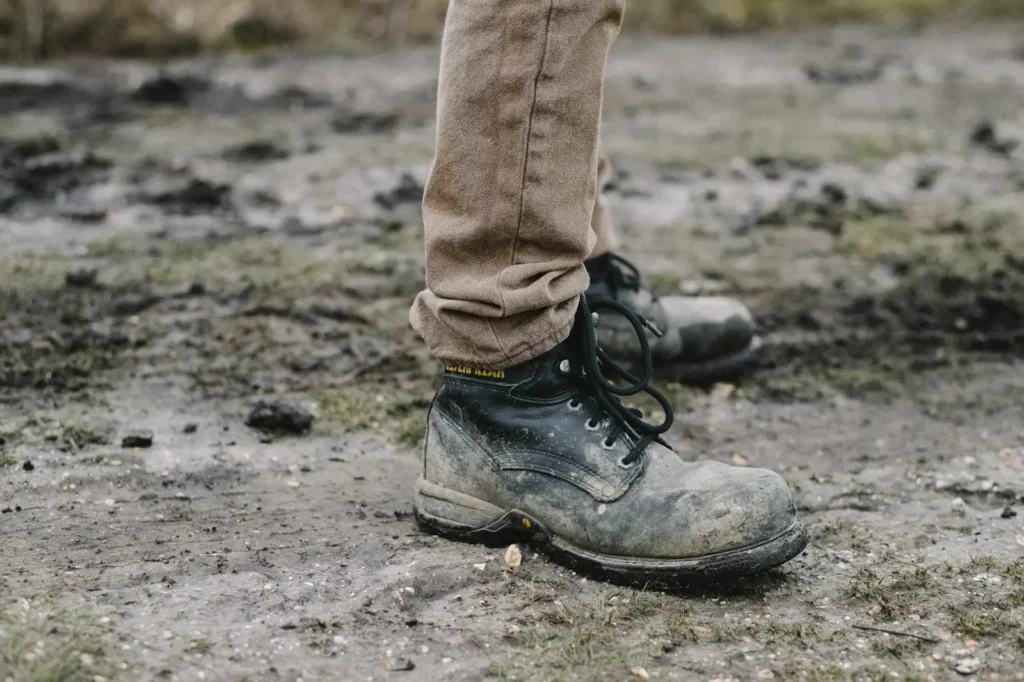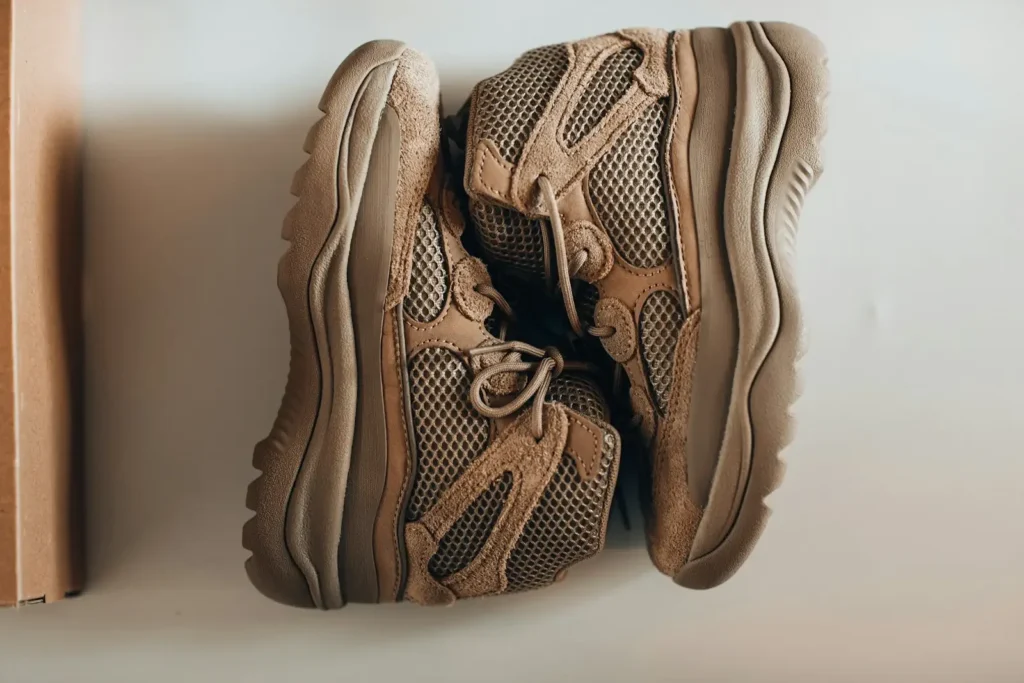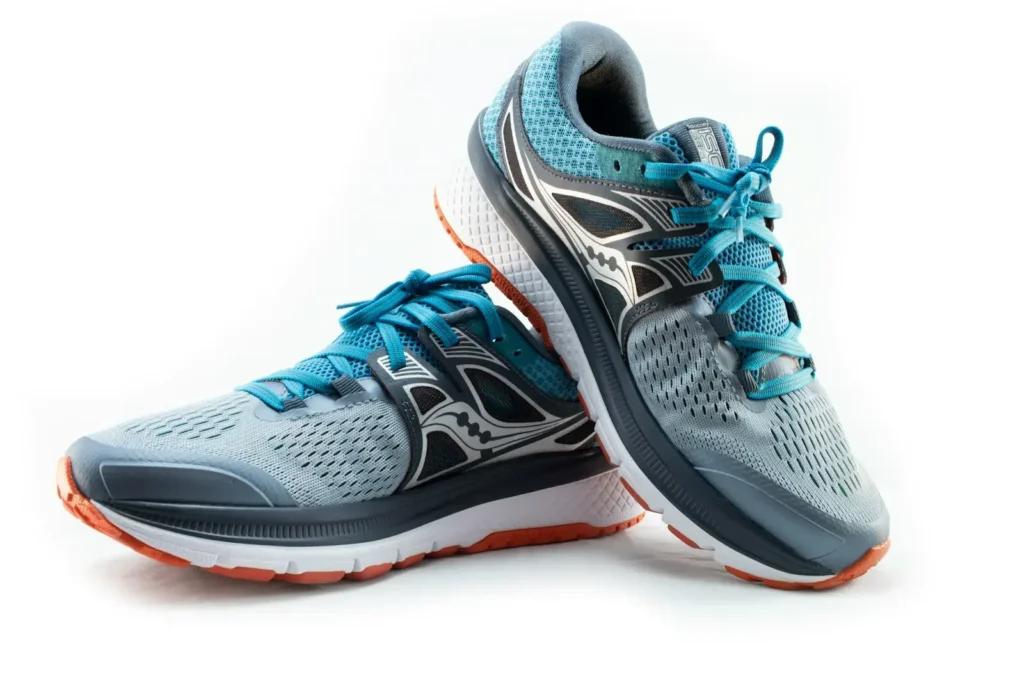
Shoe uppers carry the largest share of a footwear bill of materials and a large share of consumer complaints, yet most sourcing conversations about shoe upper materials reduce them to two labels. That framing hides the variables that decide whether a program succeeds, because coated fabric, microfibre non-woven and full-grain hide sit at very different points on cut yield, service life and price stability, and two synthetic constructions can differ more from each other than either does from a hide.
Neither material is better in absolute terms: full-grain leather uppers deliver the longest service life, the best long-term foot climate and the highest repair potential, while synthetic uppers win on cut yield, colour consistency, price stability and development speed, so the choice follows the wear life the price point promises and the climate the product sells into.
The sections below separate that trade-off into construction, service life, foot climate, cost, weather behaviour, care and a selection framework.
What Counts as a Leather Upper and a Synthetic Upper?
A leather upper is cut from hide, where the collagen fibre structure runs continuously through the thickness, while a synthetic upper is an engineered laminate in which a polymer coating or microfibre web is bonded to a textile base, so they differ in internal structure rather than surface appearance.
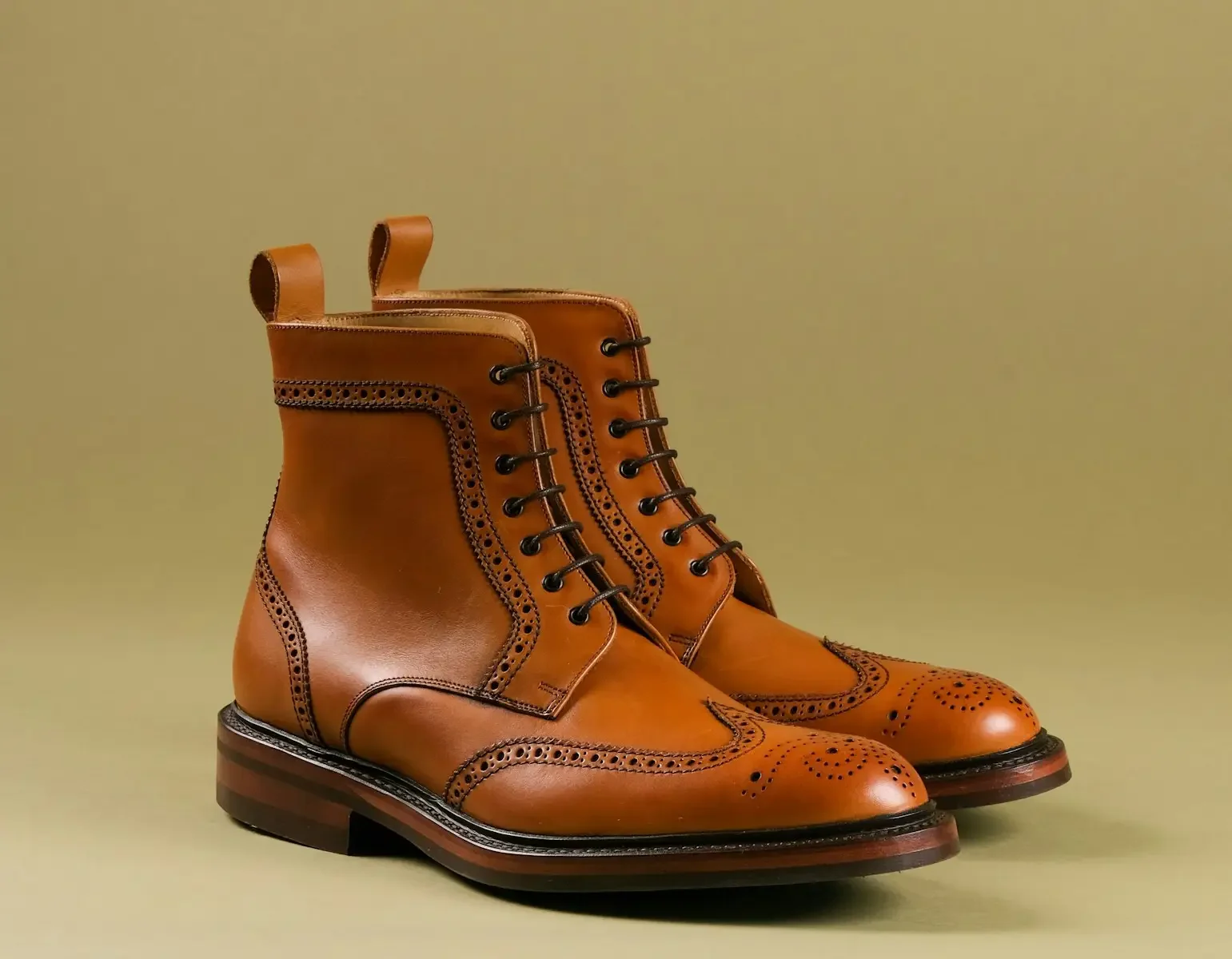
Appearance is therefore a poor guide: vegan leather, PU leather and microfibre leather can look identical in a showroom and behave differently after six months. Disclosure rules do not close the gap: United States footwear labelling under 16 CFR Part 423 identifies the upper, lining and sole by material family, which separates leather from coated or textile uppers but says nothing about coating thickness, substrate, adhesion strength or whether a carrier fabric sits under the coating. Those four parameters decide durability, and they appear on the specification sheet rather than on the sample.
| Upper family | Construction | Cost position | Typical use |
| Full-grain leather | Hide with fibre intact, light finish | Highest | Dress, premium casual, work |
| Split and suede leather | Hide sanded on grain or flesh side | Mid to high | Casual, seasonal fashion |
| Microfibre non-woven | Needled microfibre web impregnated with polyurethane, no carrier fabric | Mid | Performance casual, work, kids |
| PU coated fabric | Polyurethane film on knit or woven base | Low to mid | Volume casual, fashion |
| PVC coated fabric | PVC film on textile base | Lowest | Entry price, short season |
Where Microfibre Fits Between the Two
Microfibre is sold as an upgraded coating, but there is no carrier fabric, so no interface exists at which a film can separate. Polyurethane sits inside a dense web instead, which brings flex resistance closer to leather while the same density restricts vapour movement, and the material still ages through polymer degradation.
Which Upper Lasts Longer in Real Wear?
Full-grain leather shoe uppers last longest, typically five to ten years of regular wear with basic care, followed by microfibre at three to five years and coated fabric at one to three years, because coated fabric fails by interfacial separation that cannot be repaired, while leather fails mainly by surface abrasion that can be refinished.
Four failure modes account for most field returns. Flex fatigue concentrates stress at the toe crease, where coating and base deform by different amounts. Hydrolysis attacks polyurethane in warm humid storage, so a pair can degrade before it is worn. Abrasion removes finish at toe and heel, and tear propagation decides whether a small cut stays small. Leather resists the first three through fibre continuity; a coated upper loses its whole surface once adhesion fails.
For protective footwear the difference is codified. ISO 20345 sets a minimum upper tear strength of 120 N for leather, lower thresholds for coated and textile uppers, and a minimum water vapour permeability for breathable claims.
Why Coated Uppers Fail at the Flex Crease
A coating is a high-modulus film bonded to a low-modulus textile. Every step bends the two through a different arc, and the adhesive interface absorbs the difference until cracks open at the crease and a flap lifts. The upper is then finished structurally, because no repair reattaches a film at production adhesion strength. Microfibre avoids that interface but still loses elongation as the polymer ages, which is why it outlasts coated fabric without reaching hide.
| Failure mode | Coated fabric | Microfibre | Full-grain leather |
| Crease delamination | 8 to 18 months of daily wear | 3 to 5 years | Not typical |
| Hydrolysis in storage | 12 to 36 months | 24 to 48 months | Not applicable |
| Toe and heel abrasion | Finish lost quickly | Moderate | Slow, refinishable |
| Tear at seam | Opens easily | Moderate | High resistance |
How Do They Compare on Breathability and Foot Climate?
Leather and microfibre shoe uppers transmit a limited amount of moisture vapour, coated fabric transmits very little, and the measurable consequence appears as humidity inside the shoe rather than as temperature, so closed coatings raise foot moisture noticeably once the wearer starts walking.
A controlled trial in the International Journal of Environmental Research and Public Health measured this directly. Forty adults aged 63 to 82 wore four conditions, including a 4.74 mm synthetic leather upper and a 1.90 mm mesh upper, at 22 C and 60 percent relative humidity. The measured water vapour transmission rate was 0.84 g/m2/h for synthetic leather against 38.06 g/m2/h for mesh, and plantar humidity rose up to 13.2 percent against 8.4 percent, with dorsal skin temperature rising up to 4.0 C and 3.3 C. The synthetic upper ranked worst of the three footwear conditions on sweat accumulation and perceived comfort. A closed coating, in short, keeps the lining saturated.
| Property | Coated fabric | Microfibre | Full-grain leather |
| Air movement | Very low | Low to moderate | Moderate through open pores |
| Moisture path | Wicking via lining only | Wicking plus partial transmission | Absorbs, redistributes, releases slowly |
| Drying after rain | Fast on surface, water held at seams | Moderate | Slow, 12 to 24 hours |
Can Synthetic Uppers Be Engineered to Breathe?
Yes, within limits, and each method belongs in the specification. Mechanical perforation raises air exchange but creates a direct water path, so it suits dry-climate casual product. Hydrophilic polyurethane grades raise vapour transmission at the cost of lower hydrolysis resistance. Mesh windows in the quarter or tongue work best, combining high transmission with a reinforced perimeter at the price of extra stitching. Selecting breathable material for shoes therefore means choosing which of those costs the product can carry.
How Do the Two Uppers Behave on the Assembly Line?
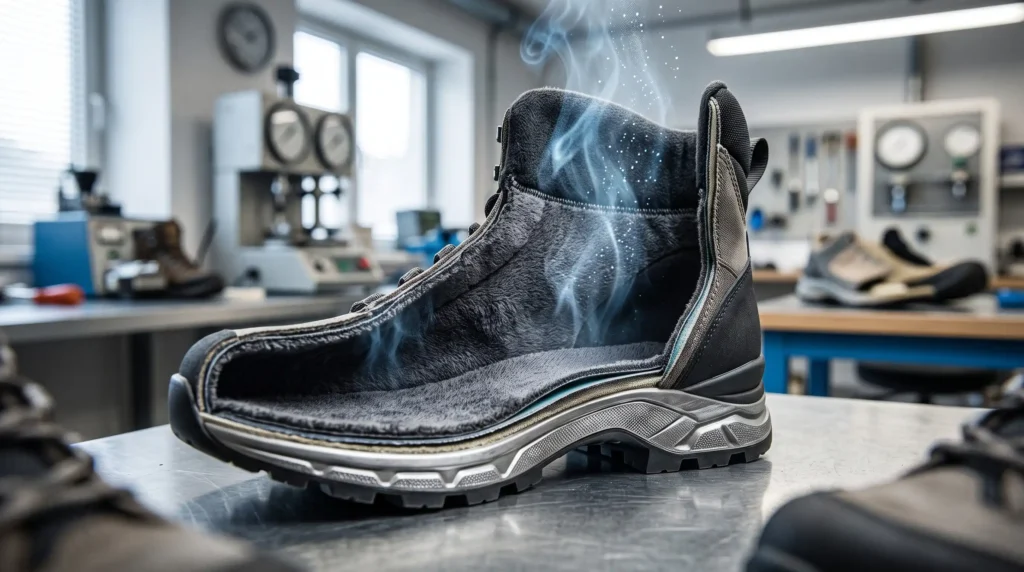
A leather upper asks for more preparation and operator judgement before the needle arrives, because panels must be matched for shade, stretch direction and thickness, while a synthetic upper runs more predictably through cutting and bonding but is far less forgiving of heat, solvent and needle choice.
Panel matching is the first divergence. Hides vary across the same skin, so panels are graded and paired before they reach the closing room, and a mismatch shows up as a two-tone shoe under retail lighting. Roll goods remove that step but introduce another: the coating, not the base, decides how the material behaves under the needle, and a dense film dulls blades and leaves stitch holes that do not close. Bonding splits the same way, since leather is roughened and primed before cement while a coated upper may be attacked by a solvent it was never specified for.
| Process step | Leather upper | Synthetic upper |
| Panel matching | Shade, stretch and thickness paired by hand | Consistent across the roll |
| Skiving and edges | Forgiving, edges burnish cleanly | Sharp tooling needed, edges folded or painted |
| Stitching | High seam strength, needle marks close up | Dense coating dulls needles, holes stay open |
| Bonding | Roughen and prime before cement | Primer choice critical, solvent can attack the film |
| Lasting and heat setting | Takes shape with moisture and heat, holds it | Sets quickly, little memory, creases at the toe |
Reject causes follow the same split. Leather losses cluster at clicking and matching, where a defect forces a re-cut panel; synthetic losses cluster after heat setting, where a crease at the toe cannot be pressed out. runs the other way.
How Do They Perform in Wet Weather and Cold?
Coated synthetic uppers shed rain better than untreated leather and dry faster on the surface, but they still admit water at the seam, collar and lace area, while leather absorbs slowly and can be re-treated, so neither material is a waterproof construction on its own.
The failure points are rarely the material face. Water enters through stitch perforations along the vamp seam, through the tongue gusset, and by wicking up the lining from a wet sole. A coated upper also traps what does enter, because the film that keeps rain out keeps vapour in. Cold adds a second effect: PVC stiffens below freezing and cracks at the crease, polyurethane loses flex resistance, and leather stiffens but recovers as it warms.
Which Upper Is Better for Rainy Weather?
For intermittent rain and urban commuting, a coated or microfibre upper with sealed seams and a water-repellent finish is the practical choice, because it dries between exposures. For sustained rain, the answer stops being about the upper material: a laminated membrane, a gusseted tongue and sealed seam tape decide performance far more than the face. Specify waterproof shoe materials as a system, and ask for hydrostatic head and seam integrity data.
What Changes in Fit, Care and Repair?
Leather shoe uppers conform to the foot over two to three weeks and hold the last shape afterwards, while synthetic uppers keep their factory form permanently, and care diverges accordingly: leather needs conditioning that feeds the fibre, whereas coated fabric needs cleaning that removes soil but cannot restore a worn coating.
Leather asks for brushing, occasional conditioning and rotation between pairs, and rewards that with refinishable surfaces and resoleable construction. Coated fabric asks for a damp cloth, resists stains better and offers no recovery once the film dulls. Microfibre cleans up better than suede, but abraded areas cannot be rebuilt.
Does Real Leather Stretch Over Time?
It conforms more than it stretches. Leather has elastic recovery, so a well-lasted upper accommodates foot volume across the vamp and instep, then returns most of it when the shoe is removed. What wearers read as stretching is usually relaxation of lasting strain plus compression of lining and insole, worth about a half size in perceived width rather than length. Permanent elongation appears when the hide is thin or the upper is lasted too wet, and it is a construction defect.
Can You Polish a Synthetic Upper?
You can clean and dress it, but polishing does not work as on leather. Wax sits on the film instead of feeding a fibre structure, so it adds temporary gloss and patches at the crease. A pH-neutral cleaner, a soft brush and a thin water-based dressing are the safe routine; solvents and abrasive creams dull or dissolve the coating. Scuffed or cracked areas cannot be recoloured to the original finish.
Which Upper Should You Use for Which Product?
Match the upper to the wear life the retail price promises, then screen the shortlist against climate, compliance and order structure, because an upper that outlives its price tier wastes margin while an upper that fails before its warranty generates returns no material saving can offset.
A workable sequence runs in five steps: intended service life in months of regular wear rather than seasons; dominant climate and wet exposure; disclosure and restricted-substance obligations per market; effective cost per pair using your own cutting yield rather than quoted price; minimum order quantity, lead time, lot-to-lot colour tolerance and tolerable shelf life. Buyers assembling a shortlist can start from a durable material for shoes reference before narrowing to a supplier.
Sustainability belongs in that sequence, not beside it. Third-party schemes give buyers something auditable: leather traceability under the Leather Working Group protocol, recycled content under the Global Recycled Standard, bio-based content through polymer certification. None resolves the trade-off, because a short-life synthetic replaced three times can carry a higher lifetime impact than one long-life hide, which carries its own water and process load at the tannery. Compare per year of wear, per pair, on the same specification.
| Product category | Recommended upper | Reason |
| Dress and formal | Full-grain leather | Shape retention, refinishable, repairable |
| Performance running | Engineered mesh or microfibre | Vapour transmission and low mass dominate |
| Work and safety | Full-grain leather or microfibre | Tear strength, abrasion, flex life |
| Kids and school | Microfibre or coated fabric | Cleanability, colour consistency, low mass |
| Fast fashion | Coated fabric | Low minimums, wide shade range, fast development |
FAQ
Three questions come up once the material decision is made and the sample room is already booked.
How much upper material does one pair consume?
A men’s casual or low boot consumes 1.7 to 2.5 square feet of upper material per pair, a women’s casual 1.2 to 1.8, and a heavily panelled design can exceed 3.0. Multiply by the reciprocal of your cutting yield to get purchased quantity. Yield depends on panel shape as much as material: the same hide can give 68 percent on one pattern and 82 percent on another.
Do synthetic uppers age before they are worn?
They can. Polyurethane hydrolyses in warm humid storage, accelerating above roughly 30 C and 60 percent relative humidity, so stock held through a wet season in an uncontrolled warehouse may reach retail with reduced flex life while the surface looks unmarked. Ask for a shelf life statement, store roll goods on racks, and rotate first in, first out. Microfibre resists this longer but is not immune.
Can a leather upper be used in a waterproof shoe?
Yes, and it is common in hiking and work categories, but the waterproofing comes from the system rather than the hide. A leather upper is normally paired with a laminated membrane, sealed seam tape, a gusseted tongue and a water-repellent face treatment. It adds cost and cuts vapour transmission, so specify it only for sustained wet exposure.