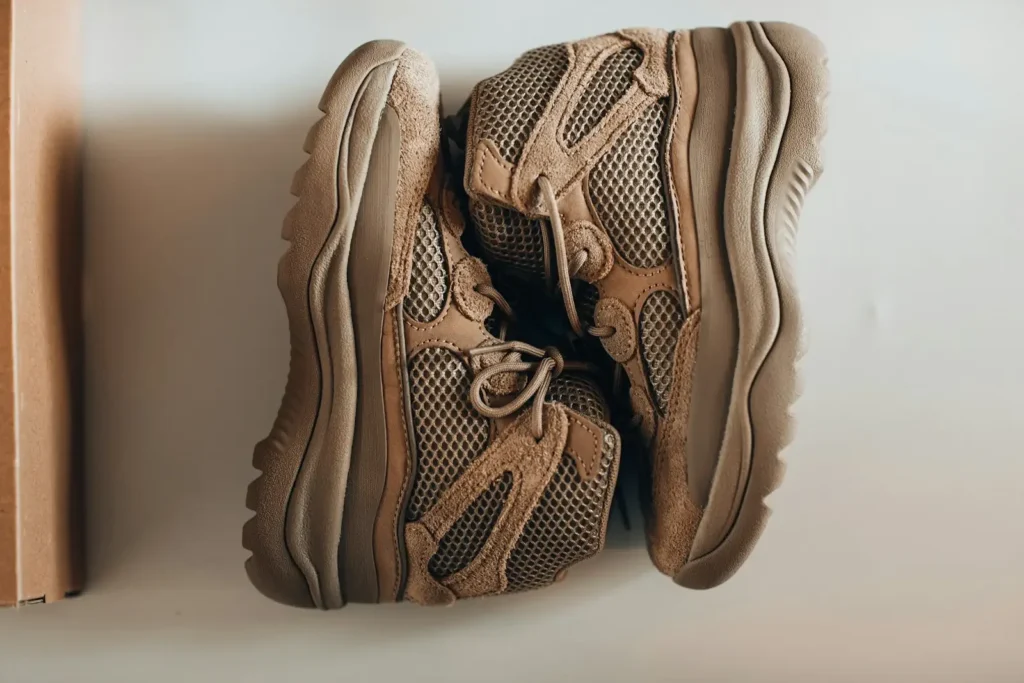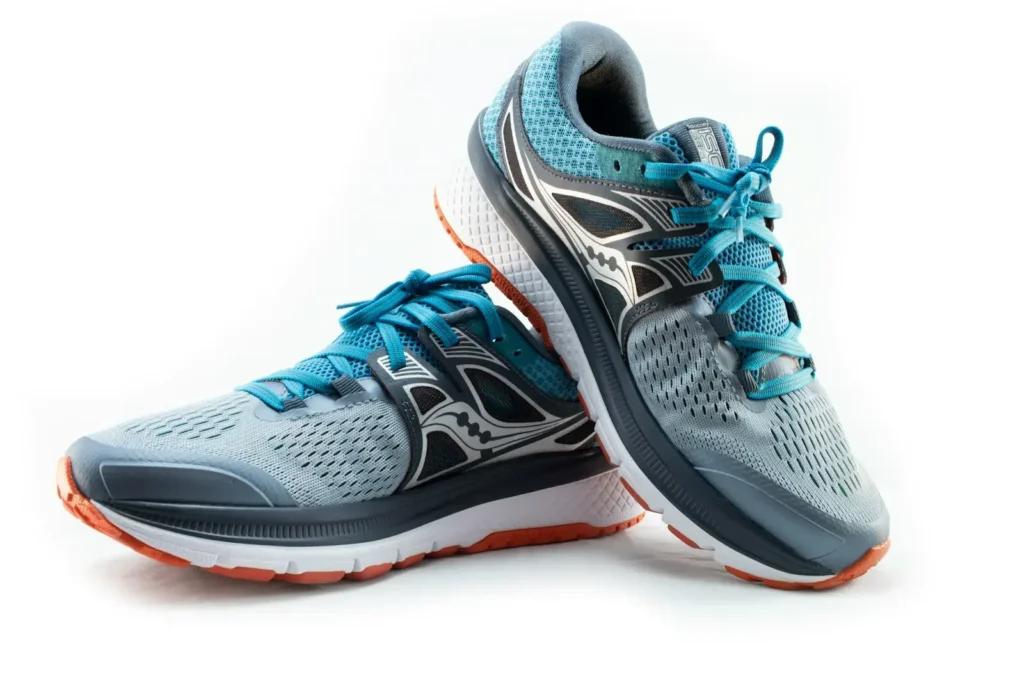
An upper specification sheet that once listed a fabric plus a foam layer now more often lists sandwich mesh, and buyers approve it on little more than a thickness and a weight. The term covers a family of warp-knitted textiles rather than one product, and the gap between a well-built and a poorly built version only surfaces after months of wear. It helps to place it inside the wider shoes upper material picture.
Sandwich mesh is a three-layer warp-knitted textile in which two separate fabric faces are held apart by vertical monofilament yarns, all knitted in one pass on a double needle bar machine. In footwear it serves as upper, tongue, collar, lining or insole cover, replacing a fabric-and-foam laminate with one breathable structure that springs back after compression. The middle layer is the whole point: it sets thickness, airflow and recovery, and it is what most specification sheets fail to describe.
Everything else follows from the cross-section.
What Is Sandwich Mesh Fabric?
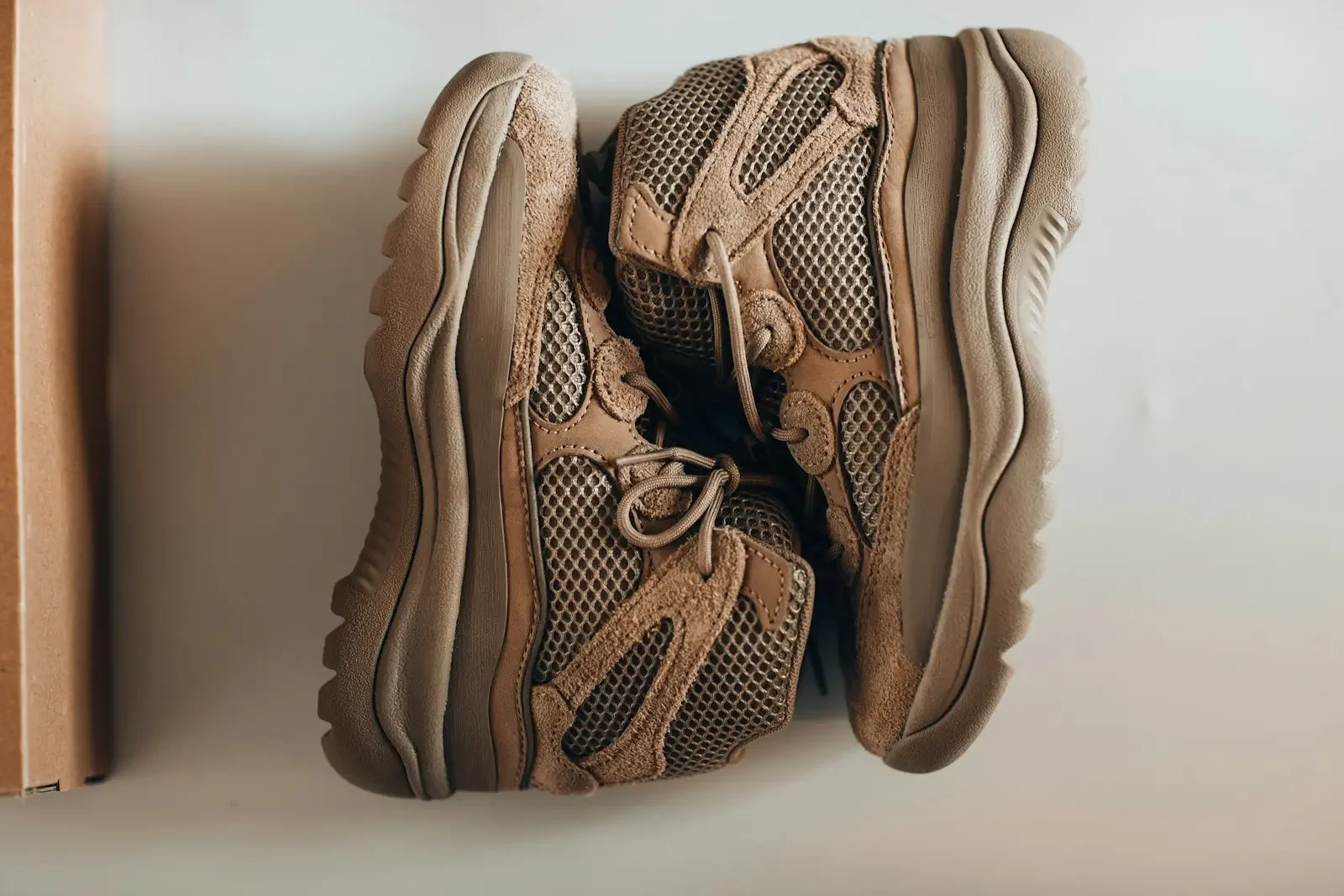
Sandwich mesh is a single-piece knitted textile with three functional layers: an open face on the outside, a middle layer of vertical spacer yarns, and a back layer that touches the foot or bonds to a lining. All three are knitted at once, so there is no adhesive interface to fail.
Openness is set by how the guide bars lap rather than by the yarn, which is why two fabrics of identical thickness can differ several times over in airflow. The middle layer is monofilament standing close to 90 degrees to the faces, typically 0.10 mm to 0.20 mm. The back is knitted tighter and kept flat where a membrane or lining will be bonded to it.
| Layer | Function | Footwear range |
| Face | Abrasion, appearance, air intake | 0.4 to 1.0 mm |
| Spacer | Thickness, rebound, air channels | 0.10 to 0.20 mm |
| Back | Skin contact, bonding, stability | 0.4 to 1.0 mm |
Footwear uses 2 mm to 6 mm for uppers and up to 10 mm for padding, at 180 to 320 g/m2.
Sandwich Mesh, 3D Air Mesh, and Spacer Mesh: One Structure, Three Names
Air mesh is the retail name, spacer fabric is the textile industry term, and sandwich mesh describes the cross-section. Used honestly, all three point to the same construction, such as a three-layer mesh fabric knitted as face, spacer and back in one piece.
They are not always used honestly. A foam sheet between two knits is a laminate with a three-dimensional look, not a spacer structure. Cut the edge and the difference is obvious: true spacer fabric shows vertical filaments belonging to the same knit as both faces, while a laminate shows two fabrics, a foam core and an adhesive line on each side. The first recovers for the life of the shoe; the second compresses once and stays compressed.
How Is Sandwich Mesh Made?
Sandwich mesh is knitted in one pass on a double needle bar Raschel machine. Two rows of needles face each other, one set of guide bars knits each face, and the spacer bars lap across both needle bars to tie them together at a fixed distance.
Three settings decide the output. The gap between the needle bars sets thickness, because the monofilament has to bridge exactly that gap. Filament diameter sets firmness and recovery speed. Face lapping sets openness, which is what separates a ventilated running upper from a dense casual upper made on the same machine. Because the structure is knitted rather than assembled, there is no adhesive plane inside it to fail, and a single-polymer build can enter one recycling stream. Airflow is measured by the standard method for air permeability of textile fabrics, and a spacer structure typically tests around ten times higher than a single-layer knit of similar weight.
Monofilament vs Multifilament Spacer Yarns
Both yarn types are used in the spacer layer, and the choice changes hand, moisture behavior and long-term recovery.
| Spacer yarn | Size | Behavior in the shoe |
| Polyester monofilament | 0.10 to 0.20 mm | Firm, fast rebound, little water held |
| Polyester multifilament | 50D to 150D | Soft hand, more moisture held |
| Nylon monofilament | 0.12 to 0.18 mm | Higher toughness, slightly costlier |
Monofilament behaves like thousands of small springs, spreading pressure instead of concentrating it, and it carries no water upward because there is no internal capillary path. Multifilament is softer, and the same fine filaments hold moisture, which slows drying and lowers resilience. Most shoe fabrics combine both.
Why Footwear Engineers Specify It
Sandwich mesh is specified because it delivers thickness without foam. Airflow, compression recovery, weight reduction and a mono-material recycling path all come from one structure, so a single material decision solves four problems that once needed three components.
Foam is an insulator: it traps the warm, humid air a foot produces and holds it against the skin. An open spacer structure does the opposite, because every step pumps air and moisture along channels that run straight through the fabric. Foam also collapses from the inside while the surface still looks intact, whereas spacer fabric either holds its thickness or visibly does not.
| Benefit | Mechanism | What it replaces |
| Ventilation | Continuous open channels through the thickness | Perforated foam and mesh overlays |
| Cushioning | Filaments act as independent micro-springs | PU or EVA padding |
| Recovery | Elastic filament returns to original height | Foam that takes a compression set |
| Weight | Air instead of solid polymer in the same volume | Dense foam of equal thickness |
Sandwich Mesh vs Regular Mesh, Engineered Knit, and Foam
Sandwich mesh is thicker and more resilient than single-layer mesh, softer and far more breathable than foam laminate, and more structural than a flat knit. The right choice depends on whether the shoe needs cushioning, ventilation, or both at once.
Regular mesh is a single-layer knit with openings formed during knitting. It is light, cheap and very breathable, but it has no thickness of its own, so it needs overlays to hold shape. Engineered knits vary density zone by zone, which makes them excellent for fit and lockdown, yet without a spacer layer they still rely on the sockliner for cushioning. Foam laminate gives cushioning and a soft hand at low cost and pays for it with heat retention, moisture storage and a glue line. Foam testing under flexible foam test methods makes that gap explicit, since compression set and fatigue are measured rather than judged.
| Construction | Thickness | Airflow | Recovery |
| Regular mesh | 0.5 to 1.0 mm | High | None |
| Engineered knit | 1.0 to 2.5 mm | Medium | Low |
| Sandwich mesh | 2.0 to 6.0 mm | Very high | High |
| Foam laminate | 2.0 to 8.0 mm | Low | Low once compressed |
On mesh versus fabric, the two words are not on the same level: mesh is a construction, fabric is the category containing it. Mesh wins wherever ventilation, weight and conformity to the foot matter. Woven and coated fabrics win where abrasion resistance, shape retention and water shedding matter, which is why many performance shoes use both, with mesh in the body and a reinforced panel at the toe and heel.
What Are the Disadvantages of Mesh Shoes?
The disadvantages of mesh shoes are real and predictable: mesh uppers snag and abrade faster than leather, pass water straight through, give less lateral support, hold dirt in the open structure, and insulate poorly in cold weather. Most of these are construction problems rather than material problems, and each has a known countermeasure.
Lateral support is the point buyers underestimate. A pure mesh upper wraps the foot well but resists sideways load poorly, so it suits forward motion and casual walking far better than court sports with hard cutting. Durability is the second: the face layer takes the abrasion, and a light face on coarse monofilament will fuzz and then hole at the toe drag point long before the structure itself fails.
| Limitation | Cause | Countermeasure |
| Snagging and abrasion | Open face with exposed filaments | Denser face, hot-melt overlay, coated toe panel |
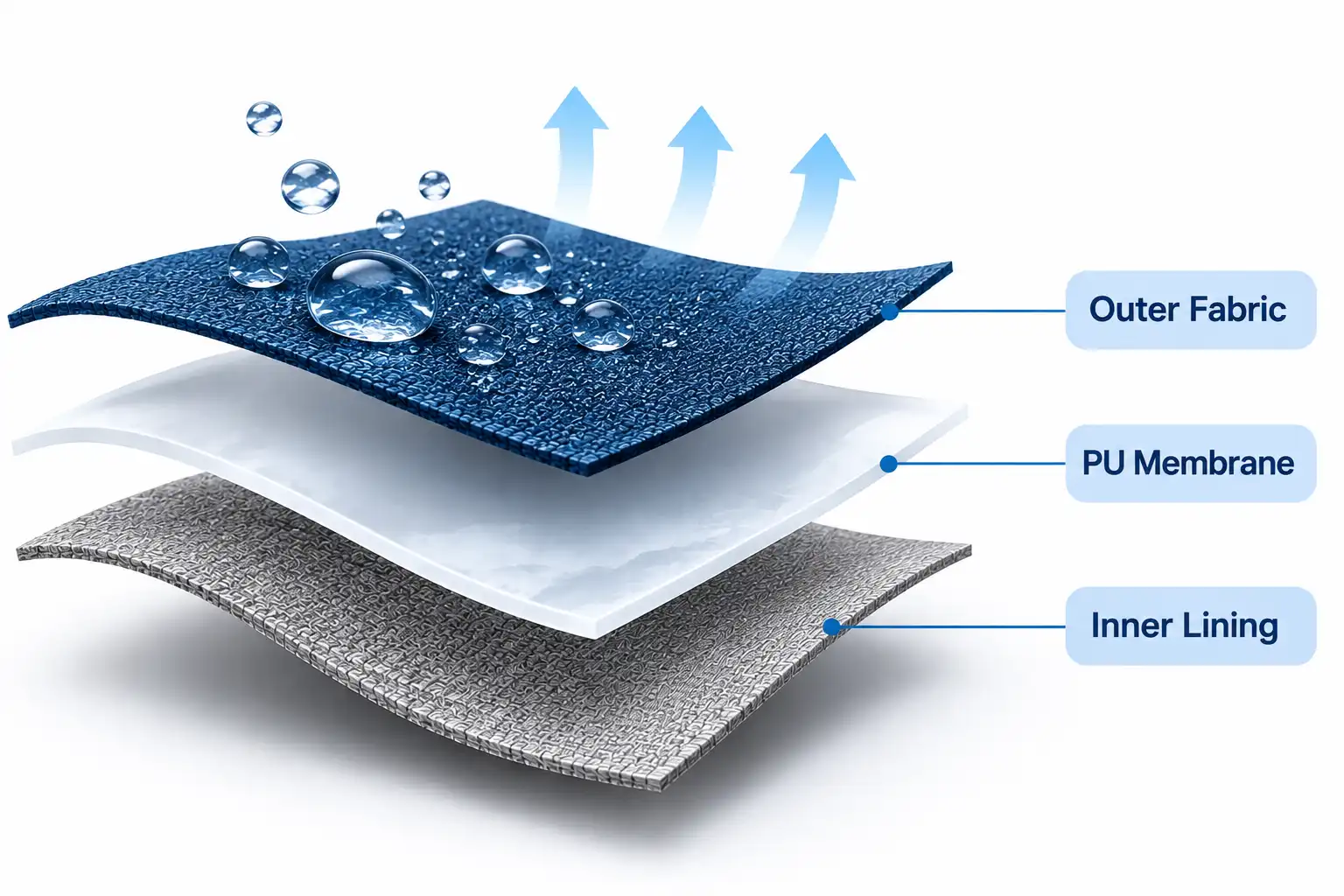
| Water ingress | Open channels through the full thickness | Laminated waterproof shoe membrane or repellent finish |
| Low lateral support | No rigid frame in the textile | Heel counter, midfoot cage, denser quarter panel |
| Dirt retention | Open cells trap fine particles | Tighter back layer, smooth filament surface |
| Poor insulation | Moving air removes heat quickly | Thicker spacer plus a closed winter lining |
Cleaning is the complaint that reaches the brand rather than the factory. The fabric tolerates hand washing and gentle machine cycles; it does not tolerate a hot dryer, which is exactly what collapses the spacer layer. Air drying preserves thickness and shape. The one limitation with no countermeasure is cost: a good spacer fabric costs more per square meter than a foam laminate, and the premium only pays back when breathability is part of the product promise.
Where Sandwich Mesh Sits Inside a Shoe
Sandwich mesh appears in six places on a typical shoe: upper body, tongue, collar, lining, insole topcover and heel lining. Each position trades thickness against weight differently and needs its own specification.
The upper body drives the fabric’s reputation. It needs a face dense enough to survive abrasion, a spacer open enough to vent, and tensile strength to hold shape during lasting. Tongue and collar are comfort positions where a thicker build is acceptable because weight matters less. Lining positions, including the shoes lining material behind the quarters, put the fabric against the skin, so moisture transport counts more than abrasion. Insole topcover is the most heavily loaded position.
| Position | Main requirement | Thickness |
| Upper body | Abrasion, venting, lasting strength | 2.5 to 4.5 mm |
| Tongue | Pressure relief, softness | 4.0 to 8.0 mm |
| Collar | Padding, shape retention | 3.0 to 6.0 mm |
| Lining | Moisture transport, skin comfort | 2.0 to 4.0 mm |
| Insole cover | Recovery under sustained load | 2.0 to 3.5 mm |
| Heel lining | Friction control, durability | 2.5 to 4.0 mm |
What to Write on the Specification Sheet
A thickness and a weight are not a specification, because two fabrics with identical numbers can differ threefold in airflow and fivefold in recovery.
| Parameter | Test basis | Acceptance line |
| Thickness | Measured at fixed pressure | Nominal plus or minus 0.2 mm |
| Grammage | Mass per unit area | Nominal plus or minus 5 percent |
| Compression set | 22 hours at 70 C, 50 percent compression | 8 percent or lower, 5 percent for premium |
| Air permeability | Standard air permeability method | 90 cfm or higher for performance uppers |
| Peel strength | Bonded or laminated variants only | 3 N/cm or higher, dry and after wash |
| Colorfastness to perspiration | Acidic and alkaline | Grade 4 or better |
Compression set is the parameter worth arguing about. Above roughly 10 percent the spacer layer stops returning to its original height, the air channels close for good, and the shoe loses breathability and cushioning while still looking intact. Specifying 8 percent as a ceiling, and asking for the test report, filters out most fabric that should not be in a shoe.
Are Mesh Shoes Good for Walking?
Yes, for most everyday walking, mesh shoes are a good choice: they are light, ventilated and flexible, which suits the low impact, high repetition loading of walking. They become a poor choice only when the route is wet, rough or cold, or when the wearer needs firm medial support.
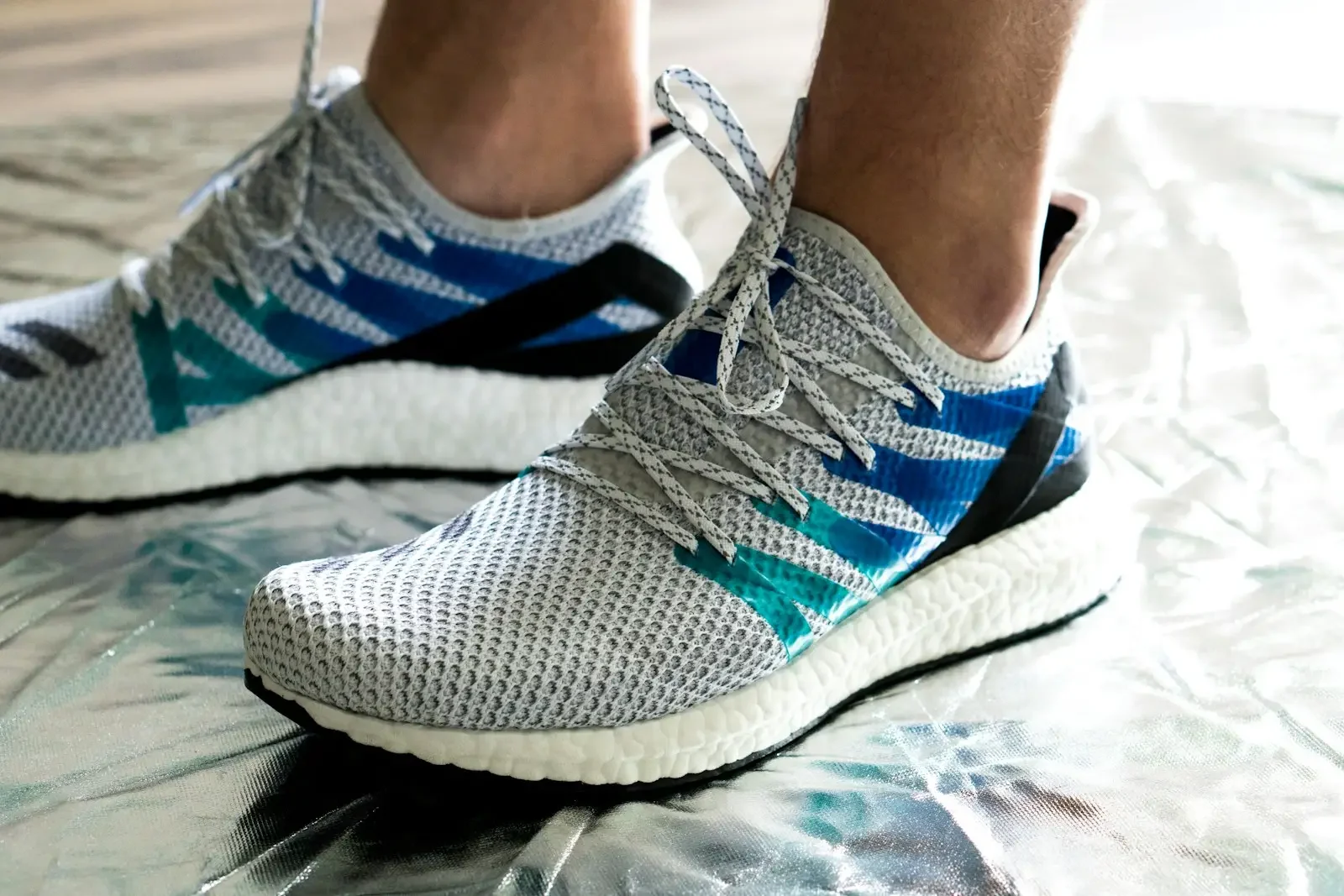
The comfort argument rests on measurement rather than marketing. A controlled trial with 40 older adults compared uppers during walking and found that large-hole mesh kept in-shoe temperature and humidity more stable than synthetic leather or laminated uppers, with smaller swings in both measures across the walk. Moving air carries heat and moisture out instead of storing them.
Two qualifications matter. A breathable upper does not compensate for a weak midsole, so a mesh walking shoe still needs a stable platform and a firm heel counter. And walking on wet grass, gravel or slush reverses the advantage quickly, because the same channels that vent warm air also admit water. For dry urban walking, mesh is close to ideal; for long wet seasons, pair it with a laminated membrane.
FAQ
Three questions come up once the structure and the specification are settled, and none of them repeat the sections above.
Does sandwich mesh lose its rebound after repeated washing?
Rebound loss comes from heat and sustained load rather than water. A gentle cycle at 30 C to 40 C with mild detergent leaves the spacer layer intact, while a tumble dryer softens the monofilament and lets the channels collapse. If a pair feels flat after washing, the dryer is almost always the cause.
Can sandwich mesh be dyed or printed to match a color line?
Yes, and the structure tolerates both better than most laminates. Solution dyeing gives the most consistent result across a large order because color enters the yarn before knitting, while piece dyeing is cheaper for small runs but harder to control on three different yarn sizes. A sublimation print holds up well on the face layer, though heavy coverage can close surface openings and cost airflow.
Is sandwich mesh more expensive than a foam laminate?
Per square meter, yes, and the gap widens with thickness and with tighter compression set tolerances. Per pair the difference is smaller than it looks, because the spacer fabric replaces a fabric, a foam sheet and the lamination step in one purchase. The calculation that matters is cost per wear against a laminate that flattens.