Footwear sourcing teams work inside a narrow trade-off. An upper that ventilates well usually looks plain, and an upper that carries a pattern usually pays for it with weight, cost, or blocked airflow. Most patterned uppers get their design from printing, embroidery, or a laminated film applied after the textile is finished, which adds process steps and a surface that can crack or peel. Buyers shortlisting shoes upper material for a new upper increasingly ask for a construction that removes that extra layer instead of hiding it.
Jacquard mesh for shoes is a warp-knitted fabric in which the mesh openings and the decorative pattern are produced at the same time on the same machine. Each yarn is selected needle by needle, so hole size, density, color, and texture can change from one zone of the upper to the next without printing, embroidery, or a laminated overlay. The finished upper is one breathable piece of fabric that already carries the design.
Understanding why that changes a specification starts with how the fabric is actually built.
What Is Jacquard Mesh for Shoes?
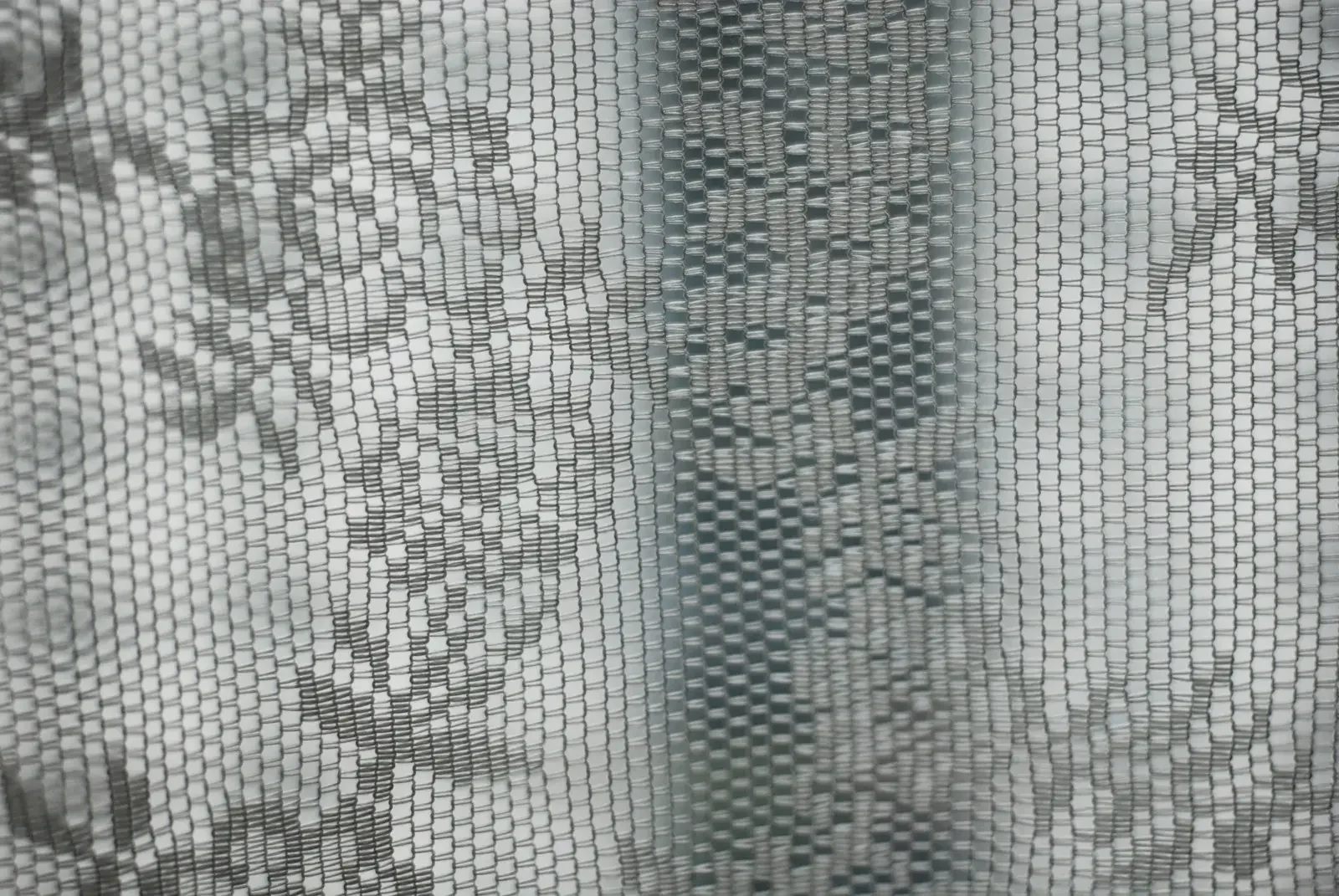
It is a single engineered textile rather than a mesh with a pattern added afterward. The jacquard mechanism controls individual warp yarns, and the mesh structure supplies the open areas, so the pattern and the ventilation are the same physical feature.
The name comes from the jacquard mechanism, a selection device that lets a machine address yarns individually instead of lifting whole groups together. The principle was developed for figured weaving and later moved into warp knitting, where knitted loops tolerate stretch and recovery far better than woven interlacing. In shoe uppers two families exist: warp-knitted jacquard mesh, which dominates performance and lifestyle footwear, and circular jacquard knit, which appears in sock-like collars and soft casual uppers.
How the Pattern Becomes Structure
On a double-bed raschel machine, jacquard bars deflect selected yarns from one needle bed to the other. Yarns that cross form a solid area, yarns that are held apart leave an opening, and yarns that travel further create texture or a color block. Selection happens per stitch, so a single run can move from a tight 400 gsm heel counter to an open 180 gsm instep without a seam, a bond, or a second material.
Layer count is set the same way. A three-layer mesh fabric is knitted as one piece with a face, a spacer or connecting structure, and a back, so cushioning and support arrive without a separate foam or lining panel. Single-layer builds suit racing shoes where every gram is contested, double-layer builds carry most trainers, and triple-layer builds handle trail and cold-weather uppers.
Yarn choice decides the rest. Monofilament polyester or nylon holds an opening open under load, textured yarn adds softness and moisture uptake, and a small percentage of TPU or elastane yarn supplies stretch where the collar and flex zone need it.
Jacquard Mesh, Printed Mesh, and Standard Mesh
The three are often quoted as if interchangeable, yet they differ in where the pattern lives and what it costs to put it there.
| Attribute | Jacquard mesh | Printed mesh | Standard mesh |
| Where the pattern sits | Knitted into the structure | Printed on the surface | Absent or single color |
| Pattern durability | Cannot peel or crack off | Can crack or fade | Not applicable |
| Ventilation | Zoned per stitch | Uniform, fixed by base fabric | Uniform |
| Extra finishing steps | None | Print and cure | Dyeing only |
| Cost profile | High design setup, low unit finishing | Low setup, recurring ink cost | Lowest |
The trade is front-loaded. A jacquard design costs more to program and set up on the machine, and the saving appears later as removed finishing steps, removed overlays, and a pattern that survives the life of the shoe. That is what is special about jacquard fabric in footwear: the decoration is load-bearing rather than applied.
What Benefits Does Jacquard Mesh Bring to Shoe Uppers?
In a jacquard mesh for shoes specification, ventilation stops being a fixed property and becomes a design variable. One upper can be dense and abrasion-resistant at the toe, open across the instep, and elastic at the collar, all in a single piece with no overlays to bond or stitch.
The practical gain is fewer components. Every overlay removed is a cutting operation, an adhesive layer, a bonding defect risk, and a stiff spot on the foot.
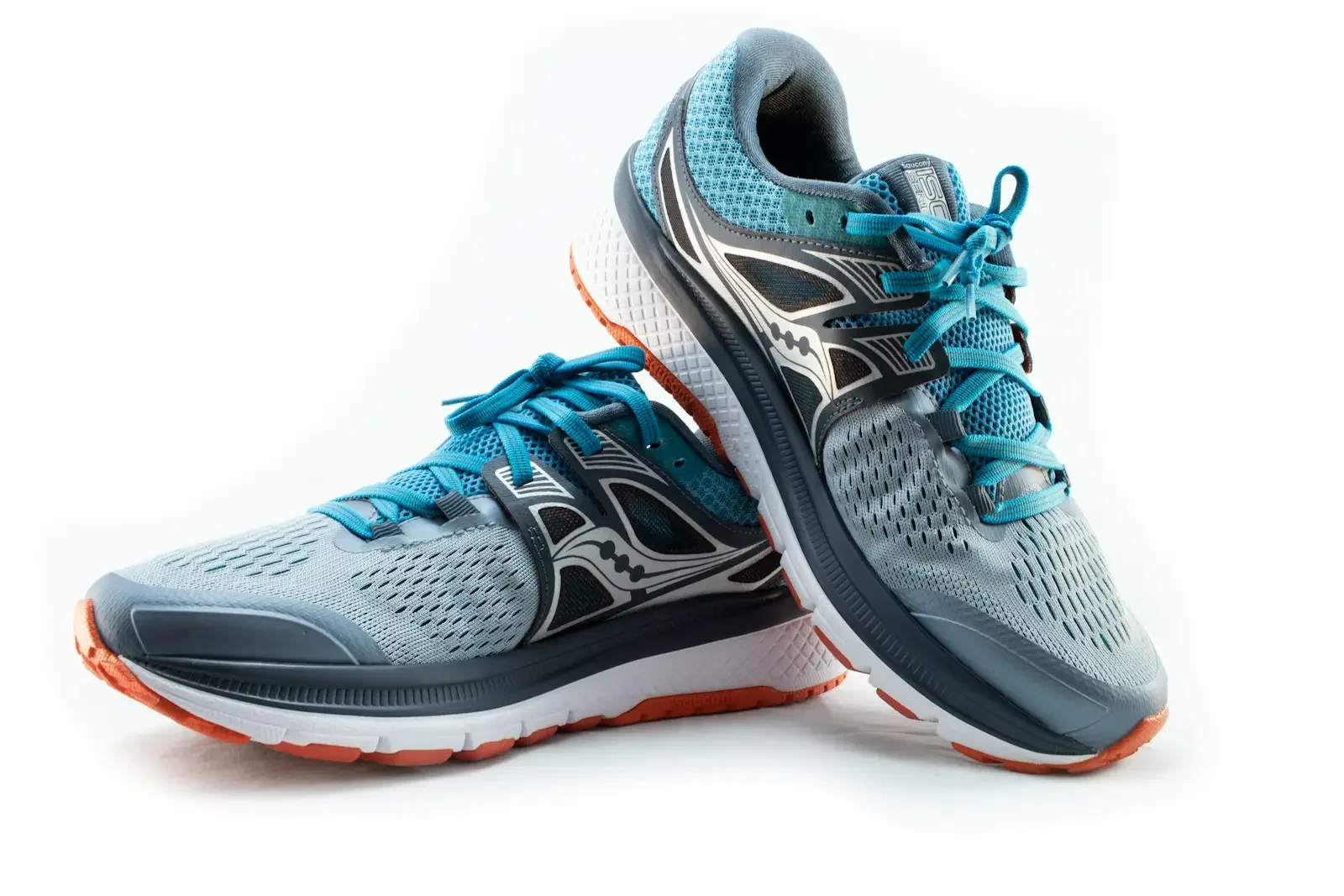
Breathability and Moisture Transport
Airflow depends on open area, but comfort depends on what sits behind it. A controlled trial of 40 older adults wearing uppers of different materials found that a highly permeable mesh with large air holes kept foot skin temperature variation within 1.3 to 3.3 C and relative humidity change between -13.3 and 5.7 percent during walking, while synthetic leather and composite layer uppers moved further from the comfort band. The published results point to the conclusion footwear developers reach on the bench: the upper sets the ceiling for everything behind it.
Zoned density then decides where that ceiling applies. A denser knit over the instep protects against lace pressure and adds structure, while an open field above the toes dumps heat, with no transition seam to rub.
Weight, Fit, and Flex
Weight savings come mostly from the components that disappear, not from thinner yarn. Removing a printed film, a reinforcing overlay, and a separate lining typically takes more mass out of the upper than reducing yarn count does, without weakening the dense zones.
Fit behaves differently from a woven upper as well. Elastane or TPU yarns give controlled extension at the collar and the flex line, and the knitted loop structure recovers after extension instead of holding a crease. The known weakness is localized stretch: a zone engineered too open can relax after repeated wear, so recovery is worth specifying rather than assuming.
Durability and Shape Retention
Durability in a jacquard upper is a zoning decision. Toe, heel, and eyestay areas are knitted tight, often with a thicker monofilament, while the ventilation field stays open. Monofilament also resists permanent creasing.
Abrasion is measured rather than asserted. The oscillatory cylinder method in ASTM D4157 rubs a specimen against an abraded surface and reports cycles to a defined change in appearance, which makes candidate fabrics comparable. The standard does not set a pass level, so the buyer writes one into the specification, zone by zone.
Where Is Jacquard Mesh Used in Footwear?
It appears in every category that values airflow over armor, from racing shoes to kids’ school shoes, with layer count and density shifting to match the demand of each use.
The build changes with the use case, and so does the job the mesh is asked to do.
| Shoe category | Typical build | What the mesh is doing |
| Road running and racing | Single layer, high openness | Minimum weight, maximum airflow |
| Training and court shoes | Double layer, dense lateral field | Airflow plus lateral containment |
| Hiking and trail | Double or triple layer, tight toe | Debris resistance, abrasion at flex points |
| Casual and lifestyle | Double layer, patterned zones | Design without printed overlays |
| Kids and school shoes | Double layer, reinforced toe | Washability and shape retention |
Protective footwear is the exception worth flagging. Where a standard sets a minimum for upper performance, a mesh upper normally needs a reinforced substrate or a coated construction, so jacquard mesh works there as a comfort layer rather than as the barrier itself.
What Are the Downsides of Jacquard Mesh?
The weaknesses are commercial and environmental rather than structural. Jacquard mesh costs more to develop and takes longer to weave, and it inherits the limitations of any open textile: water passes through, debris lodges in the openings, and thin zones wear first at the toe.
Limitations at the Fabric Level
- Weaving speed. A complex jacquard pattern runs at a fraction of the output of a plain construction on comparable floor space, because selection and pattern changes consume machine time.
- Setup and minimums. Every new design needs programming and a fresh machine setup, which pushes minimum order quantities above those of plain mesh and adds sample lead time.
- Shrinkage and heat setting. Knitted structures move during wet processing, so dimensional stability has to be tested and allowed for in pattern grading rather than assumed.
- Batch color variation. Multi-color patterns shift more between lots than solid fabrics do, which makes lab dip approval and lot retention essential.
- Repair. A tear breaks pattern continuity, and the area cannot be rewoven or invisibly stitched the way a solid fabric can.
Limitations That Carry Over from Mesh Shoes
- Water ingress. An open structure admits rain and splashes. A waterproof fabric upper solves this with a membrane or a coated tight weave, at the cost of some airflow.
- Debris in the openings. Fine dust and mud lodge in the knit and are hard to remove from pale colors. Tight zones at the toe and a smooth face reduce the problem.
- Toe wear. A hole over the big toe is the classic failure, usually caused by a shoe that is slightly short plus a toe that lifts with each step, not by the yarn alone.
- Low insulation. Air moves through the fabric in cold weather too, so winter versions rely on a denser knit or a lining.
- Limited lateral support. Flexible uppers do not contain the foot in cutting movements without denser zones or an internal cage.
- Odor retention. Synthetic yarns hold bacteria when moisture stays trapped, so quick drying and a removable footbed matter more than the mesh itself.
Which Is Better for Shoes, Mesh or Fabric?
Neither wins outright. Mesh takes airflow and weight, woven fabric takes abrasion resistance, structure, and weather protection, and jacquard mesh exists to carry some of the woven strengths into a mesh construction.
| Property | Jacquard mesh | Woven fabric | Plain knit |
| Airflow | High, zoned | Low to moderate | High |
| Abrasion resistance | Moderate, high in dense zones | High | Low to moderate |
| Structural support | Moderate, by zoning | High | Low |
| Water resistance | Low without a membrane | Moderate, high when coated | Low |
| Pattern method | Knitted in | Woven in or dyed | Printed or jacquard knit |
| Relative cost | Moderate to high | Moderate | Low |
One mistake recurs in specification meetings: treating a larger hole as more breathability. A very open mesh bonded to a thick, low-permeability lining can breathe worse than a moderately open mesh over an open lining, because the lining, the sock, and the footbed all sit in the same moisture path. The question to ask is not how open the mesh is but what the complete upper stack does.
How Should Buyers Specify and Test Jacquard Mesh?
A workable specification names the construction, the weight, the yarn, the open area, and the test methods. The phrase jacquard mesh for shoes describes a process, not a performance level, so it cannot be the whole requirement.
A specification sheet for a jacquard upper should carry the following:
- Layer count and total weight in gsm, quoted per zone if density varies.
- Yarn composition by percentage, with denier or decitex for each yarn type.
- Open area or air permeability target, stated with the test method used.
- Width, usable width, and shrinkage allowance after finishing.
- Color standard, with lab dip approval and lot retention requirements.
- Stretch and recovery targets for zones containing elastomeric yarn.
Testing should follow the same logic, with a method and a number attached to each property.
| Property | Method | What to write into the spec |
| Abrasion resistance | ASTM D4157 | Cycles to a defined appearance change, per zone |
| Breaking strength | ASTM D5034 | Minimum newtons in length and width |
| Tear resistance | Tongue tear method | Minimum newtons at the eyelet and collar |
| Dimensional stability | Wash at stated temperature | Maximum shrinkage percentage |
| Colorfastness | Rubbing and light exposure | Minimum grade for each |
Sampling usually runs on the critical path. Artwork must be final before a counter sample can be woven, because changing a pattern after approval means reprogramming the machine, and a shoe fabric supplier that owns its warping and knitting can compress that loop.
FAQ
Three questions tend to surface once the construction is agreed, and each one affects how the upper is costed and how long it lasts.
Can jacquard mesh be recycled at the end of a shoe’s life?
It can, if the upper is built as a mono-material polyester jacquard and the trims, membrane, and adhesives can be separated before shredding. Mixed nylon, polyester, and TPU constructions, and any version laminated to a film, usually drop out of mechanical polyester recycling and end up in energy recovery instead. That makes material choice a design decision rather than a disposal detail.
Does jacquard mesh stretch out with wear?
Elasticity is engineered through yarn rather than inherited from the knit, so a construction without elastomeric yarn holds its dimensions and one with it recovers after extension. The risk sits in zones that combine high openness with high stretch, where repeated loading can relax the structure. Specify recovery after repeated extension and check fit after a wear trial rather than judging from a single sample.
Can jacquard mesh be used in waterproof shoes?
Yes, when a membrane or a coated substrate sits behind it and the seams are sealed. The mesh provides the surface, the pattern, and the abrasion resistance, but it is not a barrier, so the waterproof rating comes entirely from the layer beneath it. Expect the breathability figure to fall once that layer is added, and test the complete upper stack rather than the face fabric alone.