Footwear developers replacing hide now choose between coated fabric, standard polyurethane leather and microfiber leather for shoe uppers, and suppliers describe all three with the same vocabulary. The confusion is expensive: a sheet that cuts and lasts cleanly on one program can peel at the flex line within a season on another, and the difference usually sits in the base structure rather than the finish. Buyers carry two unresolved worries into every sampling round, whether it survives a humid summer and whether it sells as an equal to leather.
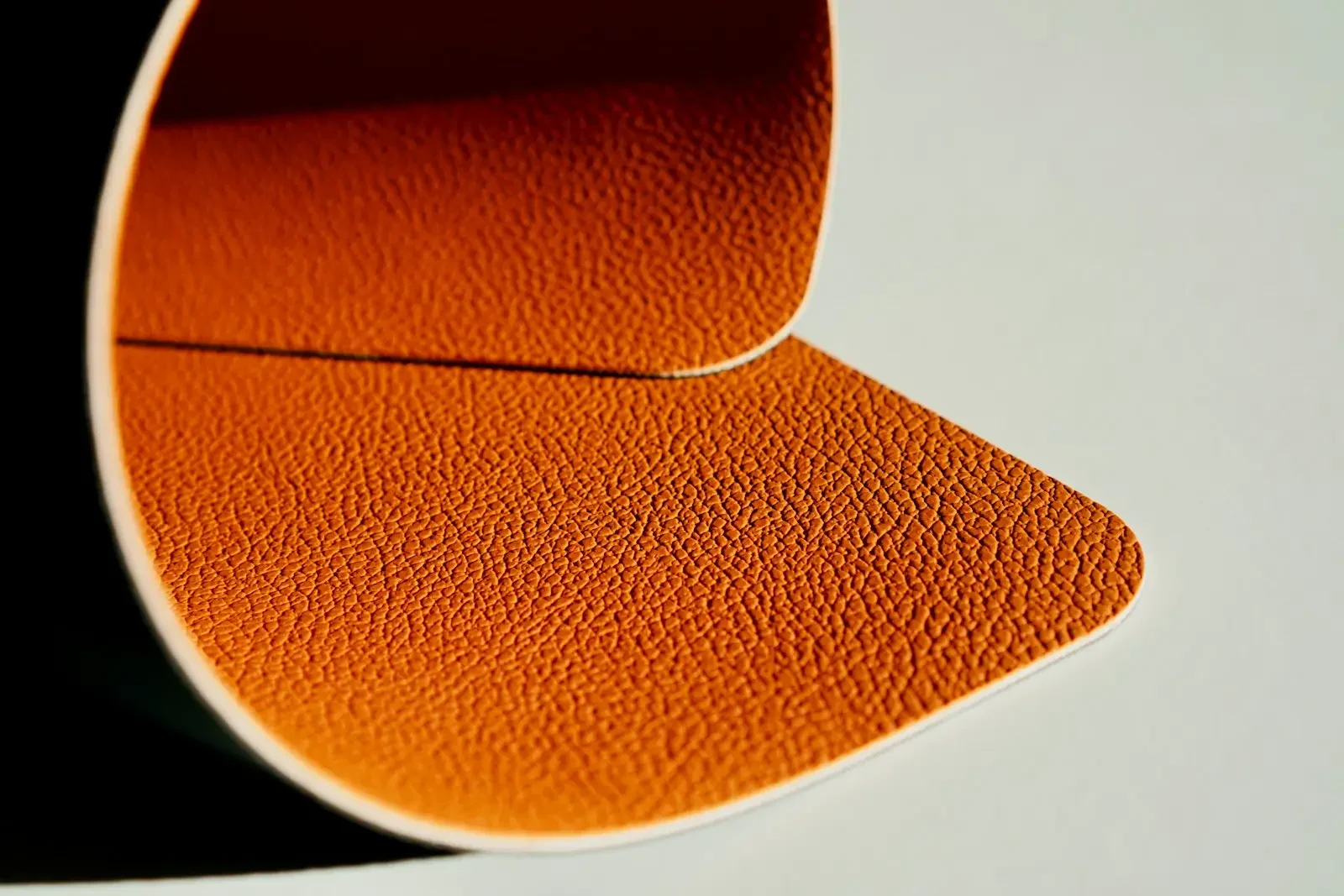
Microfiber leather for shoes is a three-layer engineered composite: a non-woven base of ultra-fine polyamide fibers, impregnated with polyurethane resin and sealed with a polyurethane topcoat. It cuts, skives, stitches and lasts like hide, resists abrasion better than coated fabric, and transfers moisture far worse than mesh. It is a manufacturing substitute for hide, not a fabric with a plastic film on top.
What follows separates what the material reliably delivers from what suppliers claim for it.
What Is Microfiber Leather for Shoes?
It is a leather-replacement sheet built to imitate the collagen network of hide, which is why its strength comes from the base and not from the coating. The fiber mat carries the mechanical load, holds stitching and resists flex fatigue; the coating only sets grain, gloss and surface resistance.
That division of labor explains most of the material’s behavior in production. Because the substrate is uniform in all directions, it stretches predictably over a last instead of pulling along a single knit direction, and it holds eyelets and stitch rows without the local weakness that hide shows at belly and neck areas. On cost it sits between coated fabric and full-grain hide, and on structural stability it stays closer to hide.
How the Material Is Built
Production starts with bicomponent spinning, in which polyamide islands are extruded inside a soluble polymer sea and drawn into filaments carrying dozens of fine strands. Dissolving the sea leaves bundles of ultra-fine fiber, commonly between 0.001 and 0.05 denier, with a diameter roughly one hundredth that of a human hair. Those bundles are needle-punched into a three-dimensional non-woven web, impregnated with polyurethane resin that fills the voids between fibers, coagulated, buffed and finally coated and embossed against release paper.
The result is a sheet with no grain direction and no natural defects. Footwear grades run 1.0 to 1.8 mm thick for uppers, 0.6 to 0.8 mm for linings, at 400 to 650 g per square meter on 137 cm rolls. Vamps, toe boxes, heel counters, collars, eyestays, overlays, tongues and linings can all come from one roll at matched color.
What Are the Main Advantages?
The advantages are industrial before they are aesthetic: gauge is consistent across a full roll, cutting yield approaches the whole sheet, flex and abrasion resistance are high enough for athletic and work use, and grain, gloss and hand feel can be specified by order rather than selected from what a tannery happens to have.
Consistency is the commercial argument. A hide loses 20 to 40 percent of its area to scars, stretch marks and belly, and every hide differs in thickness and grain. A roll yields nearly its full area at a stated gauge with a tolerance in hundredths of a millimeter, which is what automated cutting tables and cemented lasting need.
| Advantage | Mechanism | Effect on the line |
| Repeatable gauge | Calendered non-woven base | Fewer skiving adjustments between lots |
| High cutting yield | Defect-free continuous roll | Lower scrap per pair |
| Flex resistance | Isotropic fiber mat | No cracking at the crease line |
| Abrasion resistance | Dense fiber matrix under coating | Scuff tolerance at toe and heel |
| Finish flexibility | Release-paper embossing | Grain and gloss matched to a brief |
Design freedom is the second argument. Smooth nappa, tumbled pebble, suede and patent surfaces come from interchangeable embossing plates, and softness is set by resin pickup rather than animal selection. One program can hold a color across a sneaker, a loafer and a school shoe without the shade variation separate hide lots introduce.
What Are the Disadvantages?
Four limits are real: polyurethane hydrolysis, a service-temperature ceiling well below hide, lower moisture vapor transfer than any mesh or open knit, and the absence of shape recovery or patina. None is a manufacturing defect, but together they shorten service life in hot, humid or heavily flexed use, and they are the reason two sheets at the same price can behave very differently.
- Hydrolysis. The ester bonds in the polyurethane coating react with atmospheric moisture and heat, stiffen the film and eventually separate it from the base. Standard grades reach this point in two to three years of humid service; polycarbonate-based polyurethane systems extend it to five to ten years.
- Heat sensitivity. Base fibers soften well below what leather tolerates, with polyester grades glass-transitioning near 70 C, so storage and heat-setting need defined limits.
- Moisture transfer. The impregnated base blocks vapor movement that open structures allow, and the gap is wide.
- No memory. Microfiber leather does not mold to the foot or develop a patina, and a crease set into the vamp stays set.
The moisture point has the best evidence. In a controlled trial of 40 older adults, a synthetic leather upper measuring 0.84 g per square meter per hour of water vapor transfer produced a rise in dorsal foot relative humidity of up to 13.2 percent, against a mesh upper measuring 38.06 g and holding humidity change between minus 13.3 and plus 5.7 percent, as reported in this footwear microclimate study. Perforation, foam selection and shoe lining materials can close part of that gap, but the substrate sets the ceiling.
How Long Will Microfiber Leather Last?
Expect two to four years of regular wear from a general-purpose grade and five years or more from a polycarbonate-based polyurethane grade that is rotated and cleaned properly. Laboratory ratings of 100,000 abrasion cycles describe the wear of the surface film, not the adhesion between film and base, and adhesion is what fails first in real use.
Laboratory and field numbers diverge because accelerated tests hold weight, abradant and humidity constant. Add ultraviolet light, sweat salts, flexing at one crease and cleaning chemicals, and the coating hardens and lifts earlier than the cycle count suggests. Adhesion, at 3.0 to 4.0 kg per 3 cm on footwear grades, is the number worth demanding on a data sheet.
| Use case | Realistic service life | First failure mode |
| Casual and fashion, daily | 2 to 3 years | Surface scuffing, crease cracking |
| School shoes, heavy rotation | 2 to 3 years | Toe scuffing, edge lift |
| Athletic training, 3 to 4 sessions weekly | 1.5 to 3 years | Flex-line cracking |
| Work and safety, abrasive floors | 2 to 4 years | Coating wear at toe cap |
| Occasional dress wear | 5 years and beyond | Lining breakdown before upper |
Three variables move a shoe between those bands: how fully it dries between wears, whether it is stored hot, and whether the flex zone was specified with enough elongation. A sheet that passes 100,000 flex cycles flat will still crack where the pattern forces a sharp crease at a stiff coating.
Is Microfiber Leather as Good as Real Leather?
On consistency, cutting yield, water resistance and abrasion it matches or beats mid-grade hide. On tear strength under extreme load, moisture vapor transfer and long-term shape memory it does not. It is the better material for volume production and the weaker one for breathability-critical or heavy-load use, and a comparison that ignores that split is a sales document, not a specification.
A published footwear production trial makes the trade-off concrete. Moving a sport and lifestyle upper from hide to microfiber cut material cost by 22 percent and waste from 22 to 4 percent, and raised color first-pass approval from 85 to 97 percent, while moisture vapor transfer fell 39 percent and tear strength dropped below the hide range.
| Property | Microfiber leather | Genuine leather |
| Material cost per upper | About 22 percent lower | Baseline |
| Cutting waste | Around 4 percent | Around 22 percent |
| Martindale abrasion | Above 40,000 cycles | 25,000 to 35,000 cycles |
| Tear strength | Above 30 N/mm | 35 to 50 N/mm |
| Water penetration failures | 0.1 percent of pairs | 3.2 percent of pairs |
| Moisture vapor transfer | 5.2 mg/cm2/h | 8.5 mg/cm2/h |
The pattern holds across most programs: microfiber wins where the constraint is uniform appearance, cut efficiency or wet performance, and loses where the constraint is a heavy load on a stitch line or a hot climate worn all day. The wider shoe upper materials guide places these figures against mesh, knit and coated options.
How It Differs from Coated PU
Standard polyurethane leather is a thin film laid on a knitted or woven base. The textile stretches unevenly under lasting tension, and the film, anchored only at the surface, lifts and cracks within 12 to 18 months of continuous use. A microfiber base changes the failure mode: the resin penetrates the fiber mat, so there is no interface to delaminate along, and flex fatigue shows as surface dulling before separation.
What Shoes Do Podiatrists Not Want You to Wear?
Clinicians object to shoes that withdraw support, cushioning or toe room, not to the chemistry of the upper. The recurring list is flat soles without arch support, heels above about two inches worn daily, athletic shoes whose midsole has compressed, and narrow pointed toe boxes. Upper material enters their reasoning mainly through heat and moisture, not through stiffness.
The distinction matters for anyone specifying microfiber. The American Orthopaedic Foot and Ankle Society links unsupportive footwear to plantar fasciitis and flat-foot symptoms, noting that sandals give the arch little support and that shoes should offer built-in arch support, a low heel and padding under the ball of the foot, as summarized in this clinical guidance on summer footwear. Nothing in that advice turns on whether the upper is hide, microfiber or mesh.
What the upper does control is the microclimate around the foot. A tight, non-breathable upper on a supportive last keeps the foot warmer and damper, which is a comfort problem and, for people with circulation issues or diabetes, a skin-integrity problem. The practical rule is to pair a microfiber upper with a perforated pattern, a moisture-wicking lining and a ventilated insole, and never to treat the upper as a substitute for a supportive sole unit.
Which Shoe Types Suit Microfiber Leather, and What Should Buyers Specify?
There is no universal best specification. Match thickness, backing and elongation to the lasting method and to where the shoe flexes, then fix six numbers in the technical agreement before the first bulk order, because a flat swatch that looks correct tells you nothing about performance after skiving, embossing and cementing.
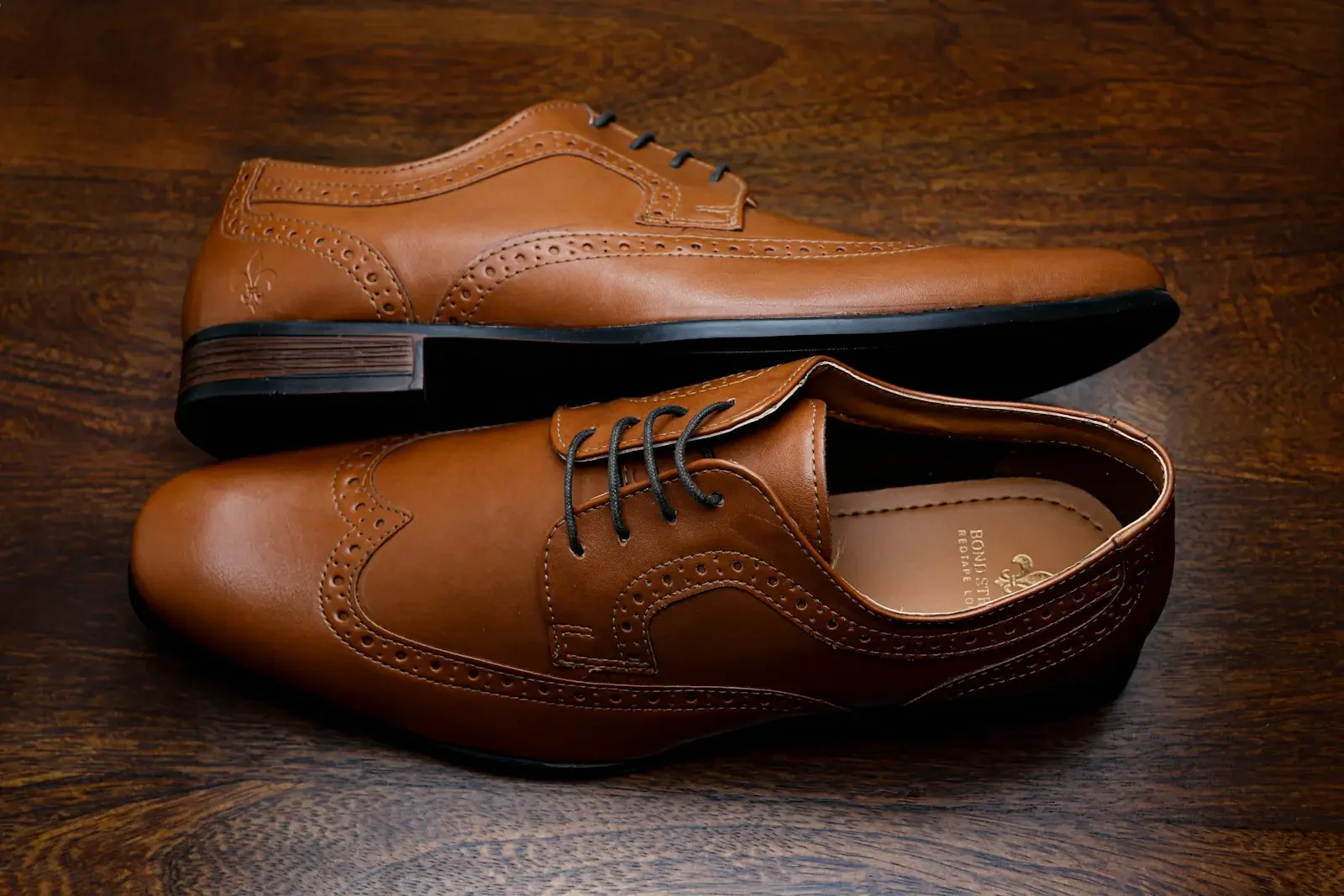
Casual, school, athletic, work and dress programs use the same material family at different priorities, and the differences are measurable, not stylistic.
| Shoe type | Material priority | Typical upper gauge |
| Casual and sneakers | Softness, crease recovery | 1.2 to 1.4 mm |
| School shoes | Scuff resistance, color stability | 1.4 to 1.6 mm |
| Athletic | Flex fatigue, low weight | 1.0 to 1.2 mm |
| Work and safety | Tear strength, abrasion | 1.6 to 1.8 mm |
| Dress and loafers | Fine grain, edge finish | 1.2 to 1.4 mm |
Six values belong in the specification, with test methods named: thickness and tolerance, tear strength, coating adhesion, flex endurance at room temperature and at minus 20 C, hydrolysis resistance under damp heat, and color fastness to rubbing. Where the shoe falls under ISO 20345:2021, the upper must also meet that standard’s minimum tear strength and water vapor permeability, with leather uppers required to reach 120 N, so the data sheet must be read against the clause rather than a marketing sheet.
Sourcing discipline closes the loop. A shoe material supplier should be able to state which polyurethane chemistry the coating uses, provide hydrolysis data at 70 C and 95 percent relative humidity, and confirm whether the base is polyamide or polyester, because those three answers predict service life more accurately than any abrasion figure.
FAQ
Three questions come up after the specification is agreed, and each one concerns what happens after the first season rather than what the material is.
Can microfiber leather shoes be repaired or recolored?
Recoloring is feasible on a sound surface but unreliable once the coating has stiffened, because new pigment adheres to a degrading film. Scuffs are best treated with a thin matched water-based colorant, and cracks at the flex line cannot be repaired, only concealed. Leather conditioners, oils and solvents should be avoided, since they can swell or dull the film.
Does microfiber leather stretch out with wear?
Less than hide, and less recoverably. The non-woven base resists elongation during lasting, which is why gauge holds across a run, but a crease that forms at the vamp stays formed. Fit should therefore be correct at purchase, and patterns should avoid forcing a sharp fold across a stiff coating, which becomes the first failure point.
Is microfiber leather accepted in safety footwear certification?
Certification applies to the finished shoe, not to the sheet. A test house assesses the assembled upper, lining, toe cap and sole as a system, so the same material can pass in one construction and fail in another. Buyers should submit samples from the production lot rather than from a development batch, and should confirm that the supplier’s test reports reference the same thickness and backing that will ship.